


More news on this day
Air travel across the United Kingdom is slowly stabilising after a major systems issue at the country’s air traffic control provider triggered the cancellation of more than 2,000 flights, with National Air Traffic Services now ruling out a cyberattack as the cause.
Get the latest news straight to your inbox!
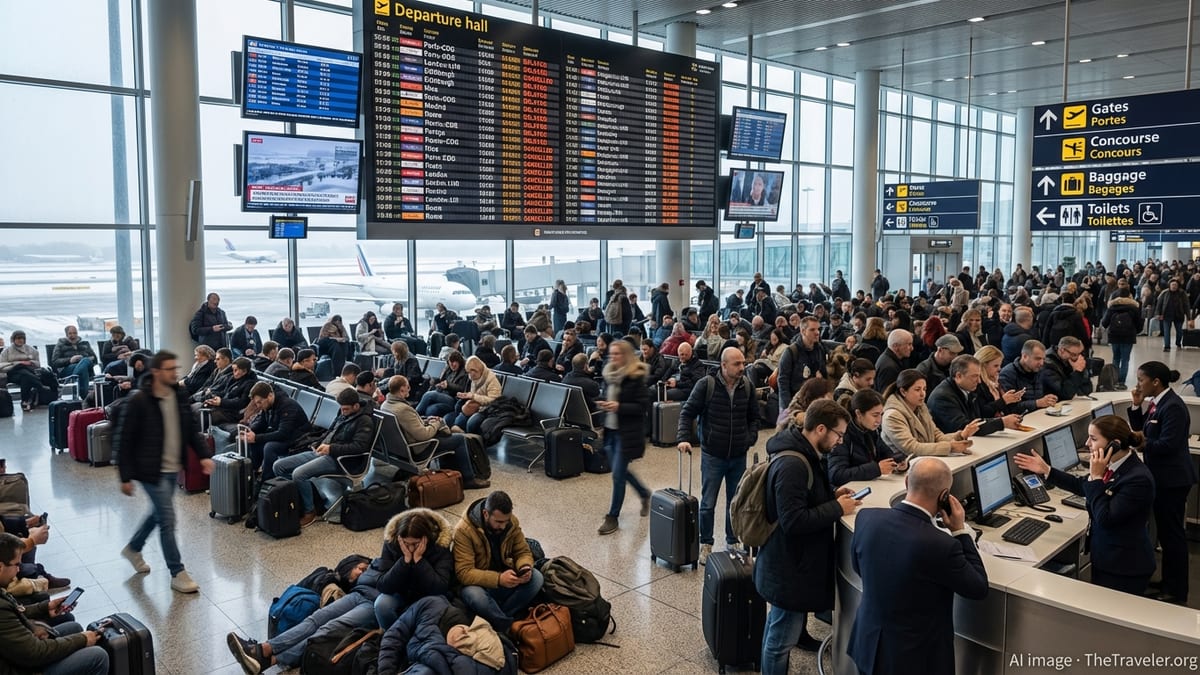
Technical fault, not cyberattack, behind mass disruption
Publicly available information indicates that National Air Traffic Services (NATS), which manages air traffic control at 15 UK airports, experienced a significant technical problem in its flight processing system that began on Tuesday and rippled into Wednesday’s schedules. Initial concerns that the outage might have been the result of malicious activity have been dismissed, with senior figures at the organisation stating that there is no evidence of a cyberattack.
Reports from multiple outlets describe the incident as a failure in systems that process or validate flight plan data, forcing controllers to move to more restrictive procedures and sharply reducing traffic capacity. As a result, airlines were required to cut services, creating bottlenecks at key hubs including London Heathrow, Gatwick and Manchester.
Coverage from international and UK news sources indicates that more than 2,000 flights to and from UK airports were ultimately cancelled as a result of the disruption, affecting tens of thousands of passengers and causing knock-on delays across Europe and beyond.
Scale of cancellations and airports most affected
Flight tracking data cited by several outlets shows that on Tuesday alone, around 1,300 flights to and from UK airports were cancelled after NATS imposed restrictions to maintain safety while operating under degraded capacity. Additional cancellations on Wednesday pushed the total number of disrupted services to more than 2,000.
Heathrow, the UK’s busiest airport, recorded hundreds of cancellations and delays as airlines struggled to adapt schedules. Reports on Wednesday morning indicated that Heathrow still faced significant disruption as aircraft and crews were out of position, despite air traffic control capacity having broadly returned to normal. Gatwick, Manchester and other major airports reported smaller but still notable numbers of scrapped services.
The disruption extended well beyond domestic routes. Published coverage notes that services linking the UK with Europe, North America and Asia were all affected, with some long-haul flights diverted or significantly delayed. Several airlines reported that tens of thousands of passengers were impacted over the two-day period.
Knock-on impact for airlines and passengers
The immediate consequence for travellers was a wave of cancellations and lengthy delays at terminals across the country. Airlines faced the task of rebooking passengers, arranging accommodation, and repositioning aircraft and crews, while handling long queues at service desks. Carriers such as British Airways, Ryanair and Wizz Air reported large numbers of disrupted customers and continued schedule adjustments into Wednesday.
Because crews and aircraft were left out of position, disruption continued even after NATS restored normal operating procedures. Industry experience from previous large-scale outages suggests that airlines can take several days to fully recover their schedules, particularly during busy travel periods when spare capacity is limited.
Consumer groups have previously highlighted the challenge passengers face in securing compensation and refunds after such incidents. While UK and EU air passenger rights rules typically oblige airlines to provide care and assistance during major disruption, the classification of a technical failure at air traffic control as an “extraordinary circumstance” can affect compensation decisions, often prompting further scrutiny once initial investigations conclude.
Political pressure and questions over system resilience
The scale and visibility of the latest disruption have drawn renewed attention to the resilience of the UK’s air traffic management infrastructure. Reports indicate that the head of NATS has been called to brief the UK transport secretary, amid questions over how a single systems issue could generate such widespread operational impact across the aviation network.
Media coverage notes that this is not the first time in recent years that a technical failure at NATS has caused large-scale disruption. A high-profile outage in 2023 also resulted in around 2,000 fewer flights operating in UK airspace than forecast on a peak summer day, prompting a detailed technical review and calls for improved contingency planning.
Some airline leaders have publicly criticised the robustness of the air traffic control systems, arguing that carriers and passengers ultimately bear the financial and practical consequences when central infrastructure fails. Others have called for clearer arrangements on compensation and cost recovery when national systems experience outages that are beyond airlines’ direct control.
Advice for current and upcoming travellers
Although NATS reports that its systems are now functioning normally and that traffic levels are gradually returning to planned levels, residual disruption remains likely in the short term. Airlines continue to adjust their operations as they reposition aircraft and crew and clear backlogs of stranded passengers.
Publicly available advisories from airports and carriers consistently urge passengers to check the status of their flight online or via mobile apps before travelling to the airport. Travellers with flexible plans are being encouraged to consider rebooking to later services where permitted, in order to ease pressure on heavily disrupted peak periods.
For those already affected, travel experts recommend keeping records of all additional expenses incurred, such as accommodation and meals, and retaining all booking confirmations and communications from airlines. These documents may be important when seeking refunds, rerouting, or compensation under applicable passenger rights regulations once the full circumstances of the outage are clarified.
India Today: NATS rules out cyberattack after UK airport disruption
Economic Times: UK airports slowly recover from air traffic control chaos
LSE / Reuters: Flight disruption in UK not caused by cyber attack