


Phnom Penh rewards travelers who look beyond first impressions. Cambodia’s capital is a dense blend of royal pageantry, harrowing recent history, bold contemporary food and a riverfront skyline that glows at sunset.
A growing range of tours makes it easier to navigate this complexity, from half-day deep dives into the Khmer Rouge period to pedal-powered city rambles and evening food safaris that cut straight to the heart of the local dining scene. Many travelers hesitate before booking tours, especially when wondering if Phnom Penh is worth visiting beyond a brief stop. Choosing the right experiences can determine whether you simply pass through or begin to understand the city’s character.
Understanding Phnom Penh Today
Phnom Penh is changing fast. New hotels and rooftop bars rise along the Mekong and Tonle Sap rivers, while traditional markets and family-run eateries continue to anchor daily life. As of early 2026, visitor infrastructure has matured: there is a reliable supply of licensed guides, reputable local tour operators and small specialist outfits concentrating on food, architecture, photography or the city’s darker chapters. Yet the capital still feels more intimate and approachable than many regional metropolises, which makes guided experiences especially rewarding.
Tours make more sense after reviewing the core things to do in Phnom Penh. Any tour of Phnom Penh unfolds against the backdrop of Cambodia’s recent history. Between 1975 and 1979, the Khmer Rouge regime emptied the city, turning schools into prisons and fields into mass graves.
Sites such as the Tuol Sleng Genocide Museum and the Choeung Ek killing fields remain central to many itineraries, and responsible operators now frame visits around remembrance and education rather than spectacle. At the same time, a new generation has come of age, and the city’s energy today is increasingly defined by students, young entrepreneurs and chefs rather than war stories alone.
The government has also been working to improve safety and its international standing, launching crackdowns on criminal scam compounds and investing in tourism promotion. For visitors, this means a more visible police presence in key districts, tighter regulation of some tour activities and a stronger emphasis on ethical conduct. Reputable guides will brief guests on current conditions, from traffic norms to photography etiquette at sensitive sites, helping them move confidently through a city that can appear chaotic at first glance.
Dark History Tours: Tuol Sleng and Choeung Ek
For many travelers, Phnom Penh’s most powerful experience is a half-day or full-day history tour that pairs the Tuol Sleng Genocide Museum with the killing fields of Choeung Ek. Several established operators and freelance guides now focus on this route, often marketing it as an S-21 and Killing Fields tour. Typical itineraries include hotel pick-up in an air-conditioned vehicle, commentary en route and a tightly structured visit to both sites, with time for audio guides or independent reflection.
Tuol Sleng, once a secondary school, was turned into Security Prison 21 under the Khmer Rouge. Classrooms were divided into crude cells and interrogation rooms; black-and-white mugshots of prisoners line the walls. Guides provide essential context here, from the rise of the regime to the scale of the atrocities and the eventual Vietnamese-led intervention that ended Khmer Rouge rule. Many tours pause for guests to explore on their own, allowing space to process a difficult narrative at a personal pace.
Choeung Ek, about 15 to 17 kilometers from the city center, is one of the most significant former killing fields. A memorial stupa holds the remains of thousands of victims, and walking paths lead past excavated mass graves and explanatory panels. Responsible tours emphasize quiet reflection, cultural sensitivity and the ongoing work of remembrance, rather than graphic detail. Dress codes are modest and photography is usually limited near the memorials, with guides ensuring visitors adhere to local expectations of respect.
Travelers should expect these tours to be emotionally demanding. Operators increasingly state this clearly in their descriptions and encourage guests to avoid bringing small children. Morning departures are common, giving visitors the afternoon free for lighter experiences. When comparing options, it is worth paying for smaller group sizes or private tours, which allow more time for questions and more nuanced discussion about how Cambodians today engage with this painful history.
Royal, Architectural and Cultural City Tours
Not every historical tour in Phnom Penh is about the Khmer Rouge period. Classic city tours concentrate on older and more uplifting aspects of the capital, taking in the Royal Palace, the Silver Pagoda, the National Museum and the riverside quarter. These are usually offered as half-day packages, either in a minivan or by tuk-tuk, and often combine architectural commentary with snapshots of present-day life.
The Royal Palace complex, still the official residence of the king, showcases gilded roofs and manicured gardens that evoke Cambodia’s royal heritage. Nearby, the Silver Pagoda houses revered Buddha statues and a floor once paved with thousands of silver tiles. Licensed guides help decode the symbolism of the buildings and murals, and explain how monarchy and Buddhism shape modern Cambodian identity. Tours that include the National Museum add another layer, with collections of Angkor-era sculpture and ceramics that predate the better-known temples of Siem Reap.
Architecture-themed tours are gaining ground, often led by enthusiasts keen to highlight the city’s mix of French colonial villas, New Khmer Architecture from the 1950s and 1960s and utilitarian postwar constructions. These walks or rides might trace a route from the art deco Central Market and surrounding shophouses to more controversial sites such as the White Building’s former location, where redevelopment has transformed the skyline. Such tours show how Phnom Penh’s built environment reflects cycles of ambition, upheaval and renewal.
Many cultural city tours also include stops at local markets such as Phsar Thmey (Central Market) or the Russian Market. Here, guides introduce seasonal produce, explain how spices and herbs are used in Khmer cooking and point out everyday items tourists might otherwise overlook. Done well, these visits are less about souvenir shopping and more about understanding how Phnom Penh residents actually live, work and eat.
Street Food and Market Tours
Phnom Penh’s food scene has matured into one of Southeast Asia’s more intriguing, and food tours now rank among the city’s signature experiences. Specialist operators run small-group morning and evening excursions, usually capped at around six participants, that move between markets, street stalls and family-run eateries. Prices typically include all food and drinks, along with tuk-tuk transfers between stops and a guide who can interpret both dishes and dining customs.
Morning food tours tend to focus on wet markets, rice porridge stalls and noodle vendors. Guests might sample bowls of kuy teav, a pork and rice noodle soup, or nom banh chok, often dubbed Khmer noodles, served with aromatic green curry. Guides explain regional differences, such as how recipes shift between Phnom Penh and the countryside, and highlight how Buddhist festivals and the lunar calendar influence what appears on local tables. For many visitors, the chance to sit at plastic tables shoulder-to-shoulder with office workers and market porters is as memorable as the food itself.
Evening tours, by contrast, tap into Phnom Penh’s post-work energy. As the heat eases, grills ignite and beer gardens fill with groups sharing skewers, grilled seafood and plates of lok lak, a peppery stir-fried beef. Reputable food tours curate a route that might include curbside shellfish, smoky barbecued meats, Cambodian fried noodles and contemporary twists on Khmer classics, paired with local beers or fresh sugarcane juice. Many itineraries end with dessert from a street cart or a quiet café serving Cambodian-style iced coffee.
Dietary restrictions are more widely accommodated than in the past. Leading operators now specify that they can adjust routes for vegetarians, pescatarians, or guests avoiding gluten or shellfish, provided they receive advance notice. Hygiene standards vary across the city, but food tour companies typically vet their vendors regularly and explain safe street food practices, from watching dishes cooked to order to choosing stalls with strong local followings. For travelers wary of navigating markets and alleyways alone, a guided food tour offers both reassurance and access.
Rivers, Sunsets and Cyclo Tours
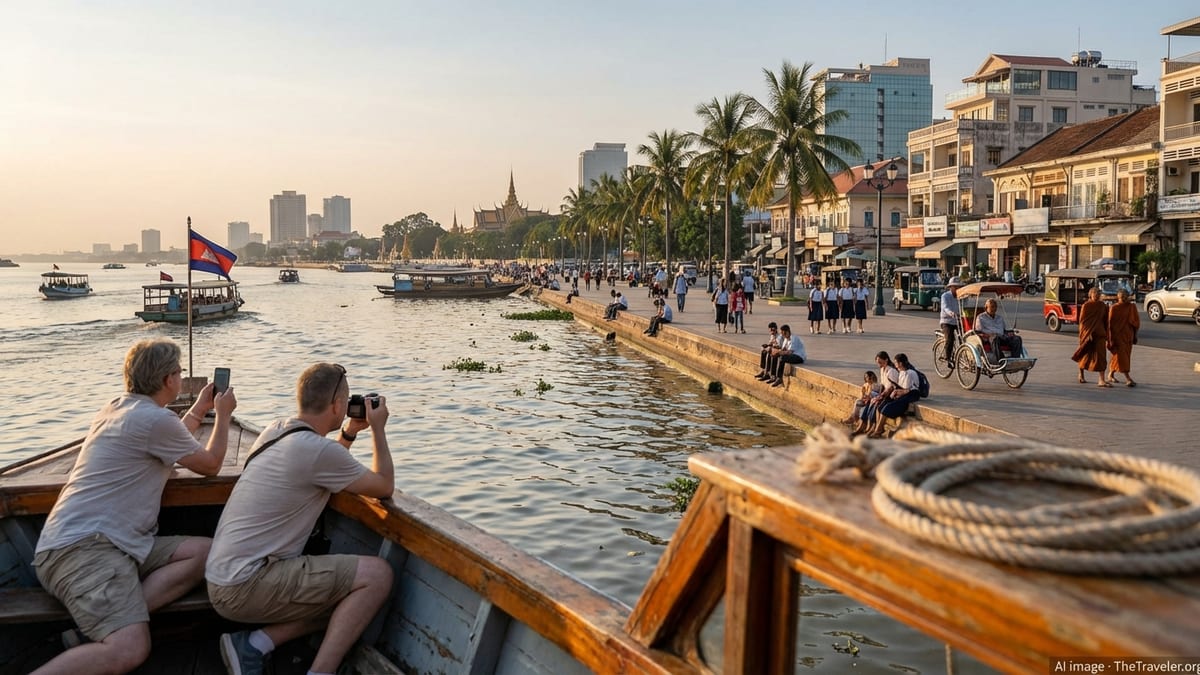
Phnom Penh’s rivers are central to its identity, and several popular tours now revolve around them. Sunset cruises along the Mekong and Tonle Sap have become evening staples, with both budget and higher-end boats available. The typical program runs for around 90 minutes to two and a half hours, departing in the late afternoon and returning after dark as the skyline lights up. Inclusions vary, but many cruises bundle soft drinks, light snacks or even full dinners into the fare.
Cruises usually trace a route along the confluence of the rivers, passing floating fishing communities, the riverside promenade and newer developments on Koh Pich island. This vantage point offers a very different perspective from the street, softening the city’s hectic traffic into a tranquil panorama. Some operators advertise unlimited beer and cocktails, which can be good value for sociable groups, but quieter options also exist for travelers seeking a more contemplative experience. Hotel pick-up within a limited radius is often available, simplifying logistics for first-time visitors.
On land, one of the most atmospheric ways to experience Phnom Penh remains the cyclo, or pedal-powered rickshaw. Several non-profit and social enterprise groups partner with cyclo drivers to offer guided city circuits, turning what might otherwise be a fading form of transport into a source of stable income. Routes often wind through older neighborhoods, past temples and along less trafficked streets, with commentary provided by an escort guide riding alongside. These tours are leisurely and low-impact, giving guests time to absorb details that might vanish from a speeding tuk-tuk.
Evening tuk-tuk city tours also remain popular, especially when combined with cocktail stops or visits to night markets. These tours suit travelers who want a broad overview with the flexibility to linger wherever a particular temple, street or eatery catches their eye. When evaluating river and city experiences, it helps to clarify whether you prefer a livelier, social atmosphere or a quieter, more reflective outing. Phnom Penh’s tour scene now caters to both, but the experiences can differ substantially in tone.
Choosing Responsible and Reputable Operators
With the growth of tourism, Phnom Penh has seen a parallel rise in informal or unregulated tours. While many are run by well-meaning locals, quality and safety can vary. To get the most from your time in the capital, it is worth seeking out established operators or vetted freelance guides, particularly for historical and food-focused experiences. These providers invest in training, carry proper insurance and stay current on museum policies, road conditions and seasonal changes in opening hours.
Responsible operators distinguish themselves in several ways. They are transparent about pricing, group sizes and what is included, from entrance fees to drinks on a cruise. They treat sensitive sites, especially Tuol Sleng and Choeung Ek, with care, avoiding staged or intrusive photography and discouraging inappropriate behavior. Many offer clear briefings on clothing and conduct at religious sites, emphasizing the need for covered shoulders and knees and respectful behavior inside pagodas.
Ethical considerations increasingly extend to labor and community impact. Some cyclo and walking tours channel a portion of their proceeds into driver cooperatives or neighborhood projects, while food tours may prioritize family-owned vendors over large chains. Asking how your money is distributed is no longer unusual, and reputable guides tend to welcome such questions. In an era when Cambodia has attracted attention for issues like forced labor in scam compounds, aligning with tours that foreground fair work and transparency is one way travelers can contribute positively.
Communication is another key factor. Guides who can explain recent policy changes, safety updates or local sensitivities help visitors avoid missteps, from unknowingly photographing military facilities to misunderstanding current political topics. Before booking, it is reasonable to ask operators how they keep their information current and how they handle emergencies. The best companies respond clearly and promptly, an encouraging sign that they will be equally attentive once you are on the ground.
Practical Tips for Booking and Enjoying Phnom Penh Tours
Timing matters in Phnom Penh. The coolest and most comfortable months generally fall between November and February, which also correspond to peak tourist season and busier tours. If you are traveling during these months, advance booking for popular food tours or small-group history excursions is advisable. In the hotter pre-monsoon period, scheduling outdoor or emotionally heavy tours in the morning and reserving late afternoons for river cruises or air-conditioned museum visits can make days feel more manageable.
Most city and history tours include hotel pick-up within central districts, but not all. Clarify meeting points and transport details in advance, especially if staying in smaller guesthouses or across the river. For food tours and evening river cruises, it is sensible to ask about return arrangements after dark and to keep a reputable local taxi or ride-hailing service on hand in case you wish to leave an area earlier than planned. Cash in small denominations remains useful for market snacks, tips and temple donations, even when main tour payments are made by card.
Dress and demeanor shape the quality of interactions with locals. Lightweight clothing that covers shoulders and knees is both practical and respectful, especially on days that include pagodas or genocide memorials. Comfortable closed shoes are preferable for markets and unpaved paths at Choeung Ek. A hat, sunscreen and a refillable water bottle will serve you well on walking or cyclo tours, while a light layer is worth bringing for breezy evening cruises.
Finally, give yourself time to process. The emotional weight of Khmer Rouge history tours in particular can linger, and many travelers find it helpful to follow them with quieter activities: a slow walk along the riverfront, a visit to a contemporary art gallery or a relaxed dinner. Phnom Penh’s appeal lies in its layers; combining difficult but important historical insight with food, architecture and everyday urban life yields the richest understanding of the city and its people.
The Takeaway
Phnom Penh’s tours now cover a spectrum as varied as the city itself. History-focused excursions to Tuol Sleng and Choeung Ek confront one of the twentieth century’s darkest chapters with a candor that can be challenging yet essential. Royal, architectural and cultural circuits reveal older strata of Cambodian identity, from the gilded spires of the Royal Palace to the concrete optimism of midcentury modern design. Food tours and river cruises, meanwhile, immerse visitors in the flavors and rhythms of a capital that has moved, however unevenly, from survival to reinvention.
Choosing the right mix of tours is less about ticking boxes and more about deciding how you wish to encounter Phnom Penh. Travelers who prioritize context might begin with a guided history day before branching into markets and neighborhoods. Those drawn to sensory experience may anchor their time around street food, sunset cruises and cyclo rides, adding one or two key historical sites for depth. In either case, seeking out reputable, responsible operators ensures that your presence supports local livelihoods and respects the stories being told.
Above all, the most rewarding tours in Phnom Penh are those that link past and present. In a city where new cafés sit beside crumbling facades and riverside joggers pass memorial stupas, understanding one without the other yields only a partial picture. With thoughtful planning and a willingness to engage, visitors can leave not only with photographs and flavors in mind, but with a sharper sense of Cambodia’s resilience and the possibilities still unfolding along its capital’s riverbanks.
FAQ
Q1: How many days should I allocate for tours in Phnom Penh?
Most travelers find that two to three full days is enough to experience a combination of history, food and city tours without feeling rushed. One day can be devoted to Tuol Sleng and Choeung Ek, another to royal and architectural sights, and an evening or two to food tours or river cruises.
Q2: Is it appropriate to visit the Killing Fields and Tuol Sleng on my first day?
It is possible, but many visitors prefer to start with lighter city or food tours to get their bearings and adjust to the climate. Visiting the genocide sites can be emotionally intense, so scheduling them on a day when you are rested and can reflect afterward often makes the experience more meaningful.
Q3: Are Phnom Penh food tours safe for sensitive stomachs?
Reputable food tour operators vet their vendors and choose stalls with strong hygiene practices and high turnover. While no experience can guarantee zero risk, joining a guided tour is generally safer than sampling random street food alone. Communicating any allergies or restrictions in advance further reduces potential issues.
Q4: Can I visit major historical sites without a guide?
Yes, you can visit the Royal Palace, National Museum, Tuol Sleng and Choeung Ek independently, often with audio guides. However, a knowledgeable local guide adds important context, answers questions and can help navigate logistics, especially when combining several sites in a single day.
Q5: What should I wear on history and temple tours?
Wear lightweight clothing that covers shoulders and knees, suitable for both religious sites and memorials. Closed or sturdy shoes are recommended, as paths at Choeung Ek and around some pagodas can be uneven. Bringing a hat and sunscreen is helpful for outdoor sections.
Q6: Are sunset cruises suitable for families with children?
Many Mekong and Tonle Sap sunset cruises welcome families and provide life jackets. The gentle pace and open space can be enjoyable for children, though very young kids may become restless. It is wise to check boat capacity, safety provisions and whether the atmosphere is more party-oriented or relaxed before booking.
Q7: How do cyclo and tuk-tuk tours compare?
Cyclo tours are slower and more intimate, ideal for short circuits through older neighborhoods where you can absorb details at street level. Tuk-tuk tours cover greater distances and are better for linking far-flung sights or combining history and nightlife. Both can be rewarding, and some travelers choose to experience each once.
Q8: Do tours operate during the rainy season?
Yes, most tours continue year-round, though heavy downpours between May and October can affect timing and comfort. Operators may adjust routes or schedules in response to weather. Bringing a light rain jacket and being flexible about start times can help you enjoy experiences even during wet months.
Q9: How far in advance should I book popular tours?
During the high season from roughly November to February, booking a week or more in advance is advisable for small-group food tours and certain private history excursions. River cruises and standard city tours may be available closer to the date, but securing spots early provides more choice of departure times.
Q10: Is tipping expected on tours in Phnom Penh?
Tipping is not strictly mandatory, but it is appreciated and has become common practice among international visitors. For group tours, a modest per-person tip to the guide and driver is customary if you are satisfied with the service. For private tours or exceptional experiences, a slightly higher amount is appropriate.