

More news on this day
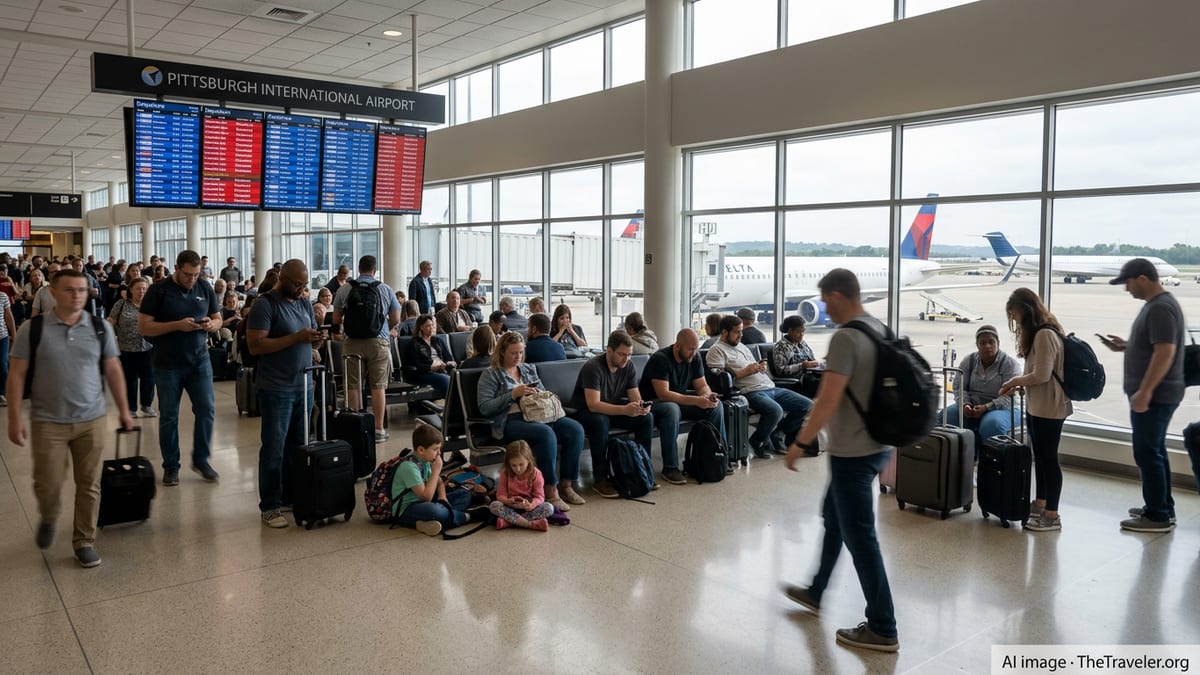
Dozens of travelers moving through Pittsburgh International Airport faced unexpectedly long waits and missed connections after 27 flights were cancelled and 54 delayed, disrupting operations for Southwest Airlines, Endeavor Air, United Airlines and other carriers on a busy travel day in the United States.
Get the latest news straight to your inbox!
Ripple Effects From a Concentrated Disruption
Publicly available flight tracking data and airport status boards show that the disruption at Pittsburgh International Airport translated into a sizable operational setback, with nearly 30 flights cancelled outright and more than 50 delayed. While those figures are modest compared with nationwide storm shutdowns, they were concentrated enough at a single mid-sized hub to cause a pronounced ripple effect through the broader network.
Southwest Airlines, Endeavor Air and United Airlines all saw their schedules affected, alongside several smaller operators. Routes connecting Pittsburgh with major hubs such as Chicago, Minneapolis, Orlando, Atlanta and Dallas were among those impacted, limiting options for travelers attempting to rebook and compressing capacity onto the limited services that were still operating.
For passengers, the practical impact was felt not only in Pittsburgh but across the country as aircraft and crews that would normally flow through the region were delayed or taken out of circulation. As aircraft missed scheduled turns, downstream services in other cities were pushed back or cancelled, leading to missed connections, last-minute gate changes and crowded departure areas far beyond western Pennsylvania.
Reports from airline dashboard data indicate that the disruptions added stress to an already busy period for domestic travel, with some travelers waiting several hours for alternative itineraries or being rebooked onto next-day flights as available seats quickly disappeared.
Key Routes Hit: Chicago, Minneapolis, Orlando, Atlanta and Dallas
The most visible pressure points appeared on the spokes that connect Pittsburgh International Airport with major national hubs. Flights to and from Chicago, a critical connection point for both United and Southwest through their respective Chicago airports, saw cancellations and knock-on delays that complicated same-day rebooking options for travelers headed to the Midwest and beyond.
Connections to Minneapolis were also affected, reducing capacity on corridors commonly used by business travelers and those heading to upper Midwest destinations that rely on hub-and-spoke links. With fewer departures to Minneapolis, passengers attempting to reach secondary cities in that region faced additional segments or overnight stays.
Leisure-heavy routes to Orlando and other Florida destinations were part of the disruption as well, affecting families and vacationers whose itineraries are often less flexible. Orlando, in particular, functions both as a leisure gateway and a connection point to other parts of the Southeast, so delays there compounded the sense of uncertainty for travelers trying to coordinate resort check-ins, cruise departures and theme park visits.
Atlanta and Dallas, both major national connecting hubs, also featured among the disrupted routes. When flights between Pittsburgh and these hubs are delayed or cancelled, the effect can extend far beyond point-to-point travelers, because these airports serve as transfer nodes for journeys spanning multiple time zones across the United States.
Operational Strains for Southwest, Endeavor, United and Others
The disruption posed particular challenges for carriers that rely on tight aircraft and crew rotations through Pittsburgh. Southwest Airlines, which links the airport to Chicago, Orlando, Atlanta and Dallas among other destinations, had to adjust multiple departures and arrivals as part of the broader pattern of cancellations and delays. Even relatively short delays can compound quickly for a point-to-point airline model, leaving aircraft and crews out of position by later in the day.
United Airlines, operating a hub-and-spoke system that routes significant connecting traffic through Chicago and other hubs, also faced complications once Pittsburgh segments were removed or pushed back. When those feeder flights do not arrive on schedule, connecting passengers and baggage flows are disrupted, increasing the likelihood of missed onward flights and the need for overnight accommodations in intermediate cities.
Endeavor Air, which operates regional services under major-airline brands, was similarly affected. Regional carriers tend to operate with smaller fleets and less spare capacity, so the loss of a few rotations at a key station can be difficult to absorb. Once a regional jet and its crew are delayed on an early segment, later flights often fall out of sync with planned schedules, extending disruptions into the evening.
Other airlines serving Pittsburgh saw lighter but still meaningful impacts as they adjusted their operations to accommodate stranded passengers or to accept aircraft and crews rerouted from canceled services. This kind of cross-carrier adaptation is common in periods of irregular operations, as airlines attempt to stabilize schedules while also managing contractual and logistical constraints.
Experiences for Affected Travelers
For many travelers, the statistics translated into a familiar set of real-world frustrations: lines at customer service counters, crowded departure gates and frequent updates over airport public address systems. According to published coverage and traveler accounts shared on social media, some passengers in Pittsburgh reported being moved between multiple flights over the course of the day as airlines tried to reopen disrupted connections to Chicago, Dallas, Atlanta and other hubs.
Others experienced the impact indirectly at airports across the country, discovering that their inbound aircraft was delayed leaving Pittsburgh or that a previous leg on the same route had been cancelled, resulting in a late-arriving plane and crew. These so-called “downline” effects are a standard feature of modern aviation networks, where a single gap in the system can echo across several time zones.
Travelers heading to or from leisure destinations such as Orlando described juggling hotel reservations and ground transfers after their original flights were canceled. Those relying on hub connections to reach smaller regional airports reported missed last flights of the day and unexpected overnight stays as schedules tightened in the evening hours and alternative routings diminished.
In some cases, passengers traveling for time-sensitive reasons, including business meetings or family events, found themselves weighing whether to wait out rebooked flights or abandon air travel in favor of long-distance drives or train journeys. These kinds of last-minute decisions highlight how even a moderate number of cancellations at a single airport can upend personal plans across a wide geographic area.
Broader Context in a Volatile Travel Season
The disruptions at Pittsburgh International Airport come against a backdrop of a volatile travel season in the United States, marked by periodic weather events and high demand that leave little slack in airline schedules. Recent months have seen large-scale storm systems trigger thousands of cancellations nationwide, putting additional pressure on carriers to recover quickly when localized problems arise.
Industry data suggests that when schedules are already dense and aircraft utilization is high, a block of several dozen cancellations and delays at a regional hub can have disproportionate consequences. With fewer backup aircraft and reserve crews available, carriers must make rapid decisions about which routes to prioritize for restoration and which to consolidate or suspend temporarily.
For Pittsburgh specifically, the incident underscores the airport’s role as both an origin-and-destination market and a connecting point within several carriers’ domestic networks. While the number of flights handled each day is smaller than at the country’s largest hubs, the airport links a wide range of business and leisure destinations, meaning that disruptions there are quickly felt in cities such as Chicago, Minneapolis, Orlando, Atlanta and Dallas.
Travel analysts note that passengers are increasingly encouraged to build additional time into itineraries, particularly when traveling through secondary hubs or when trips involve tight connections onto the last flight of the day. The latest wave of cancellations and delays at Pittsburgh is likely to reinforce those recommendations, as travelers reassess how much buffer they need when planning important journeys.