

More news on this day
Portland has stepped into the global cruise spotlight, joining Mediterranean and Baltic heavyweights such as Civitavecchia, Barcelona, Vigo, Lisbon, Copenhagen and Visby as ports managing surging passenger volumes even as public concern over mass tourism and its impacts continues to grow.
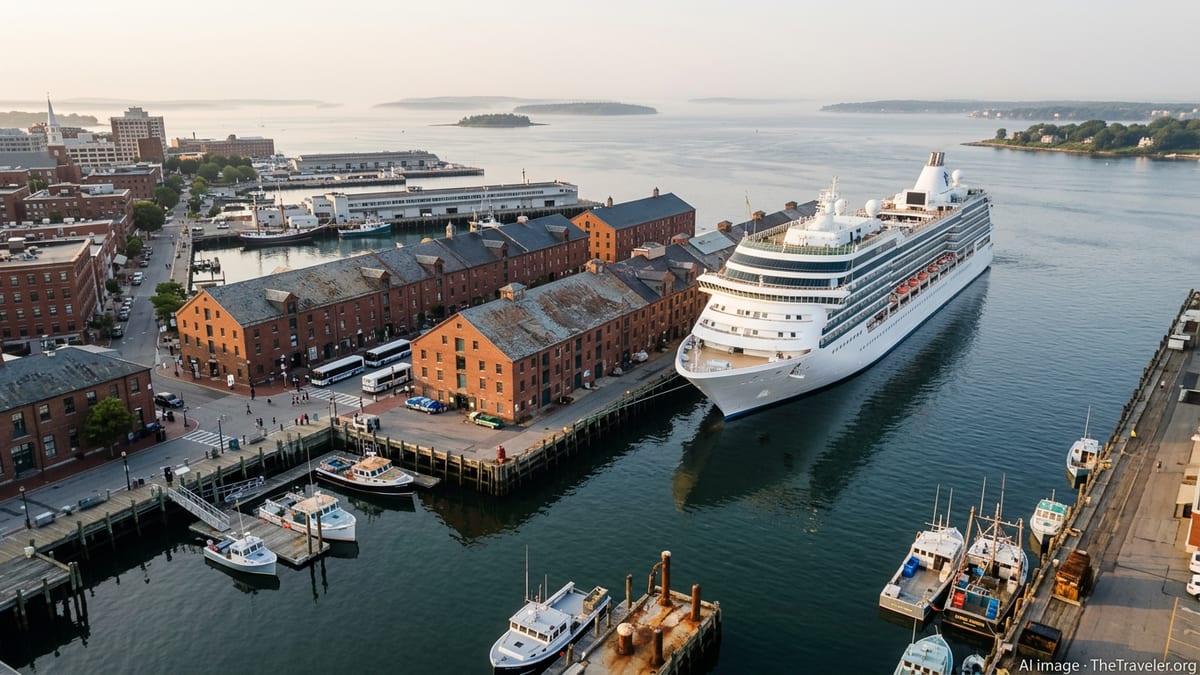
Portland’s Cruise Ascendancy Reorders the Maine Map
Once a secondary stop on New England itineraries, Portland has rapidly become Maine’s busiest cruise gateway, overtaking Bar Harbor as ships adjust routes in response to stricter local limits elsewhere along the coast. According to state tourism data, Portland’s 2023 season already set records, and 2024 and 2025 schedules have pushed berth occupancy to new highs as lines shift more calls into Casco Bay.
Industry figures compiled by CruiseMaine indicate that Portland surpassed Bar Harbor’s cruise visitation for the first time in state history in 2024, a symbolic milestone that underscores how quickly itineraries can be reshaped by local politics and market demand. Portland has welcomed more, and larger, vessels, with total passenger counts now in the hundreds of thousands each year and trending upward.
City officials and port operators frame the surge as an economic opportunity, pointing to visitor spending in the Old Port, waterfront investments and extended seasons that now stretch into early spring and late autumn. At the same time, residents have begun voicing familiar concerns about congestion in the compact downtown, pressure on housing and services, and the environmental cost of larger ships idling near city neighborhoods.
Portland has already weathered one failed referendum proposal to cap ship size, but the debate has not gone away. As ships grow and call numbers rise, the city finds itself navigating the same balancing act that has forced far larger cruise capitals in Europe to rethink their growth strategies.
Joining a Club of Ports Handling Millions of Cruise Passengers
Portland’s rise coincides with record-breaking numbers across established European cruise hubs. In the Mediterranean, Barcelona handled around 3.6 million cruise passengers in 2024, keeping its place among the world’s busiest ports even as city leaders talk openly about rolling back capacity. Nearby, Civitavecchia, the main gateway for Rome, processed well over 3 million cruise visitors and remains Italy’s top cruise port by volume.
Further north along the Atlantic and into the Baltic, ports such as Vigo, Lisbon, Copenhagen and Visby have leveraged their strategic positions on popular itineraries to capture growing flows of visitors. Data compiled by European industry groups show that Copenhagen and its regional partner ports welcomed close to 1 million cruise guests in 2024, while Visby on Sweden’s Gotland island is projected to handle well into six-figure passenger totals as calls increase.
The combined picture is one of a cruise sector that has not only recovered from the pandemic shock but surpassed its previous peak. Global passenger numbers are forecast to exceed 34 million annually, with European ports accounting for more than 30 million individual cruise visits in 2024 alone. Portland’s figures are modest beside the multi-million-passenger giants, but its trajectory mirrors theirs: a steady climb in calls, the arrival of newer, larger ships and an expanding season.
For cruise lines, the network effect is critical. Adding Portland to itineraries that already include marquee European ports allows brands to market transatlantic routes that blend Old World capitals with emerging North American city-break destinations. For destination managers, however, joining this high-traffic club comes with new responsibilities and scrutiny.
Rising Pushback Against Mass Tourism and Crowding
The growing alignment between Portland and Europe’s cruise capitals is most evident in the public debate over overtourism. In Barcelona, resident surveys commissioned by the city show a sharp increase in the share of locals who want cruise visitor numbers reduced, as daily peaks of more than 30,000 passengers strain streets, public spaces and historic districts. Similar sentiments have surfaced in Venice, Amsterdam and Mediterranean resort towns such as Cannes and Nice.
Many of the complaints are familiar to Portland residents watching busloads of visitors pour into the Old Port on busy summer days. Locals in European ports have long argued that day-tripping cruise passengers concentrate in a handful of neighborhoods, crowding out everyday life while spending relatively little compared with overnight guests. Critics in Maine echo those concerns, questioning whether the net economic benefit offsets seasonal disruption and environmental externalities.
Environmental groups on both sides of the Atlantic have also drawn attention to emissions from cruise vessels, particularly when they run engines at berth to provide hotel services on board. European ports face a 2030 deadline to offer shore power capable of allowing ships to plug in and cut exhaust during calls, while discussions in the United States, including in Portland, increasingly focus on air quality monitoring, fuel standards and noise impacts in working harbors.
The result is a widening political spotlight on cruise tourism policy. Portland’s city council, like municipal leaders in Barcelona and Copenhagen, is under pressure to demonstrate that growth is being managed, not simply welcomed. This includes questions about how many passengers the city can comfortably absorb on peak days and what share of visitor spending stays in local hands rather than flowing to global operators.
Ports Experiment With Limits, Technology and New Rules
Across Europe, some of the world’s busiest cruise ports are now experimenting with hard limits and new operating rules in an effort to keep tourism within what officials describe as a “liveable” threshold for residents. Barcelona has agreed with port authorities to reduce the number of cruise terminals serving the city by the end of the decade, a move intended to trim overall capacity even as short-term passenger numbers continue to hover near record highs.
Elsewhere, ports from Venice and Amsterdam to Cannes and Palma de Mallorca have introduced restrictions on ship size, daily passenger caps or the location of cruise berths, shifting large vessels away from historic centers. Copenhagen, Lisbon and Vigo are investing heavily in shore power hookups and cleaner fuels, responding to European Union climate rules and local air quality campaigns while trying to remain competitive in the race for cruise calls.
Portland is watching these experiments closely. While it lacks the scale of Europe’s mega-ports, many of the same toolkit options are on the table: technical upgrades to allow ships to connect to the local grid, voluntary or negotiated limits on the number of calls during peak foliage season, and tighter coordination between port operators and city planners on crowd management and transportation links.
Industry representatives argue that such measures, if carefully calibrated, can channel growth rather than choke it off, keeping cruise lines committed to a destination while addressing resident fatigue. In practice, each port is feeling its way toward a model that balances maritime commerce, tourism demand and quality of life for waterfront communities.
Economic Windfalls Meet Calls for a New Cruise Model
For now, the money at stake keeps ports such as Portland, Civitavecchia, Barcelona, Vigo, Lisbon, Copenhagen and Visby firmly in the game. Cruise associations estimate that the sector supports thousands of jobs in Catalonia alone and contributes hundreds of millions of euros to regional GDP, while studies commissioned in Maine show tens of millions of dollars in annual spending tied directly to cruise calls.
Local businesses in Portland’s Old Port, from restaurants and shops to tour operators and transportation services, have been vocal in defending the industry, particularly after the lean pandemic years. Similar coalitions of hoteliers, retailers and port-linked firms lobby municipal governments across Europe to maintain access for large ships, arguing that visitor flows can be better distributed rather than drastically curtailed.
Yet the political mood has unmistakably shifted toward demands for a more restrained, higher-value model of cruise tourism. City leaders in multiple European ports now emphasize quality over quantity, seeking to attract itineraries that begin or end in their cities, which typically bring overnight stays and higher per-capita spending. Portland, too, is exploring ways to lengthen visits, encourage independent exploration beyond the waterfront and connect cruise arrivals with broader regional tourism strategies.
As Portland joins this circle of globally significant cruise ports, its choices in the coming seasons will resonate far beyond Casco Bay. The city’s evolving approach to ship size, scheduling, infrastructure and community engagement will offer a test case for smaller destinations seeking to share in the economic benefits of the cruise boom without repeating the missteps that have pushed some of the world’s most visited waterfronts to a tipping point.