


More news on this day
Portugal has been ranked the worst country in Europe for flight punctuality, with recent analyses indicating that passengers departing its airports collectively lost millions of hours to delays and cancellations in the past year.
Get the latest news straight to your inbox!
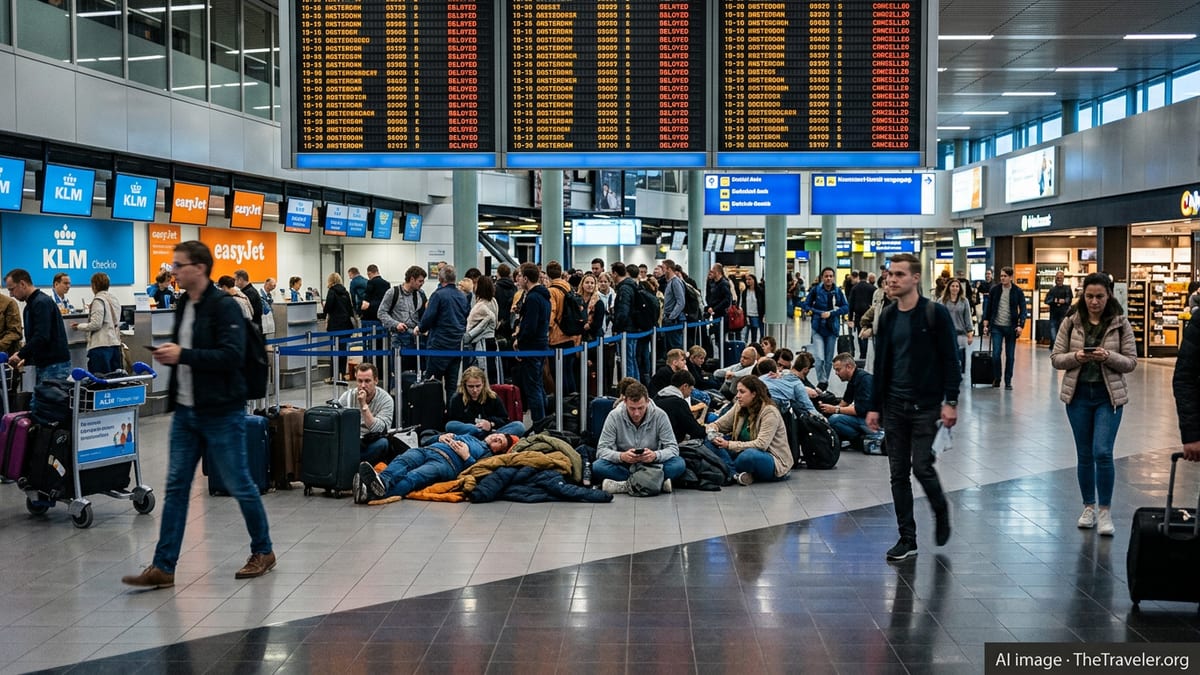
Portugal sinks to bottom of European punctuality league
Recent punctuality rankings compiled from European air traffic and passenger rights data place Portugal last among European countries for on time performance. Consumer advocacy and flight compensation platforms report that, across 2025, roughly one in four flights in Europe was delayed or cancelled, but Portugal’s rate of disruption stood out as significantly higher than the continental average.
According to published coverage of a 2025 report from passenger rights specialists, Portugal recorded the lowest punctuality of any European country when departures and arrivals were measured against scheduled times. The same analyses indicate that more than a third of travelers flying from Portuguese airports in 2023 and 2024 had their journeys disrupted, confirming a pattern that has deteriorated rather than improved as air traffic rebounded after the pandemic.
Portugal’s position at the bottom of the table reflects both frequent delays and a high incidence of schedule changes and cancellations, particularly on heavily traveled European routes. The findings come as Eurocontrol and other regional bodies warn that overall air traffic flow management delays in Europe are hovering near record levels, testing the resilience of national aviation systems.
Industry observers note that Portugal’s aviation network, while smaller than those of countries such as France, Germany or the United Kingdom, is heavily concentrated at a few congested hubs. This concentration magnifies the impact of any disruption, making the country’s poor ranking more visible in passenger statistics and punctuality indexes.
Millions of passenger hours lost in queues and on tarmacs
The statistical picture of Portugal’s delays translates into a vast loss of passenger time. Using standard methodologies applied by airlines and regulators, analysts assign an economic value to each hour a traveler spends waiting in an airport or on a grounded aircraft. Recent European assessments of delay costs estimate that the value of lost passenger time represents a substantial share of the overall economic impact of disruptions.
Publicly available information from European aviation performance reports suggests that between 2015 and 2025, passengers across the continent lost hundreds of millions of hours to delays, with several billion euros attributed directly to the value of that lost time. Applying comparable metrics to the Portuguese data, where disruption rates run above the European average, implies that travelers using the country’s airports have collectively forfeited millions of hours in the past few years alone.
These lost hours are spread across long queues at check in and security, extended waits at departure gates and periods sitting on aircraft that are held at stands or on taxiways. For leisure travelers this often means shortened holidays or missed connections on multi leg itineraries. For business passengers, delays can translate into missed meetings and additional overnight stays, with knock on costs for companies and employers.
Economists who study transport efficiency argue that this accumulation of lost time has wider social and economic effects. In tourism dependent countries such as Portugal, the perception of unreliable air links can influence trip planning, conference bidding and airline scheduling decisions, reinforcing a cycle in which delays discourage demand while still imposing high costs on those who travel.
TAP Air Portugal and congested hubs under scrutiny
National carrier TAP Air Portugal has emerged as a focal point in discussions about the country’s punctuality record. Several independent rankings of European airlines for 2024 and early 2025 list TAP among the worst performers for on time arrivals, with more than 30 percent of its flights reportedly arriving at least 15 minutes behind schedule. Such figures place the airline at or near the bottom of the European league tables.
Analysts stress that airline performance is tightly linked to infrastructure constraints. Lisbon’s main airport operates close to capacity for much of the year, particularly during the peak summer season. When congestion combines with staffing shortages, air traffic control restrictions or adverse weather, delays can cascade rapidly through the network, creating knock on effects for later departures from Porto, Faro and regional airports.
Meanwhile, Eurocontrol network operations data for 2024 point to recurring capacity bottlenecks in airspace sectors covering Portugal and neighboring parts of Spain, especially during busy holiday weeks. Although average en route delay minutes per flight remain relatively modest, the concentration of delays at certain times of day magnifies the disruption experienced by passengers on popular leisure routes.
Sector observers note that efforts are under way to address bottlenecks, including air traffic management upgrades and discussions over new airport capacity for the Lisbon region. However, these projects are long term in nature, meaning that travelers are likely to continue facing elevated disruption risk in upcoming summer seasons.
European regulations and compensation reshape traveler behavior
Under EU Regulation 261/2004, many passengers affected by long delays or cancellations are entitled to care, rerouting and financial compensation. Passenger rights organizations operating in Portugal report that hundreds of thousands of travelers departing the country each year qualify for compensation because their flights were either significantly delayed on arrival or cancelled at short notice.
Public guidance from European institutions and national regulators urges travelers to keep boarding passes and written confirmations of disruption so they can submit claims. In Portugal, consumer protection bodies and aviation authorities have stepped up efforts in 2026 to remind passengers of their rights and to channel cross border disputes to the European Consumer Centre network.
The growing awareness of these rights appears to be influencing traveler behavior. Flight compensation platforms note rising use of digital tools that allow passengers to check eligibility in real time and file automated claims, sometimes directly from airport departure lounges. This, in turn, increases the financial cost of poor punctuality for airlines and may incentivize carriers to prioritize schedule reliability where possible.
At the same time, industry voices argue that the current framework can encourage airlines to cancel flights preemptively when faced with foreseeable disruption, rather than risk longer delays that trigger higher payouts. Ongoing discussions in Brussels about updating passenger rights rules aim to address this tension while preserving strong protections for consumers.
What travelers can expect for upcoming seasons
Looking ahead to the next peak travel periods, European traffic forecasts suggest that demand will continue to grow, particularly on leisure routes linking northern Europe with Mediterranean destinations such as Portugal. Eurocontrol trend analyses point to gradual increases in total flight numbers and persistent pressure on a small number of busy holiday corridors.
For Portugal, this means that the structural factors behind its poor punctuality ranking are unlikely to disappear quickly. Capacity constraints at Lisbon and Porto, combined with the broader European pattern of air traffic control delays, suggest that the country will remain exposed to significant schedule volatility, especially on summer weekends and around major holidays.
Travel experts recommend that passengers factor potential disruption into their plans by allowing generous connection times, avoiding tight same day transfers and considering early morning departures, which are statistically less exposed to knock on delays from earlier flights. Purchasing flexible tickets or travel insurance that covers missed connections may also offer additional protection, although travelers are advised to check policy details carefully.
While ongoing investments in air traffic management systems and airport infrastructure may ultimately improve Portugal’s punctuality performance, the latest data indicate that those benefits are still some years away. For now, Europe’s worst record for flight delays remains a significant consideration for anyone planning to fly to or from the country.