

More news on this day
Holy Week sea travel across the Philippines is expected to be heavy again this year, and the Philippine Ports Authority is turning to its Online Reservation and Appointment System to help passengers secure ferry slots and spend less time queuing at ports.
Get the latest news straight to your inbox!
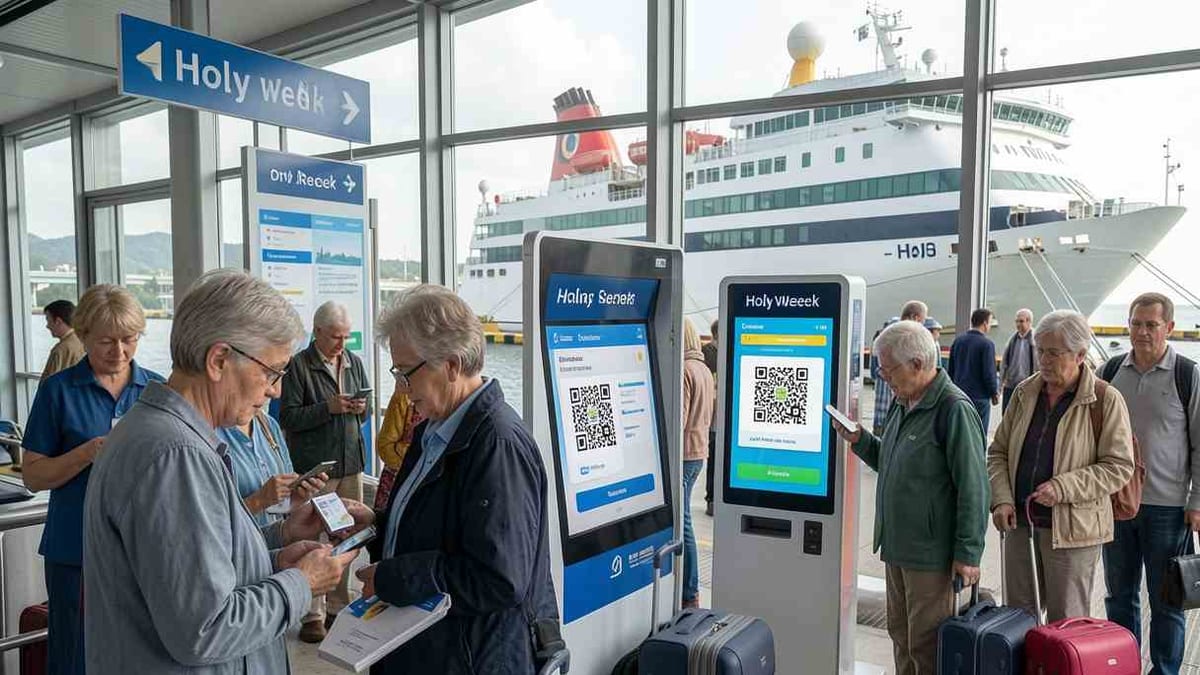
Image by Latest International / Global Travel News, Breaking World Travel News
Digital Tools Step In As Holy Week Crowds Grow
Publicly available data for Holy Week 2025 showed more than 2.29 million passengers passing through Philippine Ports Authority managed ports, a jump of over one third compared with the previous year. That surge highlighted how essential predictable boarding, crowd control and clear ticketing processes have become for holiday makers relying on ferries to reach island destinations.
Reports indicate that the rapid recovery of domestic tourism and the alignment of Holy Week with school and office breaks have made the Lenten period one of the busiest windows for interisland travel. Popular gateways such as Batangas, Mindoro, Panay, Guimaras, Bohol and Negros Orientals key ports routinely experience long queues at peak hours when most travelers arrive without advance bookings.
In response to this pattern, the Philippine Ports Authority has increasingly emphasized the role of digital platforms in managing throughput at terminals. The Online Reservation and Appointment System, known as ORAS, is positioned as a core tool to shift more transactions away from crowded counters and toward online scheduling that can be checked and verified before passengers even arrive at the pier.
Recent coverage of Holy Week operations notes that long lines and first come, first served ticket sales remain common in some locations, especially where online booking for specific routes is still limited. With ORAS undergoing incremental improvements, transport analysts observe that it is being treated as part of a broader digital upgrade intended to smooth future peaks rather than a stand alone fix.
How ORAS Aims To Streamline Ferry Reservations
ORAS is designed to let passengers reserve port appointments and related services online so that travel plans can be organized days or even weeks ahead. The system interfaces with port operations, allowing terminals to anticipate passenger volumes for particular dates and times and to allocate resources accordingly, from security screening to ticket validation and baggage handling.
According to publicly accessible guidelines, the platform enables users to select preferred travel windows, supply basic trip details and generate appointment documents that can be presented at the terminal. These steps are intended to reduce walk in uncertainties, especially during the Holy Week rush when same day ticket availability is often tight on popular routes to tourism hubs and home provinces.
By digitizing appointment data, the Philippine Ports Authority can monitor demand in near real time and adjust queuing arrangements or facility use where needed. In practice, this could mean redirecting passengers to additional counters, opening overflow waiting areas or coordinating more closely with shipping lines when certain departure windows near capacity.
Travel forums and recent reports suggest that online booking practices vary widely between operators and locations, with some routes heavily reliant on third party platforms and others still focused on on site ticketing. The evolution of ORAS is therefore viewed as a way to introduce a more standardized reservation layer anchored in port management, complementing the booking systems of individual ferry companies.
Holy Week Readiness And Passenger Experience
For this year’s Holy Week, publicly available information points to continued preparations under national campaigns focused on safe and orderly travel, with port authorities, maritime agencies and local governments coordinating security and crowd management. In that context, ORAS is being framed as a practical option for travelers who prefer to avoid extended lines at ticket windows and entry gates.
Experience from earlier Holy Week periods shows that the busiest days typically fall from midweek to Good Friday, when outbound traffic spikes as residents leave major cities for their home provinces or holiday destinations. Passengers who arrive at terminals without advance reservations during these windows often face bottlenecks at check in, particularly at busier ports such as Batangas, where ferry connections link Luzon to island provinces including Mindoro and beyond.
Reports on past operations highlight that port staff have frequently reminded the public about the likelihood of queues and encouraged early arrival to complete ticketing and inspection procedures. With ORAS enhancements rolling out, travel observers note that the system is expected to help distribute arrivals more evenly throughout the day by giving passengers fixed appointment windows and clearer expectations of processing times.
For many travelers, especially families and groups carrying luggage, the ability to minimize uncertainty at the terminal can be as important as the crossing itself. Advance reservation through ORAS offers one more planning tool alongside vehicle bookings, accommodation arrangements and coordination with bus or van connections feeding into the ports.
Implications For Island Tourism And Local Economies
The expansion and refinement of ORAS carry implications beyond immediate passenger convenience. Holy Week is a pivotal period for local tourism economies in coastal and island provinces, where resorts, guesthouses and tour operators depend on reliable ferry connections and predictable visitor flows.
Reports on recent Holy Week seasons point to strong traffic through ports serving established destinations such as Bohol and Guimaras, as well as through gateways connecting to developing tourism areas in Mindoro and neighboring islands. When bottlenecks delay arrivals or strand passengers, accommodations and tours can face last minute cancellations, while local residents commuting for work or family visits must absorb longer travel times.
By enabling port managers to track reservation trends via ORAS, authorities can signal likely peaks to local stakeholders and transport operators ahead of time. This can support decisions on additional sailings by shipping lines, extended operating hours at terminals or adjustments to local transport schedules serving the ports.
For travelers seeking quieter alternatives to the country’s best known resorts, improved predictability in ferry operations can make it easier to consider lesser known routes. As more corridors adopt online appointment and reservation processes, emerging destinations reachable by sea may become more attractive, broadening the spread of tourism spending beyond a handful of prime locations.
What Travelers Should Keep In Mind This Holy Week
With Holy Week 2026 approaching, journey planning remains critical for anyone relying on ferries to cross between islands. Travel advisories and recent passenger experiences generally recommend confirming whether a chosen route is supported by online reservation or appointment systems and making use of these tools when available.
For routes integrated with ORAS, travelers are encouraged by public guidance to secure appointments ahead of time, keep digital or printed copies of their confirmations and arrive at the terminal well before their assigned window to account for security checks and potential traffic near the port. Where ORAS coverage is still limited, early purchase of tickets from ferry operators and awareness of peak travel days can help reduce the risk of being bumped to later sailings.
Observers note that as the Philippine Ports Authority refines its digital platforms, passengers can expect more consistent use of online processes at major ports over the coming holiday seasons. For Holy Week, when millions of people converge on a finite number of terminals within a short span of days, the enhanced ORAS platform represents a significant step toward more orderly boarding, shorter queues and a smoother start to sea journeys across the archipelago.