


Punta del Este has long been the Southern Cone’s answer to the Mediterranean, a strip of Atlantic coastline where South Americans come to party, shop and soak up the summer sun. With online agencies such as Expedia reporting strong double digit growth in searches for Uruguay and Punta del Este in recent seasons, the city is firmly back on the global radar. This guide looks at what that renewed interest means in practice: how much you can expect to spend on accommodation, how to reach the main beaches without a car, and what nightlife looks like in high season.
Get the latest updates straight to your inbox!
Why Punta del Este Is Back in the Spotlight
For decades Punta del Este has been a holiday fixture for Argentines, Brazilians and Uruguayans, but in the last few summers it has begun to attract more North American and European visitors as well. Uruguayan tourism research shows that international arrivals recovered to and in some cases exceeded pre pandemic levels by 2024, with Punta del Este one of the main coastal magnets. Analysts who track booking platforms report solid year on year growth for Uruguay in general and a marked jump in Punta del Este searches and reservations, in some cases around two thirds higher than a few years ago, which fits with reports of an especially strong past two peak seasons.
This renewed demand is strongly seasonal. Summer in Uruguay runs from December to February, with January as the absolute high point. Local hotel and Airbnb data shows that nightly rates in Punta del Este almost double between winter and the core of summer, and occupancy climbs sharply. That pattern explains why a surge of roughly 60 to 70 percent in platform demand translates into very busy beaches in January, fully booked restaurants in La Barra and José Ignacio, and higher prices for everything from sunbeds to taxis.
At the same time Punta del Este has become slightly more diversified. Outside the three peak months, a growing number of boutique hotels and aparthotels stay open for shoulder season visitors from April to November, often targeting digital nomads or travelers looking for milder temperatures and lower prices. The city’s basic infrastructure, from the bus station to the Rambla promenade and the marinas, has continued to improve, which makes it easier for first time visitors to move around without a car.
For travelers, the practical takeaway is that planning matters more than it did a decade ago. A last minute New Year’s Eve escape is still possible, but it will be expensive and choice will be limited. Booking summer accommodation and key restaurant nights several months ahead, and understanding where your money goes once you are in town, can turn what might otherwise feel like an overpriced resort into a rewarding South Atlantic escape.
Understanding Punta del Este’s Beaches
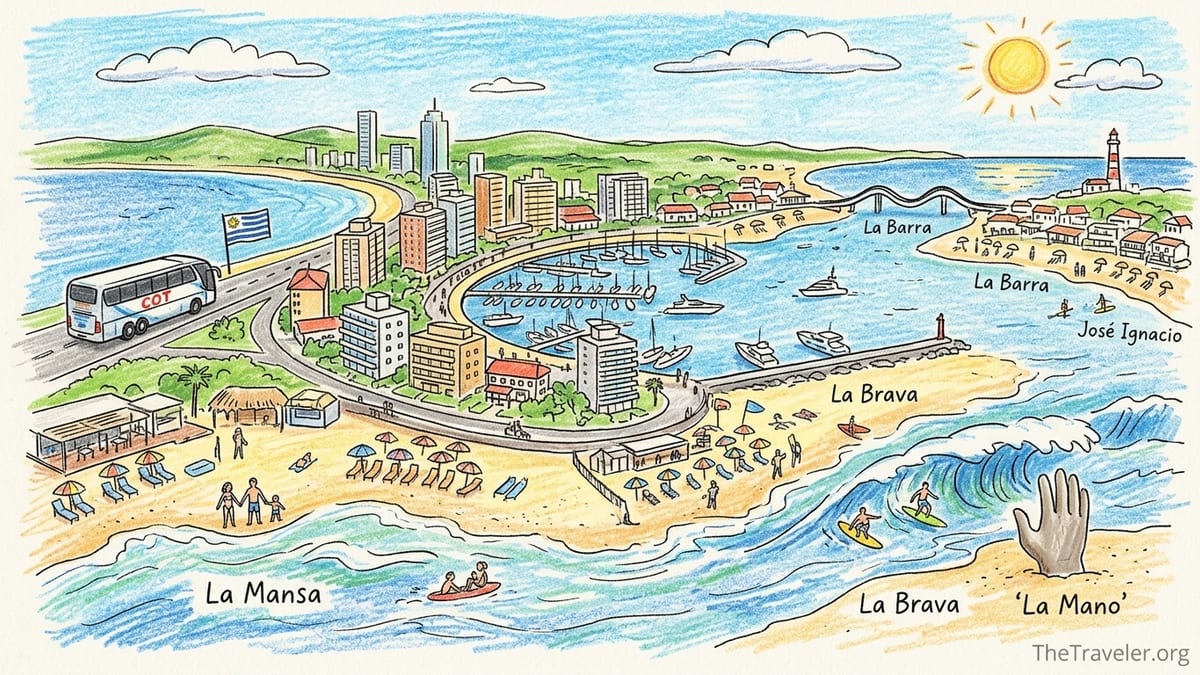
Punta del Este’s geography creates two very distinct coastlines that locals simply call La Mansa and La Brava. Playa Mansa runs west of the peninsula along the Río de la Plata estuary. Here the water is usually calmer, the waves smaller and the wind gentler, which makes it the preferred choice for families with young children and for relaxed afternoon swims. The long curve of sand from Parada 1 near the port through Parada 10 hosts a mix of apartment buildings, traditional hotels and a few beach clubs that rent loungers and umbrellas by the day.
On the ocean side Playa Brava faces the full Atlantic. This is where you find stronger waves, surfers at the right breaks and the city’s most photographed landmark, La Mano, the giant hand sculpture that appears to rise out of the sand near Parada 1. Lifeguards flag conditions carefully in summer, and powerful rip currents are not unusual on windy days, so swimming here calls for common sense. Toward the eastern end, near Parada 12 and beyond, sections of Brava become more tranquil and host some of the area’s stylish chiringuitos and sunset bars.
Further east, La Barra and Manantiales attract a younger crowd. The beaches here, such as Montoya and Bikini, are within the municipality of Maldonado but feel like their own village scene, with DJs in the afternoons in January, pop up fashion stands on the sand and a row of bars and restaurants a short walk away. Even farther, José Ignacio has evolved from sleepy fishing village to low rise luxury enclave, where the main beach in front of the lighthouse fills with visitors staying in design-focused inns or high end rentals, and reservations for lunch at beach restaurants around New Year are made weeks in advance.
Water and air temperatures also shape the experience. Local climate and tourism information shows January and February daytime highs around 26 degrees Celsius, with the ocean around 22 to 23 degrees, which most visitors find pleasantly cool but swimmable. By July, the sea drops to near 12 degrees and many beach services shut down. Travelers who want warm enough water for daily swimming and a full slate of beach bars should aim between late December and late February, while those who prefer quiet walks along almost empty sand might choose October, November, March or early April.
Summer Accommodation: What You Get for Your Money
The most important decision for your budget is where in Punta del Este you sleep. Recent surveys of hotels in January 2026 suggest that a basic double room with breakfast in the Playa Mansa area of the peninsula starts around 120 US dollars per night at a two or three star property a block or two back from the Rambla. On the busier Brava side and in the central peninsula, equivalent hotels are often closer to 150 dollars per night during the first half of January, rising further at New Year.
Moving east along the coast, prices climb again. In La Barra, where there are fewer large hotels and more small design inns, January double rooms frequently start around 200 dollars per night, while in José Ignacio, many boutique properties advertise entry level doubles around 350 to 400 dollars or more. Those rates are often quoted in US dollars even when you pay locally, and they tend to include breakfast but not resort style extras. International chains and luxury towers in Punta del Este itself, such as five star beachfront hotels with spas and casinos, can easily exceed 500 dollars per night in high season.
Apartment rentals add another layer. Data compiled from local Airbnb listings for the past year indicates that the average nightly rate in Punta del Este sits around 8,400 Uruguayan pesos, which at recent exchange rates is in the range of 200 US dollars. That average masks a big spread. A small studio or one bedroom in Maldonado town or several blocks from the beach might cost 60 to 80 dollars per night in January, while a three bedroom apartment with ocean view terrace in the peninsula or Playa Brava can reach several hundred dollars a night. Some owners prefer to rent by the fortnight, especially over New Year and peak January dates.
Travelers on tighter budgets have a few strategies. One is to stay in Maldonado city, the inland administrative center about 15 minutes by local bus from the peninsula, where basic hotel rooms in summer may start closer to 50 to 70 dollars per night and simple guesthouses a bit less. Another is to visit just before or after the absolute peak: prices during the first half of December and from late February into March are usually lower, sometimes by 20 to 30 percent, and availability is better while the sea and weather remain attractive. Booking platforms and hotel sites often display Uruguayan residents and foreign cardholder tax rules differently, so it is worth checking whether quoted rates include the country’s value added tax for your situation.
Getting There and Around: Buses, Taxis and Transfers
Most international visitors arrive through Montevideo’s Carrasco International Airport or from Buenos Aires via ferry to Montevideo and then continue by road. Regular intercity buses link Montevideo’s Tres Cruces terminal with Punta del Este in roughly two to two and a half hours, using the coastal Interbalnearia highway. Two main companies, COT and COPSA, operate dozens of departures per day in both directions during the summer months, with additional services stopping at intermediate seaside towns like Piriápolis and Atlántida.
As of October 2026, recent fare tables compiled by bus information sites and the companies themselves indicate that a one way adult ticket between Montevideo and Punta del Este on COT costs in the region of 460 to 470 Uruguayan pesos in regular class, which corresponds to roughly 11 to 12 US dollars depending on the exchange rate. COPSA’s equivalent line shows similar prices, updated in early 2026. Some departure times use slightly different routes, and almost all services require an additional small boarding fee at Tres Cruces or the Punta del Este bus terminal that is charged separately from the ticket price.
For those landing directly at Carrasco Airport, certain COT and COPSA buses that leave from Tres Cruces continue along the highway, stopping on request at the airport before heading east to Maldonado and Punta del Este. Travelers can buy a ticket at the airport kiosks when the bus has available seats, usually paying only a modest premium over the standard Montevideo fare. The journey from the airport to Punta del Este by bus takes close to two hours. Private transfers and ride hailing services are also available at the airport, but door to door transfers can easily cost ten times the bus fare for two people.
Once in Punta del Este, getting around without a car is manageable within the central areas. Local blue city buses and interurban lines connect the peninsula with Maldonado, La Barra and other nearby zones for modest fares that are usually under 100 pesos per ride. Taxis wait outside the bus terminal and at busy intersections; recent visitor reports note that app based services such as Uber or DiDi operate intermittently and may be scarce late at night, particularly in peak weeks when demand is high. For short stays centered on the peninsula and nearby beaches, many visitors simply walk along the Rambla or rent bicycles from local shops, using taxis or buses occasionally when heading to La Barra or José Ignacio for dinner.
Nightlife and Dining: From Simple Parrillas to Beach Clubs
Nightlife is a major part of Punta del Este’s appeal, especially in January when the city hosts international DJs, fashion events and private parties. The rhythm runs late. It is common for locals and vacationers to sit down to dinner around 10 p.m., move on to drinks at midnight and only enter a nightclub or beach party after 2 a.m. Central peninsula streets near the port fill with people strolling between bars and gelato shops, while younger crowds gravitate toward La Barra and Manantiales, where venues spill out onto terraces facing the ocean.
On the more exclusive end, beach clubs in José Ignacio and Manantiales serve long lunches that blur into sunset sessions with live music or DJs. Well known establishments here often require advance reservations in high season, especially on weekends and around New Year’s Eve. Typical checks for a seafood lunch with wine at one of these spots can easily reach 60 to 80 dollars per person or more, depending on the wine list and whether you rent sunbeds. In La Barra and the peninsula, cocktail bars and mid range restaurants will feel more affordable alongside a growing number of casual cevicherías, burger bars and pizzerias.
Food prices vary, but recent menus provide some orientation. A simple chivito sandwich or a plate of milanesa with fries at a modest parrilla in or near the peninsula might cost the equivalent of 10 to 15 dollars, while a main course at a more upscale restaurant, such as locally caught fish or grilled octopus, could range from 20 to 35 dollars. Expect to pay around 4 to 6 dollars for a draft beer at a bar and more for cocktails, particularly at waterfront venues. Cover charges for nightclubs fluctuate by date and headliner, but visitors should plan for something in the range of 15 to 30 dollars, sometimes including a first drink.
During the quieter months outside peak summer, nightlife contracts but does not disappear. Many restaurants and bars in the peninsula stay open year round, attracting a mix of locals from Maldonado and off season visitors. Opening hours are earlier and reservations are generally easier. In shoulder season you can still find weekend live music in smaller clubs and hotels, and food trucks set up at occasional events. Budget minded travelers who care less about big name DJs and more about local culture often choose these months to enjoy the same parrillas and cafés at more moderate overall trip costs.
Daily Costs: Building a Realistic Punta del Este Budget
Putting all of this together, a mid range summer budget for Punta del Este can be roughly sketched. For a couple staying in a central three star hotel on the peninsula in January, expect accommodation to account for the largest share, at perhaps 140 to 180 dollars per night. Add around 50 to 70 dollars per person per day for meals if you mix casual lunches, supermarket snacks and one sit down dinner, plus another 10 to 20 dollars on average for local transport and small extras like sunbed rentals or museum entry.
That type of trip, focused on enjoying the main beaches, walking the Rambla, visiting the famous hand sculpture and perhaps taking a day excursion to nearby Piriápolis or the Casapueblo museum complex, might come to 250 to 300 dollars per day for two people, excluding international travel. Adding frequent visits to high end beach clubs, designer shopping in La Barra, and late nights at clubs will increase that figure quickly. Conversely, a traveler staying in Maldonado, cooking part of the time in an apartment kitchen, and visiting more in shoulder season could reduce daily outlays substantially.
Transport costs beyond the bus ticket from Montevideo remain relatively manageable by international standards. Two round trip intercity bus tickets Montevideo to Punta del Este in high season will likely total under 50 dollars equivalent. Occasional taxi rides within the city may add up, especially at night, but walking and buses cover many needs. Tours to wineries inland from Maldonado or to more remote parts of the Rocha coast east of José Ignacio are available from local agencies; private full day tours with driver and guide commonly start at a couple of hundred dollars for a small group, while public excursions when available are less.
Travelers should also consider currency and payment habits. Uruguay is highly card friendly, with most hotels, restaurants and even many beach kiosks accepting international credit and debit cards. ATMs are widely available in Punta del Este and Maldonado, though fees and withdrawal limits vary by bank. Keeping a small stock of cash in Uruguayan pesos is useful for bus fares, smaller cafés and tips. During the main summer months, ATMs in the busiest parts of town can occasionally run short of cash on Saturday nights and Sunday mornings, so planning ahead avoids frustration.
When to Go and How to Make the Most of It
Your choice of dates shapes almost every aspect of a Punta del Este trip, from budget to atmosphere. New Year’s week and the first half of January bring the liveliest scene and the highest prices, attracting celebrities, high profile events and packed beaches. If you are set on this period, booking flights and accommodation at least several months ahead is advisable. Even then, expect premium prices for central hotels, tight restaurant reservations and heavy traffic between the peninsula and La Barra in the late afternoons and evenings.
The second half of January and early February remain busy but slightly less intense, with continued warm weather and active nightlife. From late February into March, water temperatures are still pleasant and many services operate normal hours, yet crowd levels thin and accommodation prices often start to drop. Travelers who value ocean swims and a social atmosphere but prefer to avoid peak prices often find this shoulder period ideal. October and November, before the summer rush, can also be rewarding for those interested in walks, cycling and food rather than all day beach clubs.
Regardless of timing, a few habits help you get more from the trip. Reserving key dinners, especially at noted parrillas and beachfront restaurants, a few days in advance by phone or messaging app avoids long waits. Checking bus timetables a day before excursions ensures you are not relying on the last evening service back from La Barra or José Ignacio. Finally, giving yourself at least one non beach day to explore Maldonado’s historic center, visit a local market or drive inland with a guide introduces a different side of the region beyond its famous strip of sand.
Punta del Este thrives on contrast. It is at once a family beach town, a playground for South America’s jet set and, outside high season, a quiet coastal city with long promenades and resident year round communities. Understanding the rhythms of its beaches, the realities of costs and the logistics of moving around allows you to match that complexity to your own travel style, whether you arrive for three intense summer nights or a slower week of Atlantic sun and Uruguayan hospitality.