

More news on this day
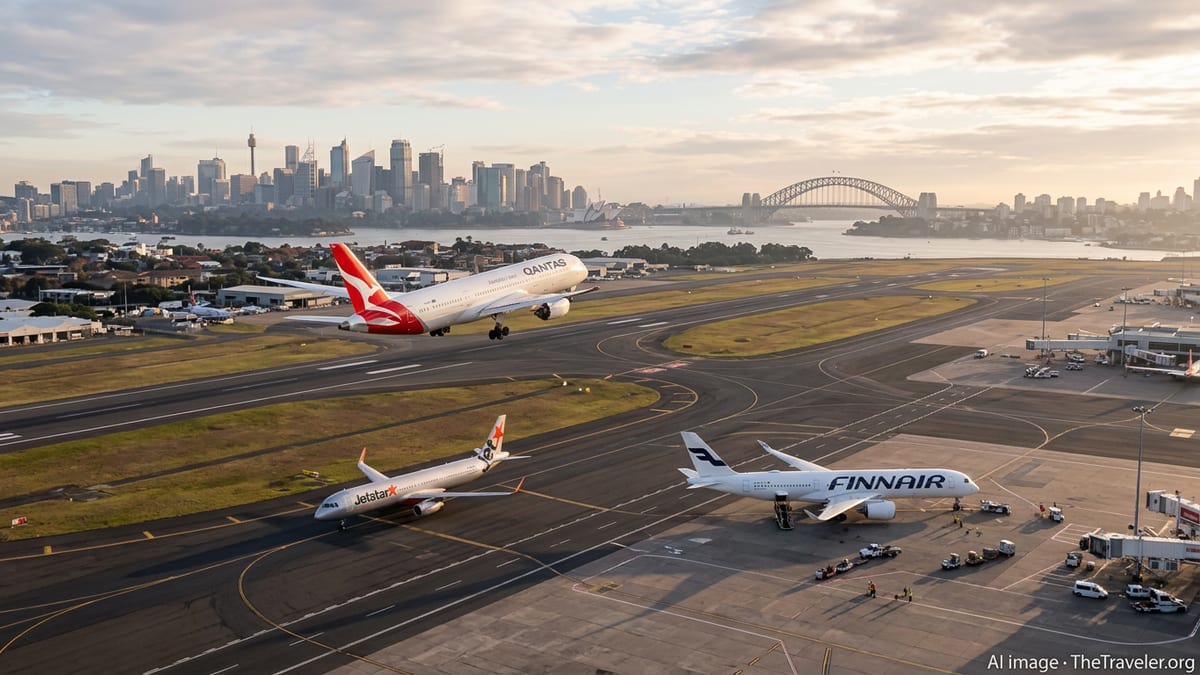
Australia’s long-haul network is set for a shake-up in 2026 as Qantas, Finnair and Jetstar unveil new and seasonal routes that stretch from Las Vegas and Los Angeles to Colombo, the Maldives and across the Pacific, opening fresh options for leisure and business travellers planning next year’s trips.
Qantas Confirms First Nonstop Sydney to Las Vegas Flights
Qantas is preparing to put Las Vegas firmly on the map for Australian travellers, with the carrier confirming it will operate the first nonstop scheduled flights between Sydney and Las Vegas from late December 2026. The limited-season service, filed to run from 29 December 2026 through 12 March 2027, will give Australians a direct gateway to one of the United States’ most visited entertainment hubs, timed to capture the peak northern winter holiday period and major events on the Las Vegas calendar.
The new flights are expected to be operated by Qantas widebody aircraft, with schedules indicating an evening departure from Las Vegas and an early-morning arrival in Sydney. The block time of just over 15 hours will put the service in line with Qantas’ other ultra-long trans-Pacific routes, but with the added appeal of bypassing traditional West Coast gateways such as Los Angeles and San Francisco.
Industry analysts say the Sydney to Las Vegas route underscores Qantas’ strategy of using its long-range fleet to connect Australians directly to high-demand leisure destinations, rather than relying solely on partner hubs. The move also plays into a wider pattern of carriers targeting “second-tier” US cities with nonstop services, giving travellers more point-to-point options and reducing the risk of missed connections across busy domestic networks.
For Las Vegas, the arrival of nonstop services from Australia is expected to deliver a tourism boost, particularly among high-yield visitors who combine casino stays with side trips to national parks and the US West Coast. Tourism officials have been pushing for a direct Australian link for years, arguing that a one-flight option could significantly lift both visitor numbers and length of stay.
Jetstar Targets South Asia With First Direct Flights to Sri Lanka
Low-cost carrier Jetstar is set to make its debut in South Asia in August 2026, when it launches three weekly nonstop flights between Melbourne and Colombo. The move will create Australia’s only low-cost nonstop service to Sri Lanka, opening up more than 100,000 additional seats a year on the route and sharply reducing travel times for budget-conscious passengers who currently rely on one or two-stop itineraries via Southeast Asia or the Middle East.
Jetstar plans to deploy its new longer-range narrowbody fleet on the Melbourne to Colombo sector, aligning with the broader Qantas Group strategy of using efficient single-aisle aircraft to drive growth on medium-haul leisure routes. The airline has made clear that South Asia is a core part of its next phase of international expansion, with Colombo positioned both as a fast-growing holiday destination and a key market for visiting friends and relatives traffic.
The new route will also dovetail with existing Qantas and partner operations, allowing travellers from other Australian cities to connect through Melbourne onto Jetstar’s Colombo flights. Travel agents expect strong interest from Australians looking to combine Sri Lanka’s beaches and tea country with wider regional itineraries, particularly as local tourism operators continue to promote the country’s post-pandemic recovery.
Jetstar’s expansion into Sri Lanka comes at a time of broader reshaping within the Qantas Group’s low-cost portfolio, following the decision to close Singapore-based Jetstar Asia while retaining and growing Jetstar Airways’ international network from Australia. The redeployment of aircraft closer to the home market is freeing up capacity for new routes such as Melbourne to Colombo and additional leisure links into Southeast Asia and the Pacific.
Finnair Builds New Kangaroo Links via Asia
While Australian carriers focus on point-to-point growth, European operator Finnair is steadily positioning itself as an alternative “Kangaroo Route” option between Australia and Northern Europe through its Asian gateways. The airline has been refining its traffic plans for the northern winter 2026 to 2027 season and beyond, including adjustments to long-haul schedules that improve onward connectivity to Helsinki for travellers starting their journey in Australia.
Finnair has signalled its intent to deepen partnerships and redeploy capacity on profitable Asia routes, a move that industry observers say will support one-stop itineraries from Australia to the Nordics and wider Europe via key Asian hubs. For Australian travellers, this means competitive fares and fresh routing choices at a time when demand for Europe trips remains robust but capacity is still rebuilding unevenly across carriers.
The airline’s gradual strengthening of its Nordic network is designed to draw more long-haul passengers into its Helsinki hub, leveraging fast connections and a compact airport layout. Although Finnair does not fly directly to Australia, its evolving schedule aligns closely with Qantas, Jetstar and other Asian partners, enabling coordinated itineraries that link Australian cities with destinations such as Lapland, the Baltics and northern Germany in a single booking.
Travel analysts note that Finnair’s strategy complements, rather than competes with, Qantas and Jetstar’s 2026 growth. As Australian airlines push deeper into North America, South Asia and the Pacific, European partners are focusing on making the “last leg” to northern capitals smoother, offering travellers an expanded web of one-stop options without adding more aircraft into already crowded Asia-Pacific skies.
More Capacity and New Aircraft Set to Reshape 2026 Travel
The flurry of new and seasonal routes for 2026 is underpinned by a significant fleet renewal drive across the Qantas Group. Qantas is progressively introducing Airbus A220 aircraft on shorter international sectors such as Brisbane to Wellington, with the type already scheduled to debut on that route from February 2026. The aircraft offers lower fuel burn, quieter cabins and a modern interior, features that are expected to become standard across much of the group’s short and medium-haul network in the coming years.
At the same time, Qantas is preparing for the arrival of next-generation long-haul jets, including the Airbus A350-1000 configured for its Project Sunrise ultra-long-range services. Although those aircraft are due later in the decade, the group has already begun adjusting its network and fleet plan, freeing up existing widebodies for seasonal services such as Sydney to Las Vegas and bolstering core trunk routes to North America and Asia.
Jetstar is also in the midst of a fleet transformation, taking delivery of new Airbus A321neo LR aircraft that are capable of flying further and more efficiently than the carrier’s older A320 fleet. These jets are gradually being deployed on routes where extra range and seat capacity open up new commercial opportunities, including planned services into South Asia and additional seasonal flights to leisure hotspots like Bali and the South Pacific.
For passengers, the combined effect of these changes in 2026 will be more choice, newer cabins and additional nonstop options from Australia to both established and emerging destinations. Travel agents are already reporting strong interest for next year’s northern winter and southern summer seasons, with many advising clients to secure peak-period seats early as airlines fine-tune schedules and promotional fares ahead of the busy year of expansion.
Australia’s Long-Haul Map Extends From the Pacific to the Indian Ocean
The 2026 route announcements highlight how rapidly Australia’s long-haul map is evolving, stretching in multiple directions at once. On one side, Qantas’ seasonal Sydney to Las Vegas flights will join existing trans-Pacific services to Los Angeles, San Francisco, Dallas and Vancouver, offering another direct option for Australians heading to the United States. On the other, Jetstar’s move into Colombo and increased use of longer-range narrowbodies signal a renewed focus on South Asia and the Indian Ocean as growth markets for leisure and family travel.
Alongside these developments, partner carriers such as Finnair are reinforcing the Asia-Europe corridor that remains critical for Australians bound for the continent. With more coordinated scheduling and expanded codeshare options, travellers can increasingly mix and match airlines and hubs, building itineraries that suit their budget, preferred stopovers and final destinations without sacrificing convenience.
Industry observers say the coming year will be a key test of how much long-haul demand Australia can sustain in the face of higher fares and cost-of-living pressures. The early signs, however, suggest that appetite for big international trips remains strong, particularly when airlines introduce genuinely new city pairs such as Sydney to Las Vegas or Melbourne to Colombo, rather than simply adding more capacity on existing routes.
For travellers planning 2026 and early 2027, the message is clear: the map is changing, and with it the range of possible journeys. From the neon of the Las Vegas Strip to the beaches of Sri Lanka and the snowy streets of Helsinki, Qantas, Jetstar and Finnair are collectively redrawing the lines that connect Australia to the rest of the world.