

More news on this day
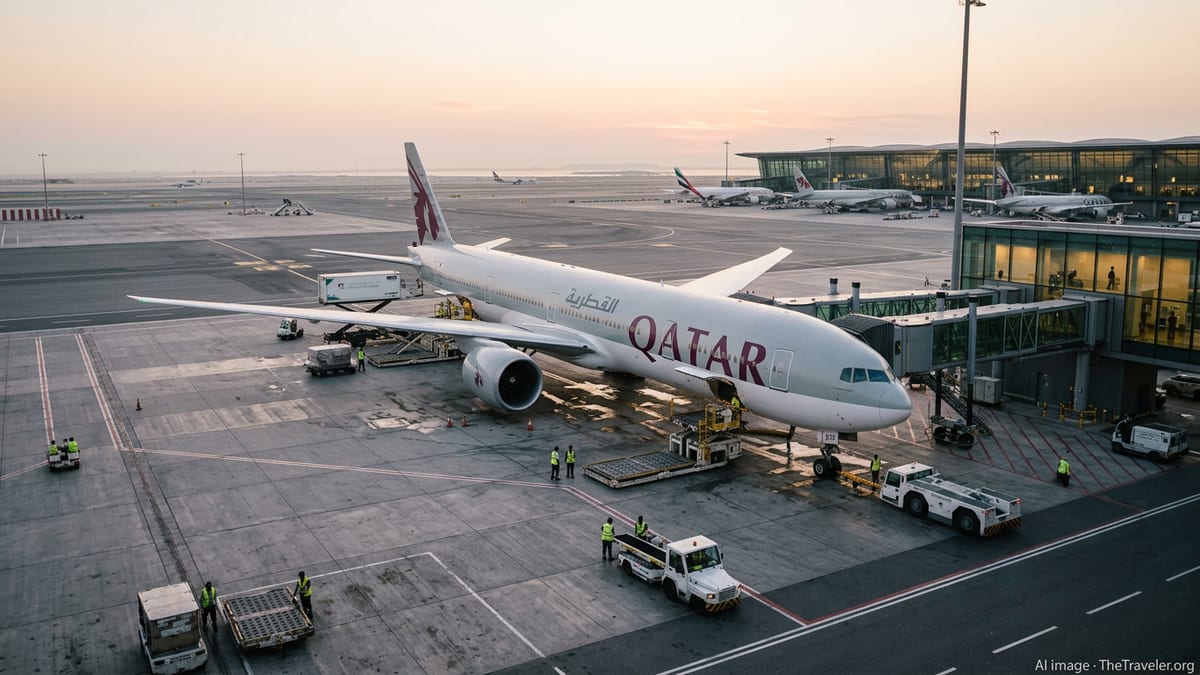
Qatar Airways has confirmed it will operate 29 limited flights to and from Doha on Thursday, March 12, under temporary authorisation from Qatar’s aviation regulator, offering a crucial though partial lifeline to travelers caught up in the ongoing regional airspace disruption.
Get the latest news straight to your inbox!
Temporary Corridors Open a Narrow Window for Global Travel
The reduced schedule, cleared by the Qatar Civil Aviation Authority, allows the carrier to use restricted operating corridors despite the continued closure of Qatari airspace to regular commercial services. The flights are being framed as special operations intended to repatriate passengers and reconnect disrupted journeys rather than a signal that normal schedules are resuming.
According to updated schedules released by the airline and regional media, the 29 flights on March 12 include 15 departures from Doha and 14 arrivals into Hamad International Airport. Services will only operate where airspace permissions, safety assessments and operational constraints align, meaning that even ticketed customers should not assume their itineraries are unaffected.
Qatar Airways has stressed that the temporary corridors remain subject to change, depending on the evolving security situation and regional airspace restrictions linked to the broader Middle East crisis. Operations, the carrier says, will return to full scale only when the civil aviation authority confirms that Qatari airspace can safely reopen for routine traffic.
The airline has urged passengers not to travel to the airport unless they hold a valid, confirmed booking on one of the specified flights operating on March 12. Airport access and check-in resources are being prioritised for travelers whose journeys have already been heavily disrupted.
Key Long-Haul Routes Back in the Air
Despite the constrained environment, the special schedule covers an extensive mix of long-haul and regional destinations across multiple continents. Departures from Doha on March 12 are set to include major global hubs such as London, New York, Frankfurt, Madrid and Beijing, alongside important markets in South Asia, Africa and Latin America.
Flights from Doha are planned to serve cities including Cairo, Casablanca, Johannesburg, Sao Paulo, New York, Frankfurt, Madrid, London, Beijing, Mumbai, New Delhi, Islamabad, Colombo, Jakarta and Manila. This spread reflects an emphasis on routes where large numbers of transit and expatriate passengers have been stranded, as well as key intercontinental trunk links.
On the inbound side, arrivals into Doha on March 12 are scheduled from destinations such as Cairo, Dallas Fort Worth, London Heathrow, Paris, Madrid, Rome, New Delhi, Jeddah, Muscat, Hong Kong, Seoul, Bangkok, Kuala Lumpur and Melbourne. Collectively, the pattern underlines Hamad International Airport’s continued role as a global hub, even under heavily restricted conditions.
Industry analysts say the mix of cities indicates an attempt to balance repatriation needs with the operational reality of which airspace corridors remain open at any given time. The selection also reflects where Qatar Airways can best consolidate demand and reposition aircraft and crew for subsequent relief flights.
Passengers Urged to Reconfirm and Use Flexible Policies
With capacity still a fraction of pre-disruption levels, Qatar Airways is urging customers to rely on official channels to verify whether their specific flights are operating. The airline has reminded travelers that these 29 services do not represent a full resumption of commercial operations, and that significant numbers of previously scheduled flights remain suspended or canceled.
Passengers with tickets issued before the current crisis and who were due to travel in the affected window have been offered enhanced flexibility, including complimentary date changes within a limited period or refunds for unused portions of tickets. The conditions differ by origin and booking channel, but the broad aim is to give travelers more options while the network remains in flux.
Travel agents across key markets report high call volumes from passengers seeking clarification on whether they qualify for rebooking, routing changes via alternative carriers, or full refunds. Consumer advocates are advising passengers to document all communications with the airline and agents, particularly where journeys originate in jurisdictions that provide additional statutory protections for delays and cancellations.
Given the fast-moving situation, aviation consultants suggest travelers regularly monitor flight status tools and alerts on the day of travel. They caution that even flights listed as operating may see last-minute timing adjustments as air traffic control requirements evolve.
Regional Disruption Reshapes Middle East Aviation
The limited March 12 schedule comes against a backdrop of broader turbulence across Middle Eastern and West Asian skies, as heightened tensions and risk assessments prompt reroutings, cancellations and capacity cuts by multiple airlines. Qatar Airways, whose hub model depends on smooth transit flows through Doha, has been particularly exposed to the closure of its home airspace for routine operations.
Other international carriers serving the region have also trimmed services or introduced extensive diversions to skirt sensitive areas, increasing flight times and operational costs. For Qatar Airways, the current workaround of temporary corridors and carefully curated flights is viewed as a bridge measure, designed to prevent passengers from being stranded indefinitely while a longer-term solution is negotiated.
Airport and tourism authorities in Qatar are working to manage the knock-on effects, including accommodation and welfare for transit passengers stuck in Doha between disrupted connections. Hospitality providers report elevated demand from travelers awaiting new flight allocations or trying to secure space on the limited relief services now being mounted.
Analysts say that, even once airspace restrictions ease, it may take weeks for regional schedules to stabilise, as airlines reposition aircraft, address maintenance backlogs and clear the accumulation of rebooked passengers. For now, the 29 Qatar Airways flights on March 12 are being watched closely as a test of how effectively carriers can operate within the tight confines of temporary safety corridors.
What the March 12 Flights Mean for Global Travelers
For individual travelers, the resumption of a small number of Qatar Airways flights on March 12 offers both hope and uncertainty. Those able to secure seats on confirmed services may finally be able to return home or continue long-planned journeys after days of cancellations and delays, while others may still face extended waits.
Travel experts recommend that passengers with flexible itineraries consider a range of options, including accepting rebookings on alternative airlines or adjusting travel dates altogether, especially where time-sensitive commitments are involved. However, high demand and limited capacity across the region mean that last-minute alternatives can be expensive or unavailable on certain routes.
For travelers still booked to fly with Qatar Airways in the coming days, the March 12 operations serve as an important signal that the airline is gradually reactivating parts of its network where conditions allow. At the same time, officials and industry observers continue to stress that safety considerations will override commercial priorities, and that any further deterioration in the security environment could prompt fresh cancellations.
As the March 12 departures and arrivals unfold, global passengers, travel agents and regulators will be closely monitoring on-time performance, load factors and customer handling to gauge how effectively the carrier and the broader aviation system are adapting to one of the most complex operational challenges the region has faced in recent years.