

More news on this day
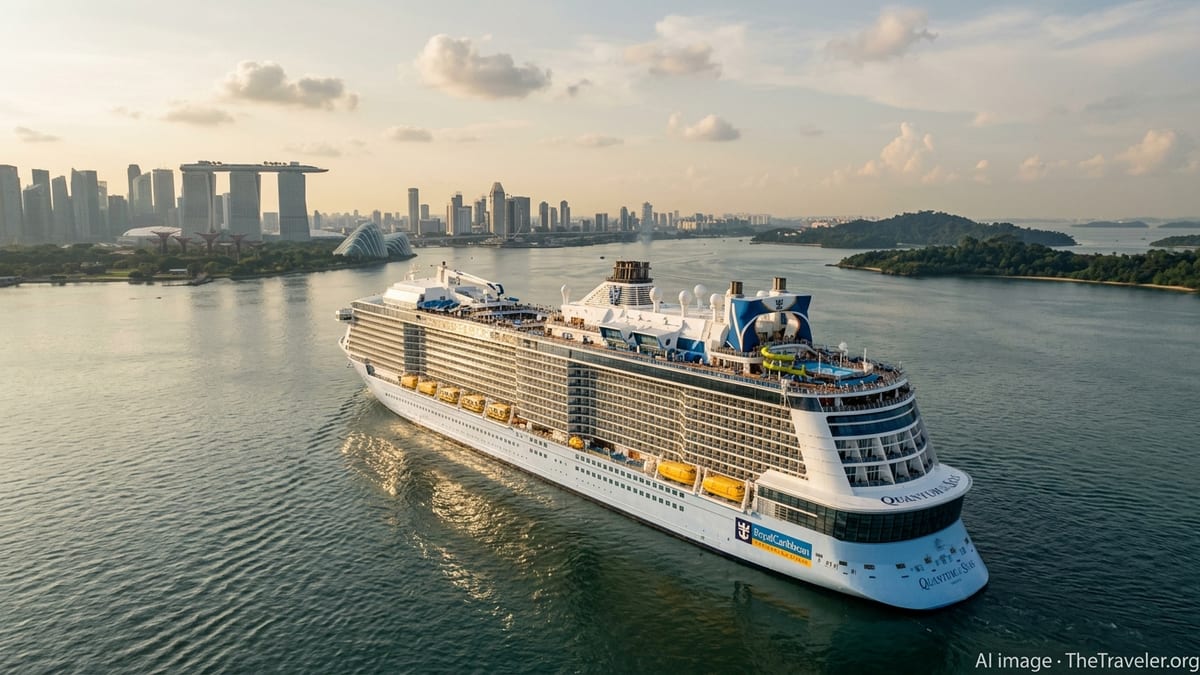
Royal Caribbean’s Quantum of the Seas is expected to return to Singapore for the 2027-28 winter season, a deployment that is poised to reinforce the city-state’s role as a major Southeast Asian cruise hub and broaden the region’s appeal to long-haul and regional travelers.
Get the latest news straight to your inbox!
Strategic Return to a Proven Homeport
Quantum of the Seas has a long association with Singapore, having previously operated seasonal programs from Marina Bay, including sailings that helped restart cruising in Asia after the pandemic. Publicly available deployment patterns for the ship show a recurring focus on Asia and Australia, with seasonal homeporting in Singapore before and after stints in markets such as Alaska and Brisbane. The expectation that the vessel will again be based in Singapore for the 2027-28 winter period aligns with these established rotation trends.
The anticipated deployment positions Singapore to capitalize on its established air connectivity, efficient cruise infrastructure and reputation as an easy fly-cruise gateway. Industry coverage consistently highlights the city-state as a primary embarkation point for itineraries that loop through the Gulf of Thailand, the Malacca Strait and the Andaman Sea. A high-capacity ship such as Quantum of the Seas returning in peak season would help consolidate that status and support passenger throughput at the Marina Bay Cruise Centre.
For Royal Caribbean, bringing a Quantum-class vessel back to Singapore during the 2027-28 winter window would complement its broader global deployment strategy. The company has been gradually rebuilding its Asia footprint with a combination of existing ships and new tonnage, and a renewed winter presence by Quantum of the Seas would extend that trajectory into the latter part of the decade.
Expanded Southeast Asia Itineraries and Key Ports
Based on prior Southeast Asia seasons, the 2027-28 program for Quantum of the Seas is expected to include a mix of short getaways and longer sailings to multiple regional destinations. Past itineraries from Singapore on Royal Caribbean ships have typically featured Malaysia’s Port Klang for Kuala Lumpur and Penang, Thailand’s Phuket, and selected Indonesian ports, alongside sea days that showcase the ship’s onboard facilities. Industry observers expect a similar pattern, potentially with fresh port combinations and occasional longer voyages.
Short three- and four-night cruises have historically targeted regional travelers and first-time cruisers, offering compact sailings that fit around work and school schedules. Longer five- to seven-night sailings from Singapore have tended to appeal to international fly-cruise guests who want to combine the ship experience with pre- and post-cruise stays. The 2027-28 winter deployment of Quantum of the Seas is anticipated to lean on this dual-appeal model, giving Southeast Asia’s destination portfolio a broader stage.
The deployment also opens opportunities for secondary ports in the region. Cruise development agencies in Malaysia, Thailand and Indonesia have been investing in upgraded berths and terminal facilities to handle larger vessels, and a Quantum-class ship returning regularly could encourage further improvements. Observers note that when large ships commit to repeated calls, local authorities and private stakeholders are more likely to expand shore excursion offerings and tourism services.
Economic Boost for Singapore and Regional Destinations
The return of a large international ship for a full winter season typically delivers measurable economic benefits for the homeport and surrounding destinations. Cruise industry analyses frequently point to spending by passengers and crew on hotels, dining, retail, attraction tickets and transportation, as well as provisioning and bunkering activities that feed into local supply chains. A vessel the size of Quantum of the Seas, sailing multiple voyages across the 2027-28 winter, would be expected to generate substantial direct and indirect economic activity.
Singapore stands to gain from pre- and post-cruise stays that encourage visitors to extend their time in the city. Airlines and travel agents in key source markets often package cruises with city breaks, creating bundled offerings that support higher visitor yields. Regional ports of call, from Malaysian cities to Thai resort destinations, benefit from day-spend on tours, food, shopping and local transport, which can be particularly significant in smaller communities that host recurring calls.
Industry reports further indicate that repeat seasonal deployments encourage private investment in waterfront areas, as local businesses gain confidence that ship calls will continue through multiple years. With Quantum of the Seas expected to anchor a 2027-28 program, tourism operators across Southeast Asia are likely to examine new products, from heritage and food tours to soft-adventure experiences, tailored to the demographics that Royal Caribbean typically attracts.
Competitive Landscape in a Growing Cruise Region
The expected return of Quantum of the Seas to Singapore for winter 2027-28 comes as several global cruise brands expand their presence in Asia. Order books for major lines show a pipeline of new large ships scheduled through the late 2020s, and deployment patterns suggest that Asia, including Southeast Asia, will receive a portion of this capacity. As a result, competition among homeports and destinations is intensifying, with cities positioning themselves as preferred bases for large vessels.
Singapore has consistently marketed itself as a reliable, well-connected and efficient homeport, and securing a marquee ship like Quantum of the Seas for a full winter season would be an important signal to the market. Other regional hubs such as Hong Kong and ports in Japan and China are similarly working to attract tonnage, while destinations including Vietnam and Indonesia pursue more calls. The 2027-28 deployment underlines Singapore’s strategy of anchoring its cruise offering with high-profile hardware and regular sailings.
For travelers, increased competition typically translates into a wider range of itineraries, ship styles and price points. With multiple lines eyeing Southeast Asia for growth, Quantum of the Seas returning to Singapore during the 2027-28 winter period adds another high-capacity option for guests comparing holidays in the region, from short regional breaks to longer multi-country journeys.
Implications for Long-Haul and Regional Source Markets
The anticipated 2027-28 winter deployment is also significant for key source markets, particularly long-haul travelers from Europe, North America and Australia, and regional guests from markets such as India, China and Southeast Asia itself. Published booking trends for earlier seasons indicate that Singapore-based itineraries attract a diversified passenger mix, with a growing share of guests treating the city as both a gateway and a destination.
For long-haul travelers, a Quantum of the Seas program in 2027-28 provides another reason to consider Southeast Asia as an alternative to traditional Caribbean or Mediterranean cruises during the northern winter. The ability to combine a cruise with land stays in Singapore or nearby countries is seen by travel planners as a strong differentiator, especially for repeat cruisers seeking new regions. For regional travelers, the presence of a large ship operating shorter itineraries offers an accessible entry point to cruising without the need for long-haul flights.
As deployment details are gradually published in the years leading up to 2027, travel agents and tour operators are expected to build inclusive packages around Quantum of the Seas sailings, incorporating flights, hotels and curated shore programs. The broader effect is likely to be a continued rise in cruise awareness across Southeast Asia, with Singapore strengthening its role as the central node in a growing regional cruise network.