


More news on this day
Queensland’s railways are entering a decisive phase of modernisation as authorities commit to large-scale deployment of advanced digital signalling, positioning the state’s network for higher-capacity, safer operations in the lead-up to the Brisbane 2032 Olympic and Paralympic Games.
Get the latest news straight to your inbox!
From lineside signals to continuous digital control
Publicly available project documentation for the Cross River Rail program shows that Queensland is replacing traditional trackside signals on key urban corridors with the European Train Control System, or ETCS, a radio-based digital signalling platform widely used in Europe and increasingly adopted worldwide. The new technology continuously exchanges data between trains, trackside equipment and a central control system, enabling far more precise management of train movements than conventional colour-light signals.
Fact sheets released for the Cross River Rail project indicate that ETCS has already been installed and is undergoing testing on Brisbane’s Shorncliffe line, serving as an early deployment zone for the technology. The same system is being integrated into the new 10.2 kilometre Cross River Rail link, including its 5.9 kilometre twin tunnels beneath the Brisbane River and central business district, where the higher level of control is considered essential to deliver frequent, turn-up-and-go services.
Information contained in Queensland’s medium-term rail infrastructure plans indicates that the ETCS rollout will extend beyond the core tunnel section, progressively reaching other parts of the South East Queensland network over the next decade. The transition marks a generational change in how trains are supervised and separated, with capacity and safety gains expected as more corridors are brought under the digital umbrella.
According to publicly accessible planning material, this investment is framed as a foundational step toward a higher-capacity metropolitan railway, comparable with other major cities that have already migrated to advanced in-cab signalling and centralised traffic management.
The Wave program pushes digital signalling onto the mainline
Queensland’s signalling transformation is not confined to inner-Brisbane tunnels. In early June 2026, rail industry coverage reported that Alstom had secured the first tranche of a wider European Train Control System contract for Stage 1 of Queensland’s “The Wave” program, a major capacity upgrade focused on the Sunshine Coast corridor north of Brisbane. The initial work package, valued in the tens of millions of euros, is described as the first part of a broader framework designed to digitise signalling on one of the region’s busiest interurban lines.
Reports outlining the project indicate that The Wave’s first stage will deliver new dual-track infrastructure between Beerwah and Caloundra alongside the advanced ETCS Level 2 signalling system. The combination of extra tracks and continuous digital control is intended to increase capacity for both commuter and longer-distance services, while improving reliability on a corridor that serves growing coastal communities and tourist destinations.
Ministerial statements and industry briefings describe the ETCS contract for The Wave as a cornerstone of Queensland’s wider strategy to migrate from legacy signalling to a digital architecture across South East Queensland. By appointing a dedicated ETCS integrator working in partnership with Queensland Rail and civil construction firms, the state aims to standardise technology and expertise across its expanding suburban and interurban network.
Project descriptions also emphasise that this mainline deployment is designed to be interoperable with urban ETCS installations associated with Cross River Rail, so that trains can operate seamlessly from inner-city tunnels to outer suburban and coastal routes under the same signalling regime.
Cross River Rail anchors a region-wide digital network
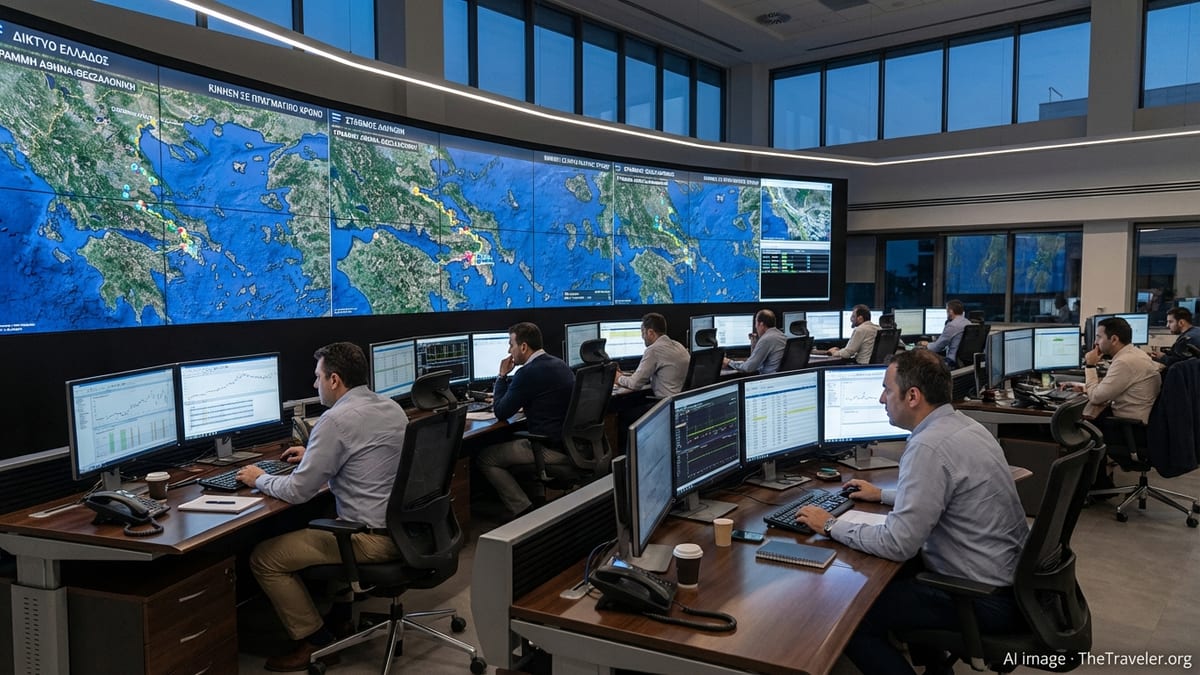
Cross River Rail remains the anchor for Queensland’s signalling shift. Technical papers and advisory case studies on the project outline a three-part delivery structure covering tunnelling and stations, wider rail systems, and the separate ETCS contract that underpins new train-control functions. Consultants engaged on the scheme describe an integrated approach that links ETCS, digital radio communications and centralised traffic management into a single operational framework.
Recent project updates show that testing of ETCS and training of Queensland Rail personnel are ongoing, including live trials on existing surface lines to validate performance before full integration with the new tunnel infrastructure. These activities, often undertaken during planned track closures and reduced timetables, are presented as necessary steps to commission the system safely and progressively.
Planning documents from the Queensland Transport and Roads Investment Program indicate that funding has been allocated not only for the core Cross River Rail corridor and its immediate approaches, but also for further ETCS deployment south toward Moorooka and along the corridor to the Gold Coast. This staged expansion reflects a strategy to build a contiguous digital spine through the region’s busiest passenger rail arteries.
Infrastructure advisory material frames Cross River Rail’s signalling as “world-class,” aligning Brisbane’s core network with leading international practice and establishing technical standards that subsequent projects, such as Logan and Gold Coast Faster Rail and additional ETCS rollouts, can follow.
Digital connectivity and passenger experience for a growing region
The shift to digital signalling is closely linked with broader efforts to modernise South East Queensland’s rail corridors ahead of significant population growth and the Brisbane 2032 Games. State development material on the South East Queensland City Deal highlights a dedicated SEQ Rail Corridor Digital Connectivity initiative, aiming to improve both operational systems and passenger-facing connectivity along key corridors.
As advanced signalling requires robust data links between trains, trackside devices and control centres, digital connectivity projects are expected to support more reliable communications-based train control while also enabling improved onboard information and, potentially, better digital services for passengers. Investment decision milestones published for 2026 suggest that specific projects and delivery pathways are now being identified.
For travellers, the practical outcomes of the signalling upgrade are expected to include more frequent services through central Brisbane, smoother operation during peak periods and greater resilience to disruptions. With ETCS providing accurate, real-time information on train positions and speeds, operators can run trains closer together while maintaining safety margins, potentially translating into shorter waiting times and more capacity on crowded lines.
For the tourism sector, more reliable rail links to coastal destinations such as the Sunshine Coast and Gold Coast are regarded as important enablers, supporting day trips and multi-day itineraries that depend on dependable timetables. As projects like The Wave and Gold Coast corridor upgrades progress, visitors could see faster, more predictable journeys to beaches, events and regional attractions.
Challenges, timelines and what comes next
While digital signalling promises substantial long-term benefits, publicly available information and community discussion indicate that the transition period brings challenges. Testing, commissioning and infrastructure works associated with Cross River Rail, The Wave and related projects are contributing to rolling track closures, altered stopping patterns and temporary reductions in timetable frequency across parts of the network.
Industrial negotiations and staffing issues have, at times, intersected with this program of works, leading to further timetable changes and cancellations on some passenger and Traveltrain services. Public statements from Queensland Rail and commentary from passenger groups reflect a network under short-term pressure as it juggles daily operations with the demands of large construction and technology programs.
Despite these headwinds, official planning documents and recent contract announcements depict a clear trajectory toward a digitally managed, higher-capacity rail system over the next decade. Investment pipelines list further ETCS rollouts across South East Queensland as priority projects, signalling that the current contracts are viewed as early stages of a much broader transformation.
As key milestones approach, including the opening of Cross River Rail and the staged completion of The Wave, travellers in Queensland are likely to experience an evolving rail landscape where temporary disruption accompanies the arrival of in-cab signalling, real-time traffic management and a network increasingly shaped by digital control.