

More news on this day
Renewed escalation linking Yemen’s Houthi movement, Iran and Israel is tightening a ring of risk around the Red Sea and wider Middle East, disrupting shipping lanes, forcing flight diversions and casting fresh doubt over the region’s tourism recovery in 2026.
Get the latest news straight to your inbox!
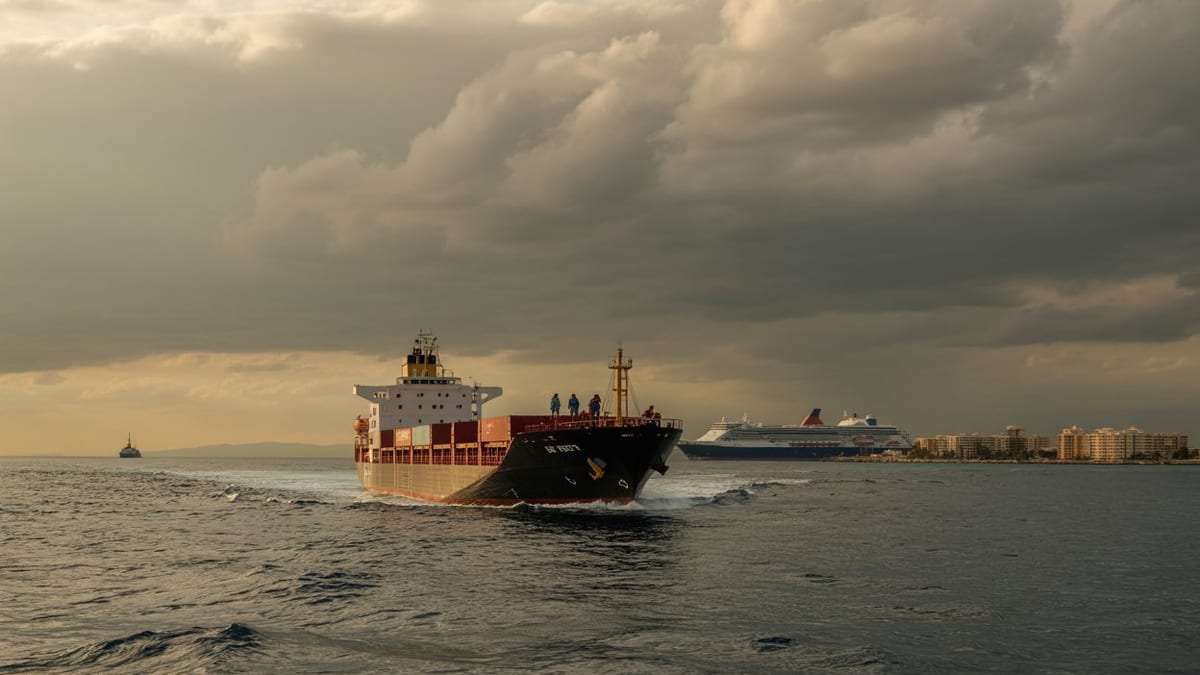
Image by Travel And Tour World
Red Sea Chokepoints Back Under Strain
Missile launches claimed in recent days by Yemen’s Houthi movement against Israel are amplifying concerns that Red Sea shipping lanes could once again become a primary pressure point in the wider Iran–Israel confrontation. Published coverage from international news agencies describes the attacks as the Houthis’ first direct strikes on Israel since the latest phase of the war, immediately reviving questions over whether commercial vessels in the Bab al Mandab Strait and southern Red Sea will be targeted.
The Houthis previously used drones and missiles against merchant shipping from late 2023 onward, contributing to what industry and research briefs describe as a collapse in Suez-bound container traffic and a sharp rerouting of vessels around Africa’s Cape of Good Hope. Recent maritime risk analysis circulated in March 2026 indicates that commercial traffic through the Red Sea corridor remains 50 to 60 percent below historic norms, with operators treating diversions around the Cape as the working baseline at least through the second quarter of this year.
New threats of attacks on vessels associated with the United States, Israel or their partners are keeping war risk insurance premiums elevated and limiting the willingness of cruise lines and ferry operators to reinstate Red Sea itineraries. Shipping advisories issued earlier in March note that, although large-scale commercial traffic continues, any confirmed strike on a major vessel could trigger fresh insurance repricing and rapid withdrawals by risk-averse operators, with knock-on effects for passenger connectivity and port calls along the route.
Analysts point out that the Red Sea disruptions are now interacting with a simultaneous crisis in the Strait of Hormuz, where conflict between Iran, Israel and Western states has sharply reduced tanker movements since late February. Together, the twin chokepoints are squeezing east–west maritime flows, lengthening voyage times and injecting fresh uncertainty into travel planning for both leisure and business passengers who rely on stable sea links.
Airspace Closures Reshape Passenger Routes
The same regional escalation is also reshaping aviation maps across the Middle East. According to airline statements and specialist flight operations bulletins published over the past week, many carriers continue to avoid or heavily restrict overflights of Iran, Iraq, Syria and Israel, adding time and fuel costs to long-haul services connecting Europe, Asia and Africa.
International travel coverage in late March highlights a deepening wave of cancellations and reroutings affecting major hubs tied into the conflict zone. Reports from aviation industry outlets describe widespread flight suspensions to Tel Aviv and the effective halt of passenger operations at Tehran’s main international gateway due to the Iran war. Other Gulf and Levantine hubs remain open but are coping with rolling schedule changes as airlines adapt to evolving airspace restrictions and passenger demand shocks.
Carriers such as Finnair have publicly confirmed that they continue to steer clear of airspace over Iran and neighbouring conflict-affected states, underlining the persistence of safety concerns even for airlines not directly serving Israeli or Iranian destinations. Travel advisories compiled by international risk consultancies in early March note that closures and no-fly zones are fragmenting traditional Europe–Asia corridors, pushing more traffic onto longer northerly or southerly routes.
Regional airlines are simultaneously adjusting capacity, trimming frequencies to high-risk destinations while adding seats on alternative sun-and-sea routes that remain accessible. This is contributing to fare volatility on certain corridors, complicating forward planning for tour operators who had been banking on a strong 2026 high season in the Gulf and eastern Mediterranean.
Tourism Corridors From the Gulf to the Levant Feel the Impact
The combined maritime and aviation disruptions are rippling through key tourism corridors that had been among the fastest-growing anywhere in the world. Data cited by regional economic think tanks show that international arrivals to the Middle East in 2025 surpassed pre-pandemic levels by close to 40 percent, supported by aggressive destination marketing and megaprojects such as new coastal resorts on the Saudi Red Sea.
The latest conflict cycle is now putting that momentum at risk. Travel and tourism industry commentary carried by international media last week estimated that airspace closures, cruise cancellations and itinerary changes are costing Middle East destinations hundreds of millions of dollars per day in foregone visitor spending. Before the current escalation, global sector bodies had projected that travellers would spend more than 200 billion dollars in the region during 2026.
Within the Gulf, Dubai, Abu Dhabi and Doha have seen particular pressure as key transfer points on routes now affected by detours around conflict zones. Coverage focusing on Russian outbound tourism trends notes a sharp decline in demand for Gulf city-breaks and beach stays, with travellers seeking alternative destinations that are perceived as more stable. This shift is benefitting competitors in the wider region, including Egypt’s Red Sea resorts and coastal destinations in Turkey and Thailand, which are being marketed as safer substitutes.
Israel’s inbound tourism sector, which had already been hammered by previous rounds of hostilities and prolonged flight suspensions, faces a further setback as airlines postpone any near-term return and cruise operators keep Israeli ports off their schedules. In Iran, the effective shutdown of international passenger flights has halted what had been a gradual rebuild of niche cultural and religious tourism, limiting future prospects until a political settlement brings greater predictability.
Spillover Effects on Medical and Outbound Travel
The turbulence is also hitting specialised travel segments that depend heavily on Middle Eastern demand and connectivity. Recent reporting from South Asia shows that Indian hospital groups have recorded a 50 to 75 percent drop in foreign patients arriving from Gulf states, Iran, Iraq and Yemen since the latest escalation began. Publicly available tourism data cited in that coverage indicate that Middle Eastern visitors accounted for the single largest share of India’s medical travellers in 2024, underscoring the scale of the shock.
With commercial flights reduced or rerouted and household budgets squeezed by higher energy prices, many families across the region are postponing or cancelling overseas medical trips as well as leisure holidays. This is affecting not only traditional destinations such as India, Turkey and Jordan, but also European and Southeast Asian markets that have targeted high-spending Gulf residents.
Outbound tourism from the conflict-adjacent states themselves is particularly constrained. Iranian and Israeli travellers face limited options amid widespread cancellations, insurance restrictions and the diplomatic fallout of the war. Yemeni citizens, already contending with years of internal conflict and humanitarian crisis, are seeing new layers of complexity added to cross-border movement as their country becomes further entwined in the regional confrontation.
Travel risk advisories compiled in March advise companies and individual travellers to build in generous buffers for itinerary changes, monitor airline notices closely and avoid making non-refundable bookings for travel that relies on transits through sensitive airspace or ports near the Red Sea corridor. Industry consultants suggest that this caution is likely to persist even if the security picture stabilises in the coming weeks.
Outlook: Prolonged Uncertainty for 2026 Travel Plans
Strategic risk assessments released this month broadly converge on the expectation that Red Sea and Middle Eastern travel corridors will remain volatile through at least mid-2026. Maritime intelligence briefs recommend that organisations treat diversions around the Cape of Good Hope as a structural feature of global logistics planning for the coming quarters, rather than a short-lived anomaly.
For the tourism sector, that means higher operating costs, more complex scheduling and persistent demand uncertainty. Cruise lines weighing the reinstatement of Red Sea and Gulf itineraries must account for elevated insurance premiums and the possibility of abrupt route changes if new attacks occur. Airlines planning summer and autumn schedules face similar dilemmas, balancing the commercial appeal of Gulf mega-hubs with the reputational and operational risks of sudden airspace closures.
At the same time, some destinations on the periphery of the conflict zone are positioning themselves as safe havens for travellers seeking Middle Eastern culture and climate without the immediate proximity to flashpoints. Egypt’s Red Sea coast, parts of North Africa and eastern Mediterranean islands are among the beneficiaries of this rebalancing, according to tourism board updates and booking data referenced in recent regional coverage.
Whether these shifts become entrenched will depend on the trajectory of the Yemen, Iran and Israel confrontation and on how quickly maritime and aviation insurers are willing to ease risk surcharges once the security situation improves. Until then, travellers and industry operators alike are navigating an environment in which the Red Sea, long a vital link between continents, has become a central barometer of global travel disruption.