


More news on this day
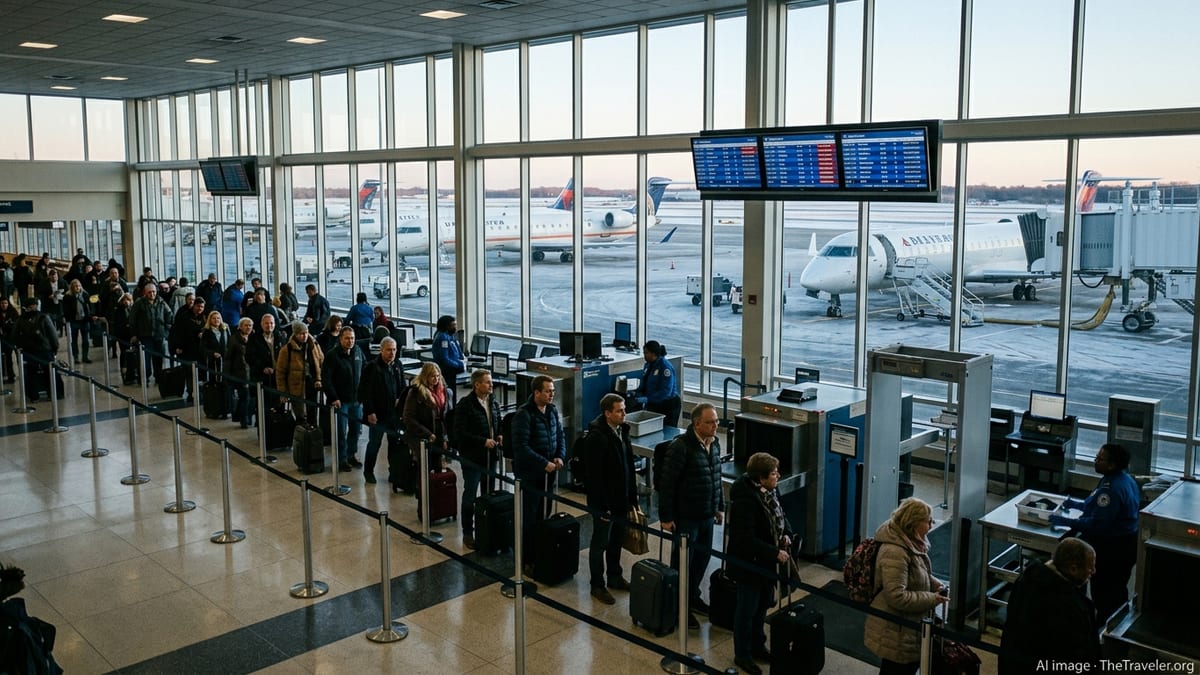
Travelers moving through the newly renamed Frederick W. Smith International Airport in Memphis faced an uneven start to the travel day as six regional flights operated by SkyWest Airlines, PSA Airlines and Republic Airways were canceled and several others delayed, contributing to a broader pattern of disruptions at major airports across the United States, including Houston, Boston, Nashville and Charlotte.
Get the latest news straight to your inbox!
Six Cancellations Underscore Vulnerability of Regional Networks
Publicly available tracking data for June 23 indicates that six departures and arrivals operated by regional carriers at Frederick W. Smith International Airport were removed from schedules or canceled at short notice, affecting connections into and out of Memphis. The affected flights were tied to SkyWest Airlines, PSA Airlines and Republic Airways, three large regional operators that fly under major airline brands and funnel passengers through hub airports.
Although the number of canceled flights at Memphis is modest in absolute terms, the impact on travelers can be outsized because many are relying on these services to make onward connections. A single missed regional leg frequently unravels a full day of travel, particularly for those connecting through one or more large hub airports. On a busy summer itinerary, that can translate into missed events, rebooked hotels and unexpected overnight stays.
The cancellations come as Memphis, long dominated by FedEx cargo operations, continues its transition as a passenger gateway under its new Frederick W. Smith International Airport name. Airport activity reports show that SkyWest, PSA and Republic all feature among the primary regional partners serving Memphis, typically operating flights on behalf of larger brands rather than under their own names. This structure means many affected travelers may only see the logo of a major carrier on their ticket while the flight itself is operated by one of these regional companies.
Ripple Effects at Major Hubs: Houston, Boston, Nashville and Charlotte
The localized disruption in Memphis coincided with scattered delays at several major U.S. hubs, amplifying the effect on itineraries. Flight-tracking dashboards for Houston, Boston, Nashville and Charlotte on June 23 show a familiar pattern of knock-on delays, as late arriving regional jets from one airport cascade into late departures elsewhere. Even when weather or air traffic constraints ease, earlier interruptions can leave aircraft and crews out of place for subsequent legs.
Houston’s hub operations, particularly at George Bush Intercontinental Airport, are sensitive to irregularities in regional feed because many smaller communities rely on short-haul connections operated by carriers such as SkyWest. A delayed inbound aircraft from a mid-size city can mean tighter connection windows or missed flights for passengers continuing on to long-haul services. Similar dynamics are visible at Boston Logan and Nashville International, both of which depend heavily on regional jets to link secondary markets.
Charlotte Douglas International Airport, a key hub for connecting traffic across the eastern United States, is especially reliant on regional affiliates such as PSA Airlines and Republic Airways. When a handful of flights into Charlotte run behind schedule or are canceled, the effect can quickly propagate across an extensive banked flight structure, leaving travelers facing rebookings and extended layovers even if their origin and destination cities are not experiencing local weather or operational issues.
Regional Airlines Carry Disproportionate Operational Risk
The three carriers involved in the Memphis cancellations are among the largest regional operators in North America and appear prominently in federal on-time performance and consumer reports. Data compiled by the Bureau of Transportation Statistics highlights how regional affiliates like SkyWest, PSA and Republic are responsible for a substantial share of domestic departures, yet operate with lean staffing and tight turn times that leave limited room to absorb disruptions.
Government and industry analyses released over the past two years point to ongoing challenges facing the regional sector, including pilot availability, aircraft utilization pressures and the economics of serving small and mid-sized communities. These pressures can make it difficult to recover quickly from a localized shock, whether it is adverse weather, congestion in terminal airspace or an aircraft maintenance issue discovered shortly before departure. Even when major airlines advertise robust networks, the underlying regional segments remain vulnerable to relatively small operational complications.
Memphis activity reports for 2025 and early 2026 illustrate the central role of these airlines as contract operators for larger brands. SkyWest, PSA Airlines and Republic Airways collectively operate thousands of flights through hub airports annually, often on narrow schedules that are carefully tiered to connecting banks. When one or two flights fall out of place, the effect may not appear dramatic on a national dashboard but can be decisive for travelers in markets that rely on a single daily frequency.
What Current Disruptions Mean for Summer Travelers
The latest wave of cancellations and delays around Memphis and key hubs arrives as the peak U.S. summer travel period accelerates, traditionally a time when airline schedules are stretched and airports operate near capacity. While six canceled flights at Frederick W. Smith International Airport may not signal a systemic breakdown, they serve as a reminder that the combination of tight regional schedules and heavy hub reliance continues to expose travelers to cascading disruption.
Public guidance from aviation and consumer agencies emphasizes that even modest irregular operations at a hub can leave passengers with limited same-day alternatives, particularly on regional routes with only one or two frequencies. Travelers connecting through airports such as Houston, Boston, Nashville and Charlotte are frequently advised to plan for longer layovers, consider earlier departures and monitor flight status closely on days when scattered thunderstorms or air traffic control programs are forecast.
For Memphis in particular, the episode underscores the evolving role of the airport as it balances its long-standing cargo identity with growing passenger expectations. With the facility now carrying the Frederick W. Smith International Airport name and modernized terminal infrastructure, any pattern of recurring regional disruptions will draw closer scrutiny from travelers and the wider industry, even when the root causes lie in network-wide conditions rather than in Memphis itself.
Broader Context: Small and Mid-Sized Airports Under Strain
Industry and government reports published in 2024 and 2026 describe a broader trend in which small and mid-sized airports face persistent uncertainty over air service levels, much of it tied to the economics of regional flying. Capacity adjustments by major airlines, evolving pilot contract terms and aircraft fleet changes have led to a patchwork of service increases and reductions across the country. In that context, a cluster of cancellations at a mid-sized airport like Memphis can be viewed as part of an ongoing adjustment rather than an isolated anomaly.
Analysts note that in this environment, irregular operations at one airport can have an outsized effect on communities that depend on a single carrier or a single regional operator for connectivity. A missed Memphis flight operated by SkyWest, PSA or Republic may represent a lost business opportunity or medical appointment for travelers in smaller origin cities, with no immediate replacement service available. The increasingly interconnected nature of the U.S. route network means those impacts can quickly extend to large hubs and international gateways when affected customers miss onward flights.
As summer travel continues to build, the situation at Frederick W. Smith International Airport offers a snapshot of how regional airline disruptions can reverberate through the national system. Cancellations and delays involving a handful of flights, spread across a few closely linked carriers, can be enough to unsettle travel plans from Houston to Boston and from Nashville to Charlotte, even on days when the broader system appears to be functioning normally.