

More news on this day
Passengers at Indianapolis International Airport faced cascading disruptions as two Republic Airlines-operated flights were grounded and several others reported rolling delays, triggering knock-on effects for connections to Boston, Baltimore, Charlotte, Denver and Fort Lauderdale.
Get the latest news straight to your inbox!
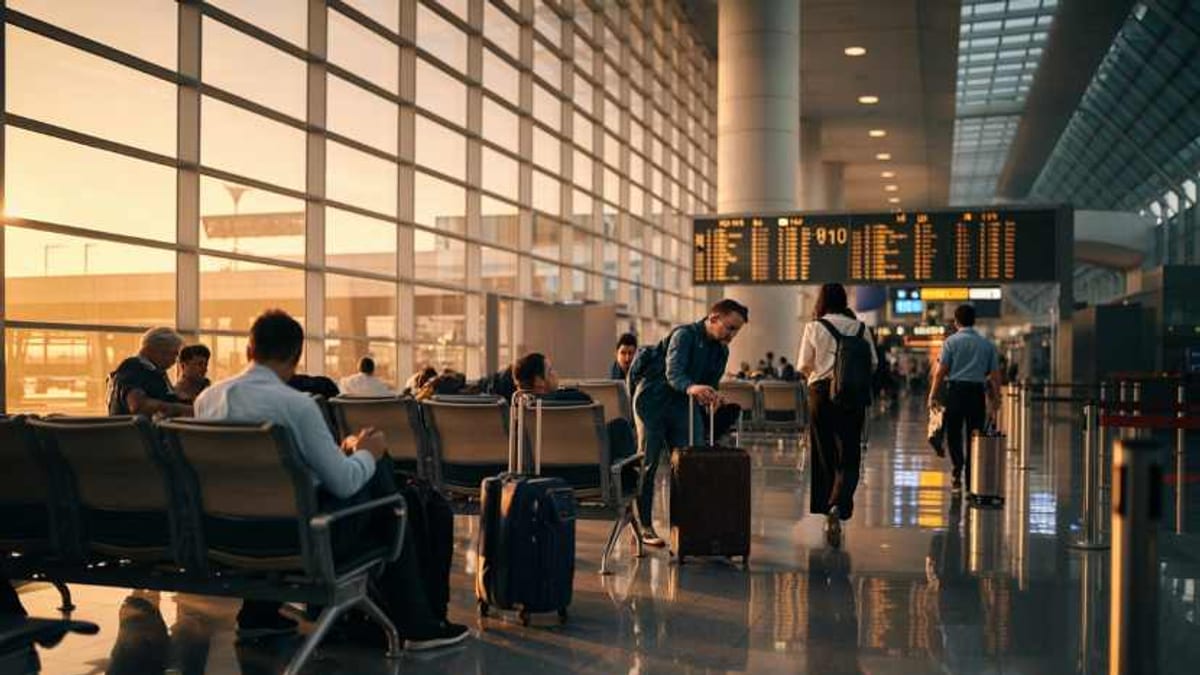
Image by Travel And Tour World
Groundings at Indy Spark a Morning of Uncertainty
Publicly available tracking data and social media posts from travelers indicate that two Republic Airlines-operated regional jets scheduled from Indianapolis were held at the gate for extended periods on Sunday morning, with both departures ultimately grounded. The affected flights were operating under codeshare banners for major U.S. carriers, turning a localized operational issue into a wider network problem.
The groundings came as airlines across the country were already working through a busy late-March travel weekend, with higher passenger volumes coinciding with lingering weather and congestion. At Indianapolis, the Republic-operated schedule connects to multiple large hubs, so the loss of even a small number of departures can quickly erode available options for rebooking.
Data from Indianapolis International Airport and flight-tracking platforms show an uptick in delay minutes for regional departures in the morning and early afternoon time bands, with several Republic-operated routes posting pushback times significantly later than scheduled. Travelers reported being advised of crew availability, aircraft routing and flow-control issues, though specific causes for the two grounded flights had not been detailed in airline statements by early afternoon.
The Republic disruptions also arrived against the backdrop of a winter marked by frequent operational strain across U.S. airports, where staffing, weather and air-traffic constraints have combined to tighten schedules and reduce the margin for handling irregular operations.
Major Markets Feel the Ripple Effect
Because Republic operates regional jets on behalf of large network carriers, the Indianapolis groundings had consequences far beyond central Indiana. Available schedules and delay logs show knock-on disruptions to itineraries involving Boston Logan, Baltimore/Washington, Charlotte Douglas, Denver International and Fort Lauderdale-Hollywood, all of which are key nodes in their respective airline networks.
In Boston and Baltimore, travelers connecting from Indianapolis reported missed onward flights and the need to rebook onto later departures, often with limited remaining seat inventory. Those airports already rank among the country’s busier facilities for delayed operations, according to recent federal analyses of flight performance, making them particularly sensitive to additional schedule shocks.
Charlotte and Denver, both major connecting hubs, saw additional strain as passengers arriving late from Indianapolis tried to secure replacement connections. Publicly available delay statistics show that even modest disruptions at feeder airports can compound through these large hubs, as small regional aircraft miss carefully timed banks of onward departures.
Fort Lauderdale, a high-demand leisure gateway with a heavy concentration of point-to-point flights, also felt the impact as disrupted Indianapolis-origin passengers attempted to salvage spring break and early holiday plans. Travel forums and real-time passenger reports described longer-than-usual lines at customer service counters and increased competition for remaining seats on southbound flights.
Operational Pressures on Regional Airlines
The episode at Indianapolis highlights the central role regional airlines such as Republic play in the U.S. aviation system. Republic operates flights for several major brands, linking mid-sized and smaller cities to large hubs using a fleet of regional jets. When a regional carrier encounters a localized disruption at one airport, the effects can rapidly spread across multiple mainline networks.
Industry analyses published in recent months describe a regional sector still adapting to pilot and crew availability challenges, tighter federal duty-time requirements and evolving fleet plans by major carriers. These factors can limit spare capacity and constrain the ability to swap aircraft or crews when problems arise, increasing the likelihood that a single grounded flight will cascade into broader delays.
Republic’s publicly available tarmac delay plan and operational policies outline procedures for managing extended ground holds and caring for passengers when aircraft remain at the gate or on taxiways for prolonged periods. Sunday’s Indianapolis events appeared to trigger elements of those contingency measures, with passengers reporting offers of rebooking and, in some cases, hotel and meal accommodations depending on the length and cause of the delay.
Analysts note that regional operations are particularly exposed to system shocks because they often fly high-frequency, short-haul routes with tight turn times, leaving less room to absorb irregular operations without affecting subsequent flights.
Weather, Congestion and a Fragile System
The disruptions at Indianapolis also intersected with a broader pattern of weather-related and congestion-driven delays across parts of the United States in March. A series of storms and associated air-traffic programs have periodically reduced capacity at key hubs, including in the Midwest and along the East Coast, adding stress to airlines’ finely tuned schedules.
Recent reports on national air-travel performance indicate that large coastal airports such as Boston Logan and Fort Lauderdale-Hollywood have seen elevated levels of delay minutes tied to weather and volume. When regional feed from airports like Indianapolis is disrupted on top of those constraints, airlines have fewer options to reroute passengers while maintaining on-time performance.
Travel advocacy groups and transportation researchers have pointed out that chronic staffing shortages in air-traffic control and ground operations amplify the impact of each storm or localized disruption. Under these conditions, an issue that might once have been contained to a single flight or airport more readily spreads across the network, particularly at peak travel times.
The latest Indianapolis incident illustrates how even brief operational problems can reverberate across multiple time zones when they intersect with an already congested and weather-sensitive system, leaving travelers with limited alternatives and extended journeys.
What Travelers Experienced and How Airlines Responded
Accounts posted to public forums and social media on Sunday described a familiar pattern for many affected passengers at Indianapolis. Initial departure times slipped in small increments, followed by gate changes, updated boarding estimates and eventually notifications that flights were grounded or heavily delayed. For travelers with tight connections to cities such as Boston, Baltimore or Charlotte, each update narrowed the window to make onward flights.
Rebooking channels quickly became strained, with customer service phone lines and airport counters handling a surge of change requests. Some passengers reported success using mobile apps to secure alternate routings through secondary hubs, while others noted that remaining options often involved overnight stays or significant detours through airports far from their original paths.
Publicly available airline guidance emphasizes that passengers affected by significant delays or cancellations should monitor official apps and notifications closely, as rebooking options can change rapidly when large groups of travelers are seeking alternatives at the same time. Travel experts frequently advise building more generous connection times during periods of heightened operational risk, including busy holiday or storm-affected windows.
As operations at Indianapolis gradually stabilized later in the day, delayed Republic-operated departures began to push back and some passengers were able to continue their journeys, though often on revised itineraries. For many, the episode reinforced concerns about the fragility of current airline schedules and the outsized impact that a small number of grounded regional flights can have on travel plans across the country.