


More news on this day
Riyadh Air is moving from concept to concrete schedules as the Saudi startup opens ticket sales on a first wave of Boeing 787 routes linking Riyadh with London, Dubai, Cairo, Madrid and Manchester, creating a new web of long haul and regional options for travelers planning 2026 and beyond.
Get the latest news straight to your inbox!
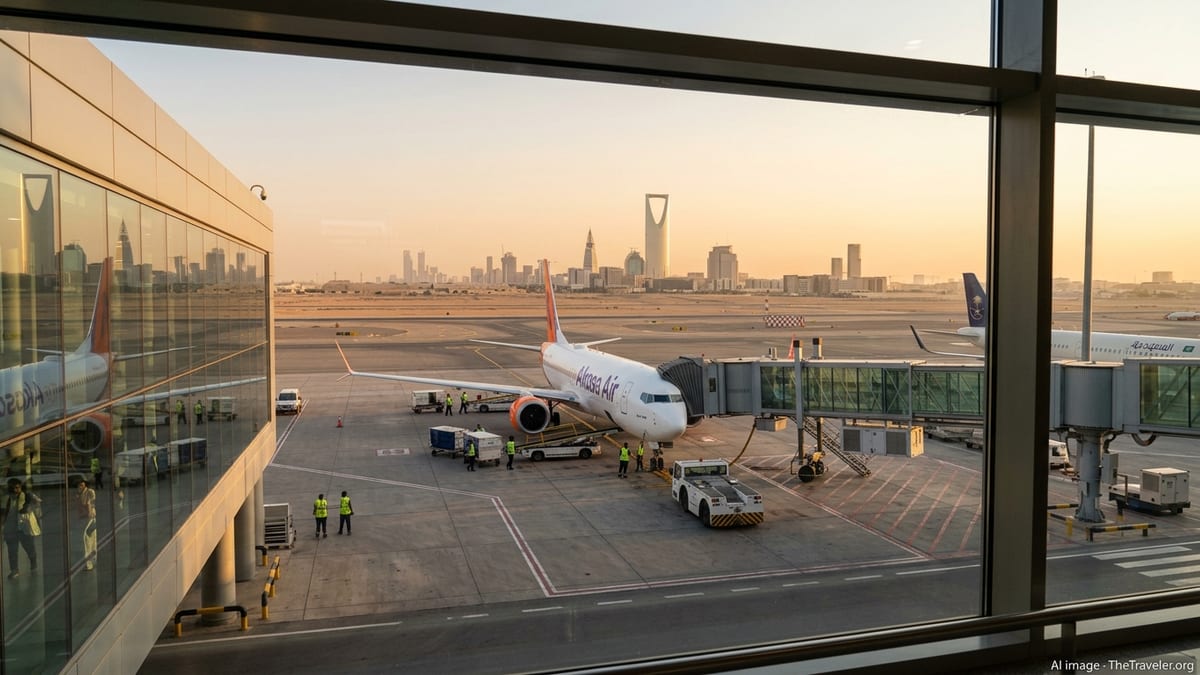
Ticket Sales Go Live Across Key Middle East and European Gateways
Publicly available information shows that Riyadh Air has now opened ticket sales for services from Riyadh to Cairo, Dubai, Jeddah, Madrid and Manchester, following an earlier launch of bookings on the flagship Riyadh to London Heathrow route. The move confirms the carrier’s transition from a projected startup into an operational airline with a defined initial network.
According to recent industry coverage, the London service is scheduled to begin daily operations in June 2026, with the other five destinations phased in over the subsequent weeks. Frequencies vary by route, with reports indicating three weekly flights between Riyadh and Manchester and regular schedules to Madrid and Cairo designed to tap both visiting‑friends‑and‑relatives traffic and growing leisure demand.
The opening of sales to Dubai and Jeddah places Riyadh Air directly into some of the region’s busiest corridors. These routes are expected to feed long haul services and position Riyadh as a competitive alternative to traditional Gulf stopover hubs, particularly for travelers whose final destination is the Kingdom of Saudi Arabia.
Timings and schedules are still being refined, but the pattern emerging is a network that connects Riyadh to major European and regional centers in time for key summer and end‑of‑year travel peaks. Travelers looking at 2026 itineraries will now start to see Riyadh Air appear in global distribution systems and online travel agency search results alongside established carriers.
London, Dubai, Cairo, Madrid and Manchester Join a Growing Riyadh Hub
Riyadh’s new web of air links aligns with Saudi Arabia’s broader strategy to position the capital as both a business and tourism gateway. London, Dubai, Cairo, Madrid and Manchester are all significant markets in their own right, and collectively they provide a mix of financial centers, expatriate communities and leisure flows with strong potential two way demand.
London Heathrow anchors the launch as a premier long haul destination with deep connectivity across Europe and North America. For travelers in the United Kingdom, the addition of Manchester offers direct access to Riyadh from the north of England without the need to route via London or a Gulf hub, something that reports from the UK business travel sector suggest will appeal to corporate and visiting‑friends‑and‑relatives segments.
Dubai and Cairo serve a different strategic role, creating dense regional links that can support short breaks, religious travel and onward connections. Madrid brings a Western European capital into the network, giving Riyadh Air access to Spain’s sizeable tourism flows, while Jeddah strengthens domestic and religious travel across Saudi Arabia’s Red Sea corridor.
For travelers, the practical effect is more choice on routes that until now have largely been dominated by incumbent Gulf and European carriers. As schedules stabilize, fare competition and new one stop options beyond Riyadh are likely to emerge, particularly as additional destinations are added to the network.
Boeing 787 Fleet Deliveries Mark a Pivotal Moment
The opening of ticket sales has been made possible by the arrival of Riyadh Air’s first three Boeing 787 9 Dreamliners, which reports indicate were delivered in early June. These aircraft form the backbone of the launch fleet and are configured for long haul and high demand regional routes.
Riyadh Air has previously announced a widebody strategy centered on the 787, with additional orders and options intended to support an eventual network of more than 100 destinations by 2030. Separate published information also notes an order for Airbus A350 1000 aircraft, suggesting a long term mixed widebody fleet, but the 787 is the type now entering service and operating the launch routes.
For passengers, the use of new Dreamliners is likely to be a key selling point. Cabin layouts are expected to offer a modern business class and a competitive premium economy and economy product, positioning Riyadh Air in line with other full service Gulf and European carriers. Industry analysis highlights quieter cabins, larger windows and improved humidity as features travelers can expect aboard the 787.
Fleet growth will be critical to the airline’s ability to add frequencies and new cities. With three aircraft available and more deliveries anticipated, aviation observers expect Riyadh Air to start with a relatively tight schedule that maximizes aircraft utilization across London, Dubai, Cairo, Madrid, Manchester and Jeddah before gradually layering in additional destinations.
What Travelers Should Watch Next
For travelers evaluating Riyadh Air for upcoming trips, several developments deserve close attention over the next 12 to 18 months. The first is the confirmation of exact launch dates and operating days for each of the new routes, as these will determine how easily Riyadh connections line up with long haul itineraries or regional trips.
Second, fare structures and introductory promotions are likely to shape early adoption. New entrants often use competitive pricing to attract first time customers, and travel industry reports already point to introductory sales on select Riyadh routes. Travelers planning trips between Europe, the Gulf and Saudi Arabia may find it worthwhile to compare these fares against those of established carriers.
Third, the evolution of partnerships and interline agreements will influence Riyadh Air’s usefulness beyond point to point travel. While detailed alliance strategies have not yet been fully disclosed, observers expect the airline to pursue codeshare and connectivity arrangements that extend its reach into North America, Asia and Africa via partner hubs.
Finally, the onboard experience will be closely watched. As the first passenger flights begin, travelers will be able to assess cabin comfort, service consistency and digital features such as inflight connectivity and entertainment. Early feedback, along with schedule reliability, will play a significant role in shaping the airline’s reputation among both leisure and corporate travelers.
Riyadh’s Bid to Become a Global Aviation Gateway
Riyadh Air’s launch is part of a wider push to transform Saudi Arabia’s aviation landscape by 2030, an agenda that includes ambitious visitor targets and large scale airport investments. Officially disclosed national plans call for the Kingdom to handle hundreds of millions of passengers annually, with Riyadh positioned as a core intercontinental hub.
The decision to prioritize links to London, Dubai, Cairo, Madrid and Manchester reflects this vision. These markets connect Saudi Arabia to financial centers, tourism hotspots and diaspora communities, building a foundation for future long haul routes toward Asia Pacific, North America and additional European cities.
For the broader travel industry, Riyadh’s emergence as a new connecting point may gradually reshape traffic flows that have long been dominated by other Gulf hubs. Competitor airlines are likely to respond through capacity adjustments, schedule refinements and potentially deeper partnerships within the region.
For travelers, the immediate impact is a wider range of options and the possibility of new itineraries using Riyadh as either a destination or a stopover city. As more details on future routes and fleet growth emerge, Riyadh Air’s initial network launch is set to be an early test of whether Saudi Arabia’s capital can establish itself as the region’s next major global gateway.