

More news on this day
Confusing signals are emerging from Riyadh’s King Khalid International Airport, where the terminals and runways remain open even as a shifting mix of airlines cancels or scales back flights in response to regional tensions and evolving airspace restrictions.
Get the latest news straight to your inbox!
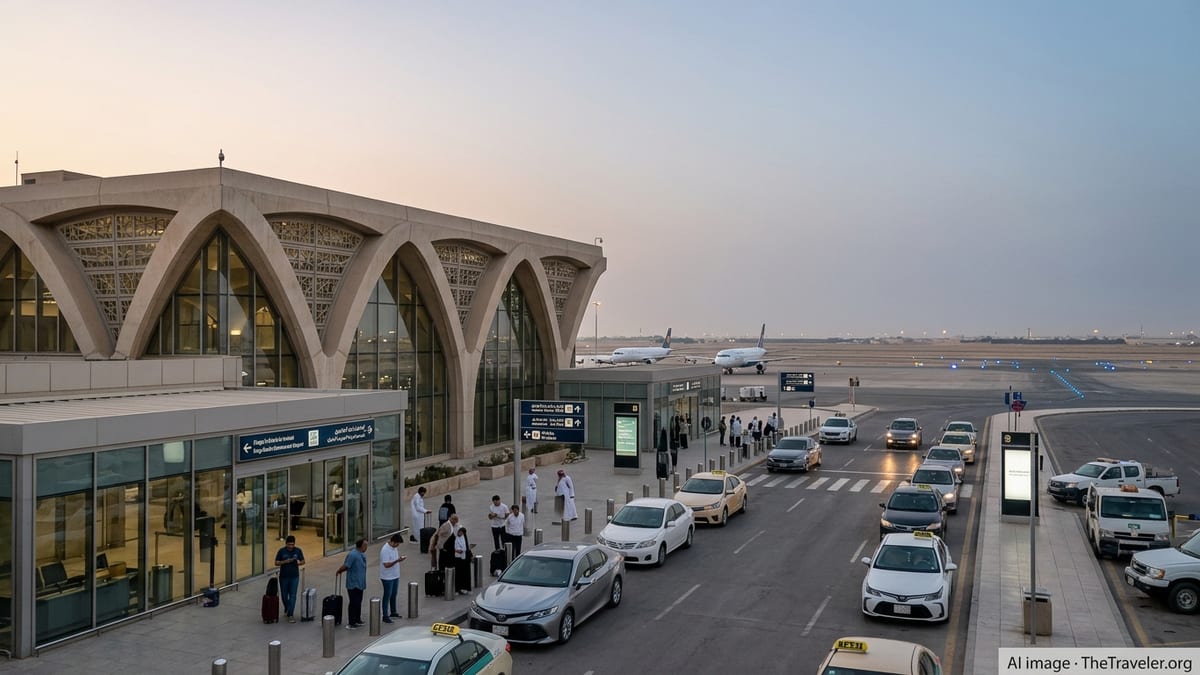
Airport Open, But Schedules Are Anything But Normal
Publicly available flight information and recent travel advisories indicate that King Khalid International Airport in Riyadh continues to operate, with check in, security, and terminal services functioning and aircraft movements still taking place. The airport has not been listed as closed, and no blanket shutdown has been reported for Riyadh’s main international gateway.
At the same time, regional travel advisories current to early March describe “limited flights” and a higher likelihood of delays and cancellations at the airport. These notices point to a combination of regional airspace constraints and airline specific decisions, rather than an infrastructure outage or safety incident at the airport itself. In practice, this means that some flights are departing close to schedule while others are significantly delayed or removed from the timetable at short notice.
Recent disruptions follow an earlier period of operational strain in late 2025, when Riyadh based coverage described widespread delays at King Khalid that later eased as the airport worked through congestion and refuelling system maintenance. That experience is serving as a reference point for many travelers now, who are again seeing crowded departure halls and volatile departure boards without any clear closure of the airport.
The result is a split screen reality for passengers. Those flying on routes and carriers that are still operating may see only modest disruption, while others booked on suspended routes or conflict exposed corridors can find their flights repeatedly rescheduled or cancelled, even as the airport itself remains fully accessible.
Airline Cancellations Driven by Regional Security Concerns
The latest wave of uncertainty around Riyadh flights is closely tied to wider instability in the region. Published coverage of recent Iranian strikes on targets in Saudi Arabia, including attempted attacks near Riyadh, has prompted airlines and regulators to reassess flight paths and overflight risks. Even where Saudi airports remain physically undamaged and open, some carriers have preferred to suspend services until they are confident about longer term airspace arrangements.
Several international airlines have announced temporary halts to their Riyadh operations as part of broader suspensions across the Gulf. Air France earlier grounded its Middle East routes, including Riyadh, for a defined period in March, while Cathay Pacific has extended a suspension of Riyadh services through the end of the month according to specialist travel industry reports. Other carriers, such as Turkish Airlines, have been cited in regional coverage as cancelling a range of Saudi and Gulf flights during the current phase of disruption.
In parallel, Saudi Arabia’s own airlines have adjusted their networks, with recent statements from Saudi carriers pointing to suspended or reduced services to several neighboring states. These changes do not equate to a shutdown of King Khalid International Airport, but they sharply reduce available seat capacity and can make it significantly harder to secure a seat out of Riyadh at short notice, particularly on popular regional connecting routes.
Travel industry analyses emphasize that much of the disruption stems from airspace closures and reroutings that affect multi country itineraries. When overflight options narrow, airlines must decide whether to accept longer and more expensive routings or temporarily suspend specific city pairs. Riyadh, as a major hub in the region, is exposed to these decisions even when local conditions at the airport are relatively stable.
Operational Changes and Terminal Works Add to Confusion
While security driven cancellations dominate headlines, King Khalid International Airport is also undergoing its own set of operational changes that can confuse the picture for passengers. Aviation notices and infrastructure supplements issued over the past year outline enabling works and infrastructure modifications at the airport, part of broader modernization tied to Saudi Arabia’s Vision 2030 transport ambitions.
Travel focused coverage has highlighted periods of terminal reshuffling and short term reassignments of flights between terminals in Riyadh, including a concentrated 10 day episode earlier this year when many services were temporarily redirected. These changes are primarily aimed at setting the stage for a long term transformation of the airport’s layout and systems, but they can make it harder for travelers to interpret what a disruption actually means in the short term.
When construction related adjustments coincide with regional airspace issues, passengers may see messages about gate changes, terminal swaps, or modified check in locations alongside separate notices about cancellations or delays. Without careful attention to airline communications and airport departure boards, it is easy to conclude that the airport itself has shut down when, in fact, only specific routes or carriers are affected.
Regulatory performance reports from Saudi Arabia’s civil aviation authorities show that King Khalid International Airport has generally maintained an acceptable level of on time performance over recent months, albeit with periodic spikes in delays when external shocks occur. This underlines a key point for travelers: disruption at Riyadh often comes in waves linked to external factors, rather than as a permanent feature of operations.
What Travelers Are Experiencing on the Ground
Recent traveler accounts shared on public forums paint a mixed picture of the current situation at King Khalid International Airport. Some passengers describe relatively smooth departures, with only minor delays, and report that domestic and selected international flights have taken off broadly as scheduled. Others detail last minute cancellations, extended waits at the gate, and flight status pages that change repeatedly in the hours before departure.
These anecdotal reports align with formal advisories that emphasize the importance of checking directly with airlines before heading to the airport. Passengers have noted that airline apps and websites do not always update in real time, with some flights still showing as on time even as airport display boards flag them as delayed or under review. This time lag in information flow can contribute to the sense of chaos, particularly for travelers connecting through Riyadh from other disrupted hubs in the Gulf.
Queues at check in and customer service desks have been a recurring theme in recent days, as travelers try to rebook journeys affected by route suspensions to key Gulf hubs such as Dubai, Doha, or Bahrain. Some accounts describe passengers successfully rerouting via alternative Saudi airports or through carriers that continue to operate limited schedules out of Riyadh, while others have opted to postpone travel entirely until the regional situation stabilizes.
The overall impression is of an airport that is physically open and staffed, with many of its usual services running, but where the predictability of flight options has eroded. For travelers, the challenge is less about gaining access to the airport and more about securing a viable itinerary that remains intact long enough to reach the boarding gate.
How to Navigate Riyadh Flights in the Current Climate
Given the disjointed nature of current operations at King Khalid International Airport, practical steps can make a significant difference for travelers. Public advisories and airline guidance consistently stress the need to verify flight status as close as possible to departure time, using both official airline channels and airport information where available.
Travel analysts suggest allowing additional buffer time for connections involving Riyadh, particularly when itineraries route onward through other Gulf hubs that are themselves subject to cancellations. Building in longer layovers or opting for itineraries that remain within Saudi Arabia for the initial legs can reduce exposure to sudden airspace related changes affecting multiple countries at once.
For those yet to book, industry observers recommend prioritizing tickets that offer flexible change and refund conditions, given the elevated risk of schedule changes. Travelers with urgent plans to leave Riyadh may wish to consider alternative routings via less affected regional hubs or through carriers that continue to advertise a more stable timetable out of King Khalid, while recognizing that conditions can shift rapidly.
Ultimately, the reality at Riyadh’s main airport today is one of partial disruption layered onto ongoing modernization. Flights are still taking off and landing, but the network around them is fragile. For passengers, understanding that the airport is open while many routes are not is the first step toward navigating this unsettled period in Gulf air travel.