


More news on this day
A three-year residential round-the-world cruise that promised life at sea has been abruptly suspended in Cambodia, leaving more than 200 passengers scrambling for housing and onward travel after the operator blamed a sudden and steep rise in fuel costs.
Get the latest news straight to your inbox!
An experiment in life at sea comes to an abrupt stop
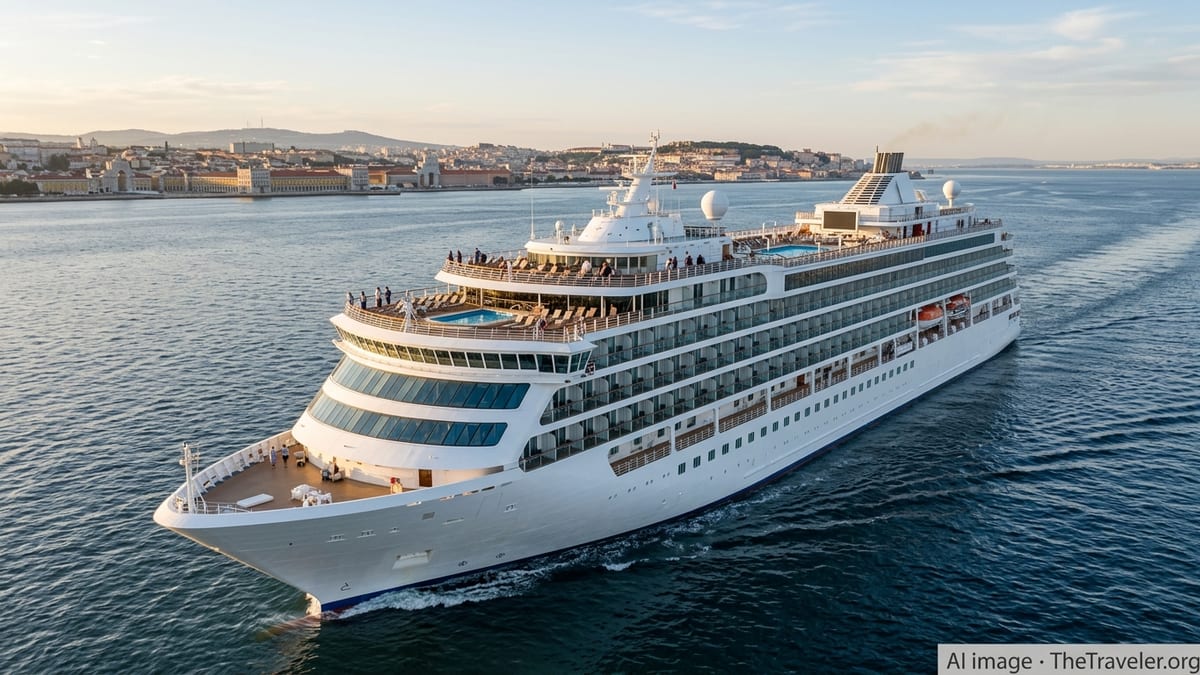
The MV Odyssey, operated by Florida based Villa Vie Residences, arrived at the port of Sihanoukville on Cambodia’s Gulf of Thailand coast in late October and then halted its multiyear itinerary. Publicly available information indicates that the company suspended operations and told passengers they would have to disembark, effectively ending what had been marketed as a three to three and a half year continuous global voyage.
Cambodian port officials cited in international coverage said the ship had been carrying 203 passengers, mostly from the United States, along with 156 crew members, on a vessel built to accommodate up to 650 guests. The Odyssey had set sail from Belfast in October 2024 after an extensive refit and months of earlier delays, with plans to visit all seven continents and make more than 400 port calls over the life of the voyage.
Unlike conventional cruises, the Odyssey sold residential style cabins that could be occupied for years at a time. Marketing materials described the units as floating homes, with some packages offering the option to live on board for up to 15 years and purchase prices for lifetime use of a suite running into the hundreds of thousands of dollars, plus ongoing monthly maintenance and operating fees.
Many of those on board had reorganized their lives around the concept of long term living at sea, selling or renting out homes on land and committing to an itinerary that they expected would stretch well into the second half of the decade. The sudden standstill in Sihanoukville has therefore functioned not only as an interruption to travel plans, but as an unplanned end to a residential experiment.
Fuel shock turns a niche business model upside down
In a statement posted on its website and cited across multiple news outlets, Villa Vie Residences attributed the suspension of the voyage to extraordinary increases in marine fuel costs in Asia following the outbreak of war involving the United States and Iran earlier in 2026. The company said its fuel expenses per cabin, which had historically averaged about 1,800 dollars per month, had surged to an estimated 6,000 to 8,000 dollars in parts of the region.
Industry and energy market reporting indicates that conflict in and around the Strait of Hormuz has sharply curtailed tanker movements and constrained supplies of petroleum products, including marine fuel, particularly for buyers in Southeast Asia. That disruption has coincided with a jump in benchmark prices, making long distance itineraries far more expensive to operate than when the Odyssey’s voyage was first planned.
According to publicly available statements, Villa Vie Residences attempted to manage the impact by slowing the ship’s speed and adding longer port stays in an effort to burn less fuel, but the measures did not offset the cost increases. The company said continuing to absorb the higher expenses would have resulted in unsustainable operating losses, while passing the full burden to residents through higher monthly charges was described as unrealistic.
The decision to halt in Cambodia reflects the reality that fuel is one of the largest single operating costs for large cruise vessels. For a niche operator running a long duration residential itinerary with a relatively small number of occupied cabins compared with the ship’s full capacity, the sudden tripling or quadrupling of fuel costs appears to have pushed the business model beyond its limits.
Passengers face sudden housing and travel challenges in Sihanoukville
Reporting from Sihanoukville describes a confused and stressful disembarkation. Several news outlets citing passengers on board say residents were given only a few hours’ notice on October 28 to leave the ship, with instructions to collect their belongings and make arrangements on land. Some travelers told reporters they had to quickly book hotel rooms in the coastal city while working out how to reach their home countries or next destinations.
Villa Vie Residences has said publicly that it is working with residents to coordinate disembarkation and identify temporary living arrangements in Cambodia. Other coverage notes that the company has pledged to cover local lodging and ground transportation for the immediate period after disembarkation, but that onward international flights and longer term housing would remain the responsibility of passengers themselves.
The sudden end of the voyage has been especially disruptive for those who had treated their cabins as primary homes. Accounts collected by international media describe residents who had sold property, downsized possessions to what would fit in a stateroom, and structured retirement or remote work plans around a roaming address at sea. For them, Sihanoukville has become an unplanned waypoint where they must now re enter traditional housing markets and re establish life on land.
The local impact in Cambodia is also notable. Sihanoukville, which has been positioning itself as a regional tourism and cruise port, has found itself temporarily hosting hundreds of unexpected long stay visitors seeking accommodation and services while they work out next steps.
Residential cruising under scrutiny after a high profile breakdown
The Odyssey’s predicament has drawn attention to the still relatively small but highly visible sector of residential cruising. Over the past decade, several companies have promoted ships in which cabins are sold or leased as long term residences, allowing owners to combine global travel with apartment style living and amenities usually associated with high end condominiums.
Supporters of the model argue that it offers an appealing alternative lifestyle for retirees, digital nomads, and frequent travelers who prefer to unpack once while seeing the world. However, the events in Cambodia highlight structural vulnerabilities, including reliance on stable fuel costs, consistent occupancy, and sophisticated financial and operational planning to sustain a complex vessel and crew over many years.
Publicly available reporting on Villa Vie Residences prior to the suspension had already pointed to challenges with the Odyssey’s launch, including delays before departure from Belfast, adjustments to the advertised itinerary, and passenger complaints about service levels and connectivity. The latest fuel shock appears to have intersected with those existing pressures, crystallizing concerns about whether boutique operators have the resilience to withstand major external shocks.
Industry analysts quoted in recent coverage suggest that potential residents considering similar ventures may now scrutinize financial disclosures, contingency plans, and ownership structures more closely. Questions about what legal protections apply when a ship based company suspends operations mid voyage, and how residents rank among creditors in any restructuring, are likely to feature more prominently in future marketing and due diligence.
What happens next for the Odyssey and its would be residents
Villa Vie Residences has indicated that it is evaluating restructuring and recapitalization options over a period of around 60 days, while keeping the Odyssey moored in Sihanoukville. Public statements emphasize a focus on supporting residents, crew, and employees during this assessment, but offer no firm timeline for a possible resumption of sailing or for any sale of the vessel to new operators.
For passengers who had planned to remain on board for years, the immediate priority is navigating the practicalities of visas, finances, and travel from Cambodia. Many visitors from North America and Europe can obtain short term visas on arrival, but turning an abrupt disembarkation into a new long term plan involves securing housing, arranging insurance, and deciding whether to rebuild a land based home or seek another ship.
Travel advisors monitoring the situation note that the Odyssey episode underscores the importance of carefully checking contract terms for extended voyages and residential products, including refund policies, contingency clauses, and the scope of travel or trip interruption insurance. Some policies may not fully anticipate the failure of a residential cruise operator, particularly when the voyage is marketed more as a lifestyle product than a traditional package tour.
As of late October, the Odyssey remains tied up at the Sihanoukville Autonomous Port without a confirmed departure date. Whether the ship eventually resumes its global circuit under the same brand, is taken over by another operator, or becomes a symbol of the risks inherent in long term life at sea will depend on decisions being made far from the Cambodian waterfront, even as former residents piece together new itineraries on shore.