


More news on this day
Germany has underlined its longstanding warning against travel to Syria while drawing renewed attention to the wider security risks in the Middle East, as regional tensions, armed confrontations and recent attacks refocus concern on cross border instability and aviation disruptions.
Get the latest news straight to your inbox!
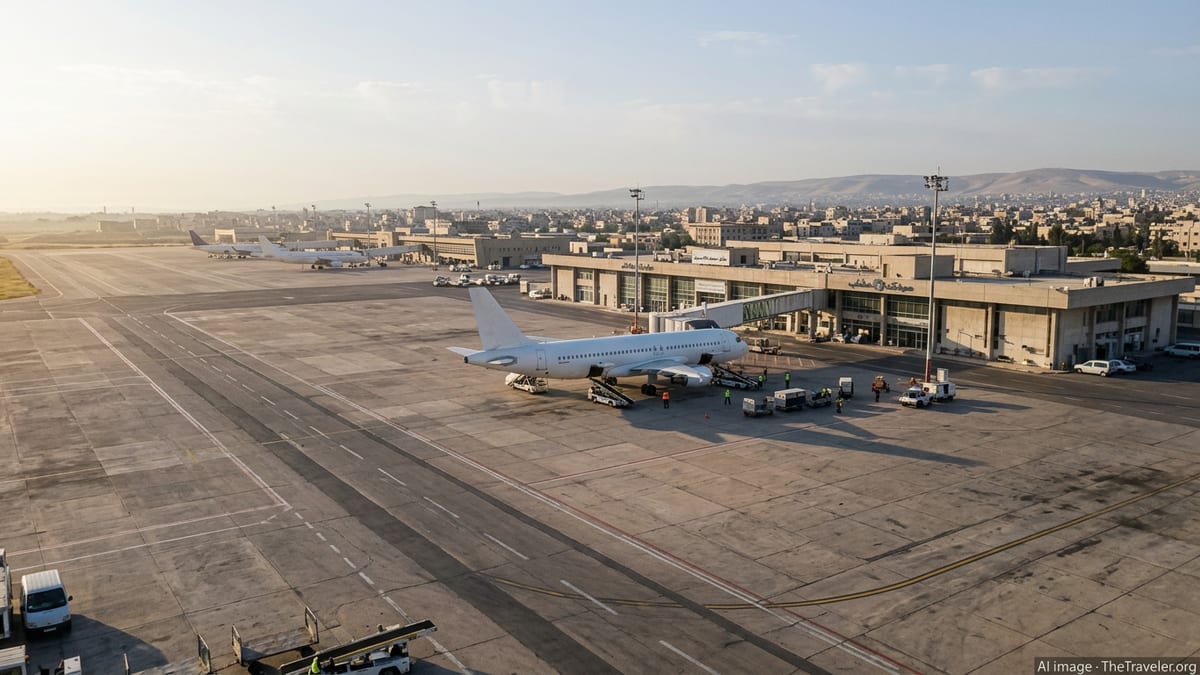
German Guidance on Syria Remains at Highest Alert
Publicly available information from the German Federal Foreign Office indicates that Germany continues to warn against all travel to Syria, with the dedicated Syria advisory updated on 29 October 2026. The advisory records that the overall warning has remained unchanged since 26 October 2026, signalling that the country is still regarded as too dangerous for private or tourist travel.
The guidance notes that the German embassy in Damascus remains closed to regular visitor traffic and that consular assistance for German nationals in Syria is extremely limited. Responsibility for emergency support and selected consular services continues to be handled by the German embassy in Beirut, reflecting ongoing operational and security constraints on the ground in Syria.
According to the advisory, incidents involving explosive devices in central Damascus during the summer of 2026, including attacks near locations frequented by international visitors, have reinforced assessments that personal security cannot be guaranteed anywhere in the country. The Federal Foreign Office highlights that organized tours offered by commercial providers do not offer meaningful protection from security incidents.
The travel and security notice further underlines that large parts of Syria remain affected by unstable front lines, residual armed groups and widespread contamination from mines and unexploded ordnance. The situation is described as volatile and difficult to predict, with the potential for sudden road closures, checkpoints and restrictions that can leave travelers stranded without reliable options for evacuation.
Regional Tensions and Risk of Escalation
In parallel to the country specific advisory, broader guidance published by the German government on the situation in the Near and Middle East points to a highly volatile regional environment. An official frequently asked questions document on stays in the region lists Syria alongside Israel and the Palestinian territories, Lebanon, Jordan, Iraq, Iran and several Gulf states among destinations for which Germany currently warns against travel.
The Syria advisory itself highlights that since late August 2026 there has been an increase in military strikes linked to the wider confrontation involving Iran, with targets reported across several countries in the region. The German Foreign Office notes that recent hostilities between Houthi forces and Saudi Arabia have added further uncertainty, contributing to a heightened risk of sudden escalations.
The guidance warns that renewed fighting could lead at short notice to significant restrictions in air traffic, including the possibility of flight cancellations or diversions affecting both regional and long haul routes that cross Middle Eastern airspace. Travelers with itineraries transiting the region are encouraged in published material to monitor airline communications closely and to stay informed about the security situation.
Reports from other governments, including the latest United States travel advisory for Syria, also underline the potential for armed attacks linked to regional power dynamics and non state actors. While each government issues its own assessments, the overall picture presented in current public advisories points to persistent cross border security risks that extend beyond Syria’s borders.
Debate Over Whether the Warning Has Been Tightened
Recent developments have prompted a public discussion over whether Germany has materially tightened its stance on travel to Syria in response to the shifting regional context. Coverage by Syrian state media on 29 October 2026 reported comments from the German chargé d’affaires in Damascus, who was cited as rejecting suggestions that Germany had issued a new, more restrictive warning.
According to that report, the diplomat indicated that the underlying travel warning and guidance for Syria remained in place without formal change, and that the most recent update by the Foreign Office related to regional developments rather than a revised Syria specific risk assessment. The remarks were presented in response to local speculation that new language amounted to an escalation in German policy.
The German Syria advisory published the same day lists its latest modifications as editorial in nature, while reiterating the standing warning against travel. The wording on regional security nonetheless gives greater prominence to the risk that confrontations involving Iran aligned groups and neighboring states could spill over into new areas or disrupt air routes used by travelers heading to or from the region.
Publicly available documents do not indicate any relaxation of Germany’s position. The continued classification of Syria as a destination subject to a comprehensive travel warning, combined with specific references to recent attacks in Damascus and the regional military situation, signals that the country remains off limits for leisure travel from a German policy perspective.
Practical Consequences for Travelers and Air Links
For travelers, the German position has several concrete implications even as some air connections between Europe and Syria slowly re appear. Syrian aviation authorities recently announced the planned launch of regular direct flights by Syrian Air between Damascus and Munich from 12 November 2026, in addition to existing services to Berlin. These routes would provide new links between Syria and Germany for those eligible and willing to fly.
At the same time, Germany’s travel warning emphasizes that the existence of commercial flights does not equate to an endorsement of travel or a guarantee of safety. The advisory explicitly notes that organized travel arrangements do not mitigate the underlying security risks, and that the capacity to provide consular assistance in the event of an incident in Syria is severely constrained.
The heightened focus on regional tensions also affects travelers who do not intend to enter Syria but whose journeys pass through neighboring airspace or hubs. Official German guidance on the wider Middle East recommends that German nationals staying anywhere in the region register with the federal crisis preparedness list so that they can be contacted with updates if the security situation deteriorates.
Given the risk of sudden disruptions, airlines and travel operators may adjust schedules or routings at short notice in response to airspace restrictions, changes in insurance conditions or security assessments. Travelers planning trips that involve transits through regional hubs are encouraged by publicly available advisories to maintain flexible itineraries, ensure they can be reached quickly and keep alternative arrangements in mind.
How Germany’s Advisory Fits Into Global Travel Guidance
Germany’s travel warning on Syria aligns closely with advisories issued by several other countries, which also classify Syria as a destination that should not be visited due to armed conflict, terrorism, kidnapping and the absence of reliable consular support. The latest United States advisory, updated on 23 October 2026, labels Syria as a location to be avoided entirely and underlines the long term suspension of embassy operations.
Many European partners maintain similarly restrictive guidance, reflecting a shared assessment that the security environment in Syria has not improved to a level that would permit the resumption of normal tourism or business travel. The continued presence of multiple armed actors, the legacy of past fighting and the potential for further escalation tied to broader regional disputes are all cited in public documentation as factors behind these decisions.
For prospective travelers, the result is a patchwork of flight options and regulatory conditions in which it is technically possible in some cases to book journeys involving Syria, while national foreign ministries strongly advise against doing so. Insurance coverage, legal liabilities and the ability to seek help in an emergency are all affected by these official warnings, and travelers are urged in open sources to consider these dimensions carefully.
As the regional landscape remains unsettled, Germany’s restated focus on Syria within the broader context of Near and Middle East security underscores that the country continues to be seen internationally as part of an interconnected crisis area. Any significant easing of the German travel warning would likely depend not only on changes within Syria itself but also on a durable reduction of tensions across the surrounding region.