


More news on this day
Royal Caribbean’s long-anticipated Discovery Class is still several years from debut, but new public filings and industry coverage are offering the clearest hints yet of where the next generation of smaller ships is likely to sail.
Get the latest news straight to your inbox!
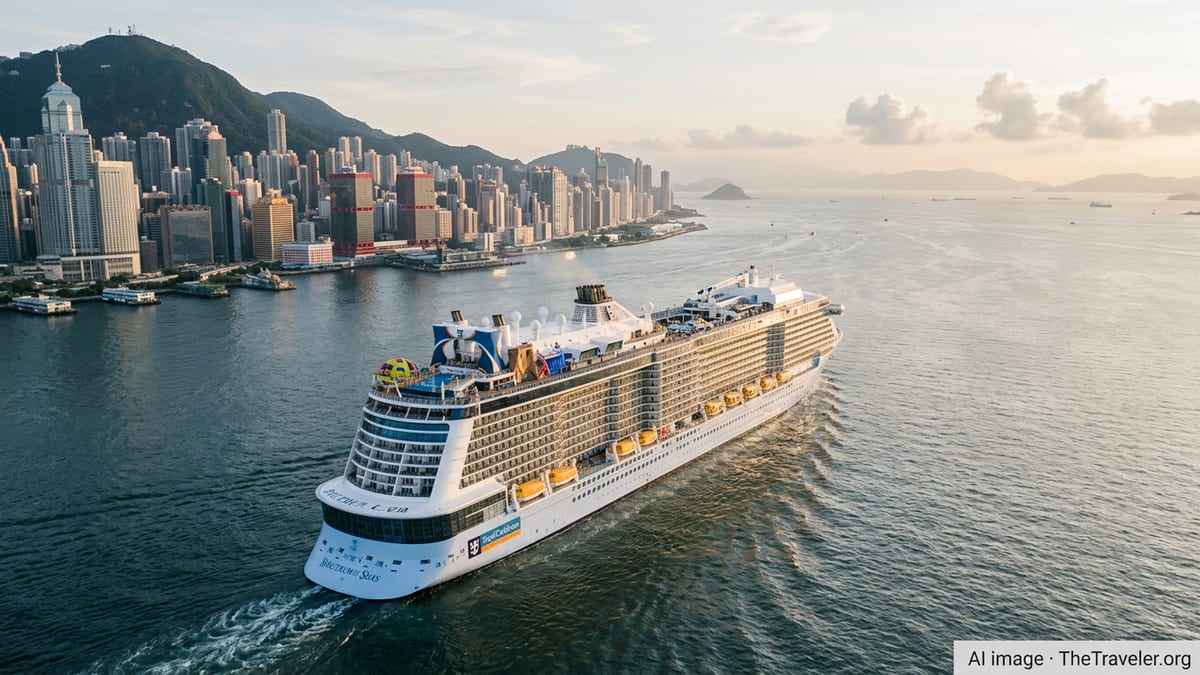
A Smaller Class Built for Destination-Focused Itineraries
Royal Caribbean Group has confirmed a multi-ship Discovery Class order with Chantiers de l’Atlantique in France, framing the project as a complement to its mega-sized Icon and Oasis vessels rather than a replacement. Company statements describe Discovery as a “new generation of smaller cruise ships,” signaling a pivot toward ports that cannot accommodate the world’s largest cruise ships but remain highly desirable to travelers.
Publicly available information suggests the first Discovery Class ship will debut near the end of the decade, with at least two firm orders and options for additional vessels. The tonnage and exact dimensions have not been formally disclosed, but industry analysis points to a mid-sized platform that sits below the gigantic Icon Class yet above older Vision and Radiance Class ships in flexibility and efficiency.
The positioning indicates that Royal Caribbean is designing Discovery Class to serve itineraries where port access, environmental regulations or berth sizes limit today’s biggest ships. That opens the door to routes featuring historic city centers, smaller islands and destinations that prize lower-impact tourism, rather than simply building around headline-grabbing onboard attractions.
Reports comparing Discovery with earlier Royal Caribbean ship classes suggest the newbuilds are likely to be optimized for longer sailings and more intensive port calls rather than short “weekend getaway” cruises. This aligns with broader industry trends in which mega-ships dominate marquee family markets while smaller hardware focuses on more immersive travel experiences.
Clues Point to Europe and the Mediterranean as Early Targets
Hints about Discovery Class deployment are emerging alongside Royal Caribbean’s latest Icon Class rollout. Legend of the Seas, an Icon Class ship entering service in 2026, is scheduled to spend its inaugural season in the Western Mediterranean before repositioning to Florida for Caribbean voyages. Observers note that this European-first strategy could foreshadow how the group thinks about deploying its future fleets, including Discovery.
With construction of Discovery Class taking place at Chantiers de l’Atlantique and the shipyard’s long history of delivering vessels that debut in Europe, analysts see the Mediterranean and Northern Europe as strong candidates for the class’s earliest itineraries. A mid-sized ship with enhanced maneuverability and updated environmental systems would be well positioned to visit ports with stricter local rules on ship size and emissions.
Smaller European harbors in regions such as the Greek Isles, Adriatic coast and Atlantic fringe of Spain and Portugal are frequently cited in commentary about the type of destinations Royal Caribbean could target with Discovery. These are areas where berth limitations and channel depths often preclude the largest vessels but where demand for cruise calls remains robust.
Industry coverage also notes growing interest among major cruise brands in shoulder-season and off-peak Europe sailings, including late-spring and autumn voyages that focus on culture, food and extended time ashore. A more compact Discovery Class ship would allow Royal Caribbean to compete more directly in that space without relying on ships initially designed decades ago.
Potential Caribbean, Americas and Niche Port Opportunities
While Europe appears to be a leading candidate, observers are also looking to the Caribbean and the Americas for future Discovery Class deployments. Royal Caribbean has increasingly saturated marquee Florida homeports with Oasis and Icon Class ships on short and weeklong routes, creating an opportunity for smaller hardware to tackle more specialized itineraries.
Published analyses of Royal Caribbean’s deployment strategy highlight a gap between the company’s largest ships, which focus on marquee Caribbean and Bahamas destinations, and its aging small and mid-sized vessels that currently serve secondary ports. Discovery Class could allow the line to offer longer, more varied Caribbean cruises that include smaller islands, less-frequented Central American ports and destinations in the Southern and Eastern Caribbean that reward ships with a lighter footprint.
Cruise-watchers also point to regional ports in the Gulf of Mexico, Western Caribbean and along the U.S. East Coast that are constrained by bridge clearances, channel widths or terminal infrastructure. A moderately sized Discovery hull might enable Royal Caribbean to expand or strengthen its presence in markets where it currently relies on older tonnage, including seasonal sailings from ports beyond its main Florida bases.
Commentary on cruise forums and in trade publications further suggests possibilities in Canada and New England, the Panama Canal region and even select South American routes. None of these itineraries have been confirmed, but they fit the broader pattern of using a flexible ship class to reach ports that are currently underserved by Royal Caribbean’s newest vessels.
How Discovery Class Fits into Royal Caribbean’s Long-Term Fleet Plan
The Discovery Class order follows years of heavy investment in very large Icon and Oasis Class ships, which are tailored to high-capacity, high-profile routes. Public filings and press materials describe Discovery as a way to “expand the vacation portfolio” and diversify Royal Caribbean Group’s offerings, rather than simply adding more berths to the same marquee markets.
Industry reports indicate that the group intends to use Discovery to phase out or redeploy some of its oldest ships over the next decade. Vision and Radiance Class vessels, which have been workhorses in smaller markets, are likely to see their roles reassessed once the new generation arrives with improved efficiency, updated cabins and more contemporary amenities.
Analysts also point out that the new class gives Royal Caribbean a tool to respond to evolving environmental regulations, which are particularly stringent in certain European and North American regions. Ships built later this decade are expected to incorporate advanced propulsion systems and emissions-reduction technologies, enabling access to ports and protected areas where older tonnage may face tightening restrictions.
As a result, Discovery Class is being interpreted not just as a new set of ships, but as a strategic pivot that will shape Royal Caribbean’s global network well into the 2030s. The itineraries have yet to be published, but recent moves in Europe and the Caribbean, combined with reports about ship size and shipyard capabilities, strongly suggest that guests can expect more destination-driven voyages to ports that until now have largely remained outside the reach of the company’s newest and largest vessels.