

More news on this day
Russia has surged ahead of Bulgaria, Germany, the United Kingdom, Saudi Arabia, China and other key markets to become Türkiye’s single largest tourism source country, underpinning a record-breaking visitor boom that is projected to reach around 64 million travelers and reinforce the country’s position among the world’s most visited destinations.
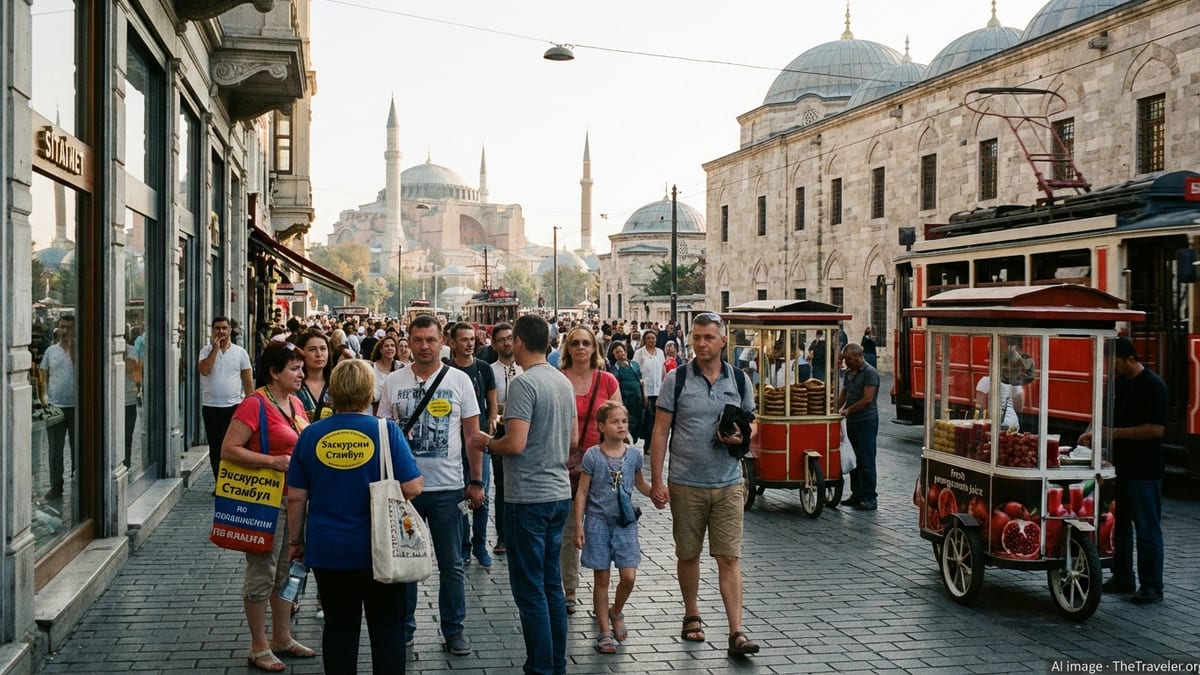
Russia Becomes Türkiye’s Leading Tourism Powerhouse
Official statements and recent data from Türkiye’s Culture and Tourism Ministry show that Russia has firmly established itself as the country’s top inbound market, outpacing long-standing European leaders such as Germany and the United Kingdom as well as regional neighbors like Bulgaria and Saudi Arabia. In both 2024 and 2025, Russian travelers have consistently ranked first among nationalities visiting Türkiye, with arrivals measured in the range of nearly 6.7 to 6.9 million annually, giving Russia a clear edge over other major markets.
This Russian prominence is part of a broader structural shift in Türkiye’s tourism geography. While European Union markets remain vital, the share of arrivals from Russia has risen noticeably since 2022, helped by flight restrictions and changing travel patterns following Moscow’s invasion of Ukraine. As western routes narrowed, Türkiye’s airports and resorts became even more important gateways for Russian holidaymakers seeking relatively accessible, visa-free or visa-light sun-and-sea destinations.
By 2025, ministry figures cited by senior Turkish officials placed Russia at the top of the inbound league table with around 6.9 million visitors, ahead of Germany with roughly 6.75 million and the United Kingdom with about 4.27 million. That hierarchy has been mirrored in monthly and seasonal data, where Russia and Germany often trade places at the very top, but Russia retains the overall annual lead.
Record Visitor Numbers Push Toward 64 Million
Against this backdrop, Türkiye has been smashing its own tourism records. After hosting 56.7 million visitors in 2023 and more than 62 million in 2024 when Turkish citizens living abroad are included, the government set an ambitious target of roughly 64 to 65 million visitors and more than 64 billion dollars in tourism revenue for 2025. Officials now say 2025 has already delivered the highest tourism revenue and visitor numbers in the country’s republican history, with foreign arrivals surpassing earlier records and total visitor numbers edging close to the mid-60-million mark.
Foreign tourist arrivals alone climbed past 52 million in 2024, and preliminary 2025 data show that figure being overtaken again as Türkiye consolidates its place as the world’s fourth most visited country. The combination of foreign tourists and visiting Turkish citizens from abroad is what brings the overall total close to the symbolic 64 million mark that policymakers have linked to a parallel 64-billion-dollar revenue goal.
Tourism has become one of the central pillars of Türkiye’s economic strategy, accounting for roughly 10 percent of gross domestic product and around 5 percent of total employment, according to statements from senior economic officials. Average spending per visitor has recently nudged above 1,000 dollars, helped by efforts to emphasize higher-value segments such as culture, gastronomy and boutique experiences in addition to mass-market resort stays.
Germany, the UK and Neighbors Play Supporting but Secondary Roles
Although Russia has taken the lead, European markets remain crucial to Türkiye’s tourism story. Germany, long a cornerstone of inbound travel to the Turkish Riviera and Aegean coast, continues to rank second in overall arrivals, contributing more than 6.6 million visitors in 2024 and an even higher tally in 2025. British travelers, meanwhile, have strengthened their position in third place, exceeding 4.3 million annual visitors and expanding beyond classic beach holidays to city breaks in Istanbul and cultural itineraries in Cappadocia and along the Aegean.
Regional neighbors such as Bulgaria and Iran, as well as markets including Saudi Arabia and other Gulf states, add further depth to the tourism base. Bulgaria is especially significant for short-haul cross-border travel into Edirne and other northwestern provinces, while visitors from Saudi Arabia and the wider Middle East have become increasingly visible in Istanbul’s historic districts and luxury retail corridors. China remains a strategic long-haul market that Türkiye aims to build up further as aviation links normalize and group travel gradually recovers.
Despite this breadth, the numbers underline a clear hierarchy. Russia, Germany and the United Kingdom dominate the league table, while countries such as Bulgaria, Iran, Saudi Arabia and China form an important but smaller second tier. This concentration has prompted Ankara to emphasize diversification even as it leans on its biggest markets to sustain record arrival and revenue figures.
Why Russians Are Choosing Türkiye in Record Numbers
The reasons for Russia’s outsized role in Türkiye’s tourism boom are both practical and geopolitical. Direct air connections between Russian cities and Turkish coastal hubs such as Antalya and resort towns along the Mediterranean and Aegean coasts remain plentiful, even as routes to many Western destinations have been curtailed. For Russian travelers, Türkiye offers a rare combination of relative proximity, favorable currency dynamics, familiar service standards and a permissive visa regime.
At the same time, Turkish tourism operators and officials have tailored products to Russian demand, from Russian-language services in hotels and retail outlets to targeted marketing campaigns for families and package-tour customers. Antalya, Alanya, Bodrum and Marmaris are among the destinations that see particularly strong Russian presence during the summer peak, with charter flights and all-inclusive resorts helping keep prices and logistics predictable.
The Mediterranean resort model has been complemented by growing Russian interest in urban and cultural tourism, particularly in Istanbul. Tour operators report that some travelers now blend a beach stay with a few days in the historic metropolis, a pattern that boosts average spending per trip and supports the government’s strategy of spreading tourism across more regions and seasons.
Economic Stakes and Future Outlook for Türkiye’s Tourism
Türkiye’s success in drawing nearly 64 million visitors carries significant macroeconomic weight. Tourism revenues help narrow the country’s chronic current account deficit, provide foreign currency inflows and support a vast ecosystem of hotels, restaurants, transport firms and small businesses from Istanbul to the smallest coastal towns. Policymakers frequently cite tourism alongside exports as a cornerstone of plans to stabilize the lira and sustain growth.
Looking ahead, Ankara has set new targets for 2026, including higher revenue goals in the high-60-billion-dollar range and continued expansion in both core markets such as Russia, Germany and the United Kingdom and growth markets like Spain, Italy, Ireland, the United States, Canada, China, Japan and South Korea. Officials emphasize that the strategy is not only to grow headline visitor numbers, but also to enhance per-capita spending by promoting year-round cultural, nature and wellness tourism.
Industry analysts note that geopolitical risks, climate-related disruptions and price competitiveness remain potential headwinds. Yet Türkiye’s performance through a series of shocks, including regional conflicts and even a major earthquake, has underlined the resilience of its tourism brand. With Russia firmly in the lead among source markets and Europe still delivering millions of loyal visitors every year, the country is entering its latest tourism cycle as a maturing global powerhouse rather than a purely seasonal Mediterranean playground.