

More news on this day
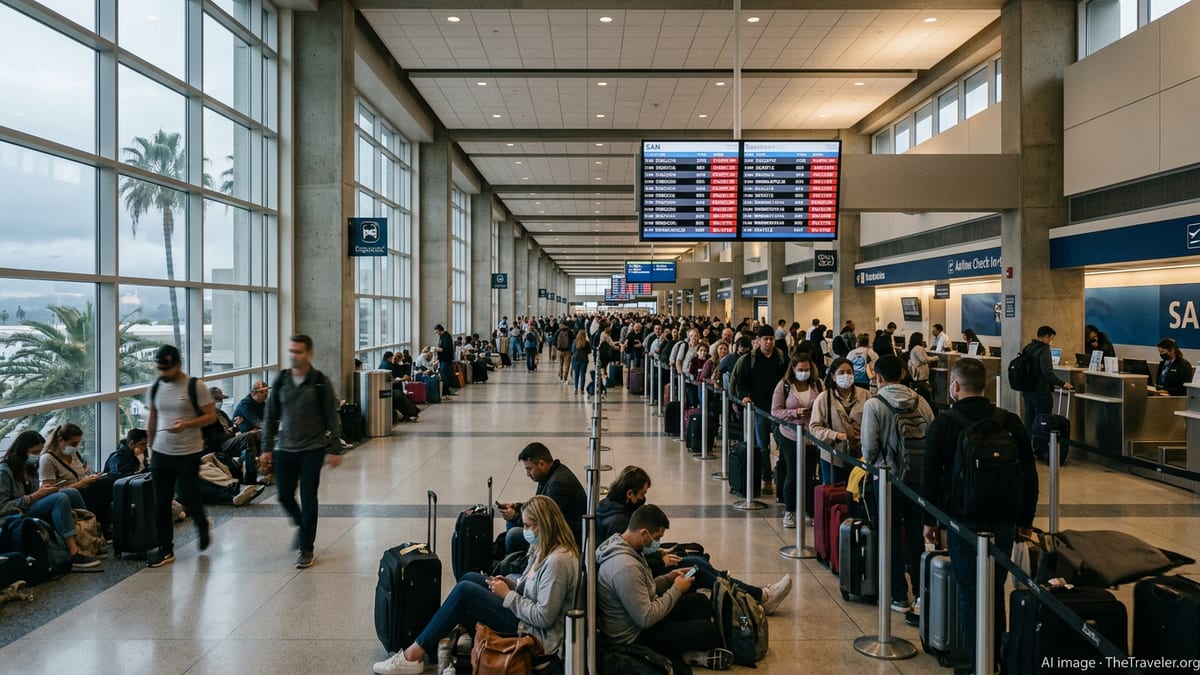
Travelers at San Diego International Airport faced a cascade of cancellations and delays on March 16 as a powerful winter storm sweeping the Midwest and Pacific Northwest disrupted flights to Chicago, Seattle, Minneapolis and other key hubs, snarling the schedules of thousands of passengers at the height of the spring travel period.
Get the latest news straight to your inbox!
Storm System Ripples Across the National Air Network
Publicly available weather and aviation data show that a broad storm complex affecting large swaths of the United States on March 13 to 16 has pushed heavy snow, high winds and freezing conditions into major hub cities including Chicago, Minneapolis and Seattle. Those hubs serve as critical connection points for airlines operating out of San Diego, creating a knock-on effect for both outbound and inbound flights.
Coverage from national outlets describes snow-packed runways, de‑icing backlogs and strong crosswinds in the Upper Midwest that have constrained airport capacity in Chicago O’Hare, Chicago Midway and Minneapolis–Saint Paul. Similar reports from the Pacific Northwest point to intermittent snow and icy conditions around Seattle–Tacoma International Airport, where operations slowed as crews worked to keep taxiways and ramps clear.
As those airports reduced arrivals and departures, airlines began pre‑emptively canceling or significantly delaying flights from San Diego International Airport to avoid aircraft and crew becoming stranded downline. This cascading disruption has affected a wide range of carriers and routes, with Chicago, Seattle and Minneapolis particularly impacted because of their role as connection points for travel to the East Coast, Canada and international destinations.
Aviation trackers on March 16 indicate that the storm’s reach is national in scope, affecting airports from the Plains to the Great Lakes and into parts of the Northeast. For travelers departing San Diego, that has meant disruptions not only to nonstop services but also to multi‑segment itineraries that rely on smooth connections through weather‑hit hubs.
Routes and Airlines Most Affected from San Diego
Flight boards at San Diego International Airport on March 16 show clusters of cancellations and extended delays on services to Chicago, Seattle and Minneapolis in particular. These routes are heavily used by business travelers, leisure passengers and those connecting onward to smaller regional cities, amplifying the impact well beyond a handful of nonstop flights.
Chicago O’Hare, one of the busiest hubs in the country, has seen waves of cancellations as the storm system disrupted operations across the Upper Midwest. Publicly available airline waivers and social media updates point to multiple San Diego–Chicago flights being grounded or rescheduled, with some passengers facing long rebooking windows as aircraft and crew are repositioned.
In Minneapolis, state emergency measures and local snowfall reports over the weekend highlight difficult conditions that have constrained flight operations into and out of Minneapolis–Saint Paul International Airport. This has translated into cancellations and rolling delays on San Diego–Minneapolis services, especially on carriers that rely on tight connection banks through the hub.
Seattle–Tacoma has also been under pressure from snow and icy conditions, based on regional forecasts and airport operations updates circulated over the past 24 hours. San Diego–Seattle flights have been affected as airlines adjust schedules to match reduced capacity and ensure that aircraft are available where demand and weather allow, sometimes resulting in last‑minute cancellations even after boarding times were initially posted.
What Passengers Need to Do Right Now
For travelers in San Diego with tickets to Chicago, Seattle, Minneapolis and other storm‑affected cities over the next 24 to 48 hours, publicly available airline guidance strongly emphasizes checking flight status frequently and using digital tools before heading to the airport. Many carriers have rolled out weather‑related travel waivers that allow passengers to change dates without additional change fees, provided travel occurs within designated windows and fare rules are met.
Industry advisories suggest that travelers first confirm whether their specific flight is still scheduled, then explore same‑day alternatives within the airline’s app or website. In some cases, passengers may be able to reroute through less affected hubs or move their trip to later in the week when forecasts point to improving weather conditions across the Midwest and Pacific Northwest.
At the airport itself, staffing and congestion can become challenging during major disruption events. Passenger advocacy information recommends arriving earlier than usual if a flight is still operating, bringing necessary medications and essentials in carry‑on bags, and preparing for extended waits at customer service counters. For those whose flights are canceled, rebooking via phone, chat or mobile app can sometimes be faster than queuing in person at busy gate areas.
Travelers on multi‑segment itineraries should pay particular attention to connections through Chicago, Seattle or Minneapolis. If a downline leg is canceled while the first segment from San Diego remains scheduled, some consumer guidance indicates it may be better to adjust the entire itinerary in advance rather than risk becoming stranded mid‑journey with limited hotel availability and overbooked later flights.
Your Rights When Flights Are Canceled or Delayed
The extent of compensation or assistance available when a flight is canceled or heavily delayed depends on the airline’s policies and the cause of the disruption. U.S. government resources on airline passenger protections note that when weather is the primary driver, carriers are generally not required to provide hotel vouchers or meal compensation, although many will offer rebooking on the next available flight at no additional cost.
Publicly available policy charts show that some airlines voluntarily provide meal credits or hotel discounts during large‑scale disruption events, even when those events are attributed to severe weather. Passengers are encouraged to review the specific contract of carriage and any weather waiver details posted on the airline’s website or app to understand what forms of accommodation or reimbursement might be available.
Consumer advocates often advise that travelers keep all receipts for out‑of‑pocket expenses such as food, ground transportation and lodging incurred as a result of cancellations, in case the airline later broadens its goodwill measures or travel insurance providers request documentation. Travel insurance policies, including those offered through credit cards, may provide additional coverage for significant delays or overnight stays, but benefits vary widely and usually require proof that the disruption met certain time thresholds.
Even when compensation for weather‑related issues is limited, travelers retain rights to a refund if an airline cancels a flight and the passenger chooses not to travel. Government guidance explains that this typically applies to the unused portion of the ticket, and passengers may request refunds rather than accept credits if the carrier cannot provide a suitable alternative itinerary.
Outlook for the Days Ahead
Meteorological outlooks indicate that the core of the current storm system should move eastward after March 16, easing some of the immediate pressure on Upper Midwest and Pacific Northwest airports. However, aviation analysts note that it can take several days for airline networks to fully recover from large‑scale disruptions, as aircraft and crews gradually return to normal rotations and backlogs of displaced passengers are cleared.
For San Diego travelers with plans later in the week, schedules may stabilize, but lingering irregularities are possible on routes connected to heavily affected hubs. Early morning and late‑evening flights are often the most vulnerable to continued knock‑on effects, especially if aircraft are arriving from cities still experiencing weather‑related slowdowns.
Published coverage of recent storm‑related disruptions across the U.S. shows a recurring pattern in which airlines increasingly cancel flights proactively to avoid passengers being stranded on aircraft or at intermediate hubs. While this approach can be frustrating in the short term, it is intended to streamline recovery once weather conditions improve and to reduce safety and logistical risks associated with operating near the limits of visibility and crosswind thresholds.
Travelers with flexible plans may find it worthwhile to monitor conditions and consider shifting non‑essential trips out of the current disruption window. For those who must travel from San Diego to Chicago, Seattle, Minneapolis or beyond in the coming days, staying informed through airline apps, airport status boards and official weather updates will be key to navigating what remains a fluid and fast‑moving situation.