

More news on this day
Travelers moving through San Diego International Airport on April 12 encountered a fresh wave of flight delays that quickly rippled across major US hubs, complicating weekend connections for passengers nationwide.
Get the latest news straight to your inbox!
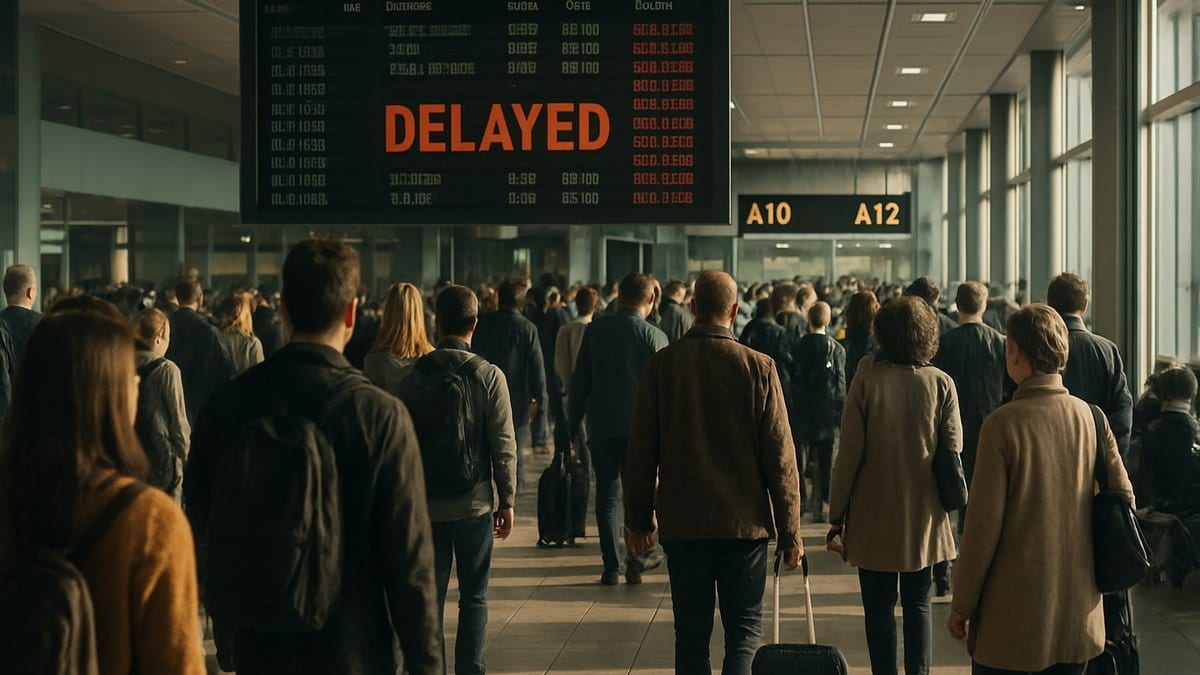
Delays Mount at San Diego International
San Diego International Airport reported several dozen delayed departures and arrivals on April 12, with only a small number of outright cancellations, according to aviation tracking data and airport status boards. The pattern reflected a familiar scenario for the single-runway coastal airport, where even modest disruptions can cascade into long waits at gates and crowded hold rooms.
Publicly available information shows that carriers operating dense schedules from San Diego to major hubs such as Los Angeles, Phoenix, Denver, Dallas and Chicago bore the brunt of the disruption. Late inbound aircraft, schedule compression and minor weather impacts in the region combined to push many flights behind schedule by 30 minutes or more, enough to cause missed connections across the network.
Operational data indicates that large domestic airlines with multiple daily frequencies in and out of San Diego, including American, Southwest, United and Alaska, were disproportionately affected. While most flights eventually departed, rolling gate holds and aircraft swaps increased uncertainty for passengers attempting to connect onward the same day.
Flight performance statistics for recent months show that San Diego’s constrained layout and heavy peak-hour traffic can magnify the effect of even short-lived slowdowns. When a morning or early afternoon bank of flights falls behind schedule, knock-on delays can extend late into the evening as crews and aircraft attempt to realign with published timetables.
Knock-on Effects at Chicago, Dallas and Other Hubs
The impact of San Diego’s April 12 delays quickly became visible at major connection points across the United States. Aggregated flight-tracking summaries for the day showed several thousand delayed flights nationwide, with the heaviest concentrations at large hub airports such as Chicago O Hare, Dallas Fort Worth, Denver, Atlanta and Newark.
Published coverage of national operations indicated that airlines with large hub-and-spoke networks experienced hundreds of delayed flights across their systems. While many of these disruptions originated from broader factors such as regional weather and air traffic flow programs, late departures from San Diego fed into the same pressure points, particularly on routes arriving into Chicago, Dallas and Denver during already busy afternoon banks.
Domestic passengers connecting from San Diego through these hubs to smaller cities in the Midwest, South and Northeast were among the most exposed to missed or tight connections. In several cases, rebookings pushed travelers to late-night arrivals or overnight stays near hub airports, especially where the final leg of a journey was the last scheduled departure of the day.
Industry data trends suggest that the growing frequency of days with more than 2,500 to 3,000 delayed flights nationwide makes local disruptions like those in San Diego more consequential. Even when no nationwide ground stops are in effect, clusters of delays at a single coastal origin can add strain to already crowded arrival and departure banks in the country’s largest hubs.
Weather, Congestion and Infrastructure Constraints
While April 12 did not bring the kind of extreme storms that sometimes shut down entire swaths of US airspace, scattered weather disturbances and low clouds around parts of Southern California and the interior West still reduced margins in an already tight system. Air traffic management advisories for the weekend pointed to periodic flow restrictions and spacing requirements on arrival and departure routes.
San Diego’s geography and infrastructure leave less room for operational flexibility than at many multi-runway hubs. The airport relies on a single primary runway nestled between downtown and the bay, with limited space for holding aircraft and managing long banks of departures. When flights stack up at the gate, boarding and turnaround times lengthen, which in turn increases the likelihood that crews will run up against duty-time limits.
Recent reporting on West Coast airports has highlighted how construction, runway maintenance and terminal projects can further constrain capacity. At San Diego, phased work on terminal facilities and airfield improvements has been scheduled in a way that attempts to minimize operational impact, yet any reduction in taxiway or gate availability can contribute to congestion during peak hours.
Nationally, federal delay maps and traffic management logs for early April show a patchwork of modest constraints rather than a single dominant cause. This fragmented picture often translates into what passengers experience as unpredictable pockets of disruption, where a flight may appear routine at departure but encounters compounding delays en route or on arrival.
Travelers Face Missed Connections and Limited Alternatives
For travelers starting their journeys in San Diego, the April 12 disruptions translated into long lines at customer service desks, rebooked itineraries and a scramble for hotel rooms near key hub airports. Because many San Diego departures connect to the final evening flights into smaller regional destinations, even a short delay at the origin can mean an unplanned overnight stay hundreds of miles away.
Publicly available guidance from consumer advocacy groups notes that during widespread delay events, options can narrow quickly. When multiple flights into a given destination are delayed or oversold, standby lists grow longer and open seats become scarce. Travelers connecting from San Diego through major hubs on April 12 reported limited choices on later flights, particularly on routes to medium and small markets.
Some airlines expanded the use of interline agreements and same-day rebooking tools to move San Diego passengers onto alternative routings via secondary hubs. However, the overall volume of delays nationwide limited the ability to fully absorb the disruption. In some cases, travelers arriving late from San Diego into cities such as Chicago or Atlanta faced the prospect of departing the next morning on the first available flight.
Data from previous high-disruption days suggests that the residual impact can linger for at least one additional operational cycle. Aircraft and crew that ended April 12 out of position may require schedule adjustments on April 13, potentially causing minor follow-on delays even after conditions at San Diego and the major hubs begin to normalize.
What Travelers Can Learn from the April 12 Disruptions
The events surrounding San Diego’s April 12 delays underscore the heightened sensitivity of modern airline networks to local disruptions. Even a relatively modest cluster of delayed departures at a single origin airport can cascade across multiple time zones when it intersects with already busy hub operations and tight aircraft utilization plans.
Travel experts and consumer information outlets consistently recommend building additional buffer time into itineraries involving single-runway coastal airports and large connection hubs. For San Diego travelers, that can mean opting for earlier departures when possible, particularly on itineraries that connect through cities known for congestion or weather-related slowdowns in spring.
Guidance widely shared by airlines and travel organizations also emphasizes the importance of monitoring flight status and broader national delay patterns before heading to the airport. Real-time dashboards showing clusters of delays at key hubs can offer early warning that a connecting itinerary may be at risk, even if the San Diego departure itself still appears on time at check-in.
As airlines, airports and regulators continue to adjust scheduling, staffing and infrastructure plans in response to growing demand, days like April 12 highlight the operational fine line the system walks. For travelers using San Diego as a gateway, understanding that local delays can quickly ripple outward across the national network may help in planning more resilient trips during busy travel periods.