

More news on this day
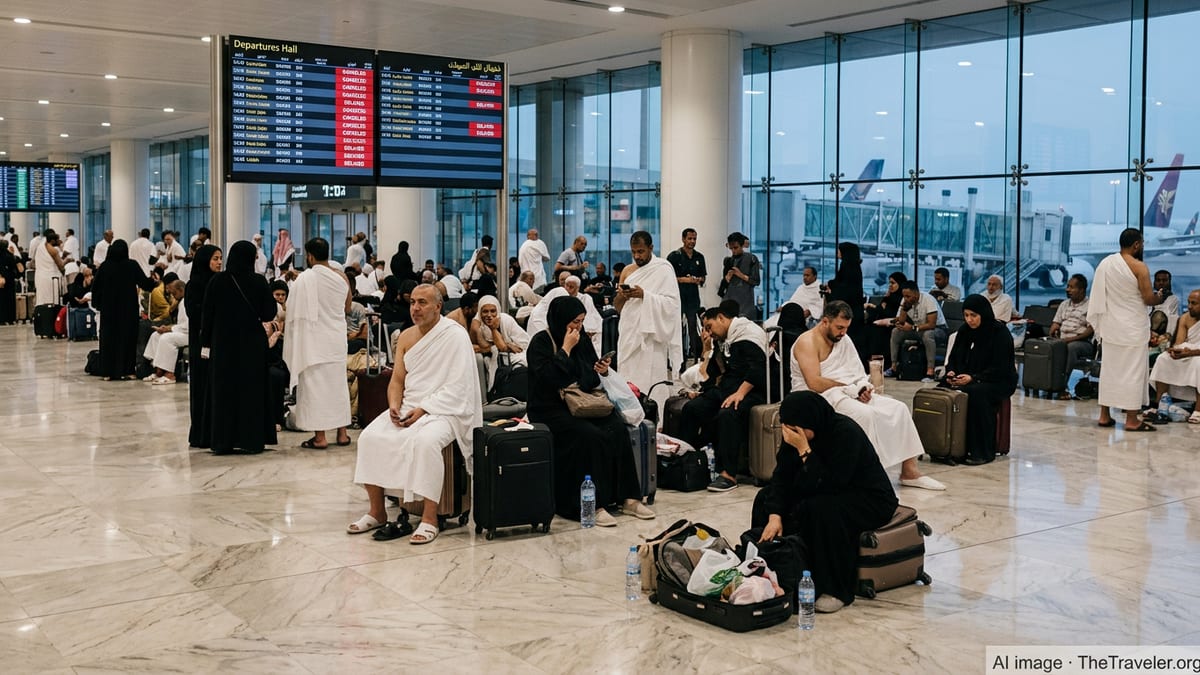
Thousands of travellers have been left stranded across Saudi Arabia this week after more than 300 flights operated by major Gulf carriers including Qatar Airways, Saudia and Gulf Air were cancelled or severely delayed, disrupting a web of connections to key cities such as Riyadh, Jeddah, Dammam, Medina and Abha.
Get the latest news straight to your inbox!
Major Gulf Carriers Slash Schedules Amid Regional Turmoil
Airlines across the Gulf have scrambled to cut or reconfigure schedules as airspace restrictions and fast-changing security assessments ripple through one of the world’s busiest aviation corridors. Industry sources say the latest round of disruption has wiped out over 300 flights touching Saudi airports, as carriers from Qatar, Bahrain and other Gulf states suspend or reroute services that would normally funnel passengers through hubs like Doha and Manama before continuing on to Saudi Arabia.
Qatar Airways, a key operator on routes into Saudi cities for both religious pilgrims and transit passengers, has cancelled multiple services in recent days, leaving customers struggling to reach or leave the kingdom. Travellers posting on airline forums and social media describe last-minute notices of cancellation, difficulty rebooking, and long waits to reach call centres as the carrier works through a mounting backlog of affected itineraries.
Bahrain-based Gulf Air has also pulled a number of Saudi-bound flights, including services feeding into Jeddah and other western gateways. While Saudia, the Saudi flag carrier, has maintained more of its domestic and international operation than some regional rivals, it too has been forced to adjust timings and consolidate services, adding to congestion at already crowded terminals.
Low-cost and regional airlines that rely on Gulf hubs have not been spared, with knock-on cancellations spreading across the broader network. The result is a patchwork of gaps in the usual Saudi flight map, hitting both point-to-point travellers and those using the kingdom as a vital east–west corridor.
Riyadh, Jeddah and Dammam See Logjams as Backlogs Build
At King Khalid International Airport in Riyadh, passengers have reported crowded departure halls, long queues at airline desks and overnight waits for scarce seats on remaining services. With some routes consolidated and others suspended outright, those who do manage to rebook often face multi-stop itineraries or lengthy detours via secondary airports.
In Jeddah, the main gateway for pilgrims travelling to Mecca and Medina, the effect has been particularly acute. Travellers finishing Umrah or other religious trips are finding their outbound connections cancelled, forcing them to pay higher fares on remaining flights or extend hotel stays while they search for alternatives. Travel agents in the city say demand for any available seat to major regional hubs has surged as families try to get home.
Dammam, serving Saudi Arabia’s eastern province and heavily dependent on connectivity with Gulf neighbours, has seen a wave of cancellations and missed connections. With some flights into Doha, Bahrain and the United Arab Emirates suspended, passengers who would typically make short hops to connect with long-haul services are instead stranded in the kingdom’s eastern cities, unsure when normal schedules will resume.
Secondary hubs such as Qassim and Abha, which in recent years have enjoyed expanded links with Gulf carriers, are also feeling the strain. Where these airports once offered multiple daily options to Doha or Manama, travellers now face intermittent service and elevated risk of last-minute changes.
Medina, Abha and Smaller Cities Struggle With Limited Alternatives
In Medina, where many international passengers arrive via regional hubs before continuing by road to Mecca or other destinations, the sudden thinning of flights has left terminals quieter but travellers more anxious. Those whose return journeys rely on Qatar Airways or Gulf Air connections are being urged by agents to explore rebooking onto Saudia or other carriers still operating direct or one-stop routes, though availability is tight.
Abha, a key gateway to Saudi Arabia’s southwest, has similarly seen its international links disrupted. Qatar Airways and other Gulf airlines have previously promoted Abha as part of a broader expansion into secondary Saudi cities, but passengers now report schedules that shift from one day to the next, with cancellations announced only hours before departure.
In smaller airports such as Arar or Al-Qurayyat, the main impact is indirect. With pressure on major hubs rising, domestic sectors feeding into Riyadh, Jeddah and Dammam are close to full, leaving fewer seats for last-minute travellers attempting to reposition within the kingdom in search of a viable international connection. Travel advisors say some passengers are resorting to long-distance road or rail journeys to reach an airport where outbound seats are still available.
The cumulative effect has been to expose how deeply Saudi Arabia’s regional air connectivity is tied to the health of Gulf hubs. When Qatar, Bahrain or the United Arab Emirates experience serious operational disruption, the shock quickly spreads to Saudi airports large and small.
Stranded Travellers Face Mounting Costs and Limited Clarity
For travellers caught up in the wave of cancellations, financial and personal costs are mounting. Many report paying significantly higher fares to secure replacement tickets on Saudia or other carriers, particularly on popular routes linking Saudi Arabia with South Asia, Europe and North Africa. Others say they have lost non-refundable hotel bookings or missed work and family commitments as their stays in the kingdom stretch beyond what they planned.
Communication challenges have compounded the frustration. Passengers attempting to reach airline call centres, online chat channels or ticket offices describe long waits and conflicting information about their options. In some cases, travellers have learned of cancellations only after arriving at the airport, leading to crowded service desks and long lines at rebooking counters late into the night.
Consumer advocates stress that while airlines are dealing with an evolving operational environment, they remain responsible for providing clear guidance on rebooking, refunds and accommodation where required. Legal experts note that the scope of passenger protections varies depending on where a ticket was purchased and which jurisdictions apply, leaving many travellers uncertain about their rights.
Social media platforms and informal traveller groups have emerged as ad hoc information hubs, sharing reports on which routes are still operating and which airlines appear most flexible with waivers and date changes. Yet with conditions shifting daily, passengers are warned that what worked for one person may not be available the next day.
Authorities and Airlines Urge Flexibility as Networks Reset
Saudi aviation and airport authorities are coordinating with carriers to manage congestion and prioritise essential traffic, according to officials familiar with the situation. While domestic services within Saudi Arabia have generally held up better than cross-border routes, they too are being adjusted as airlines reshuffle aircraft and crews to cover the most critical sectors.
Airlines operating into Saudi airports are advising customers to check flight status frequently, avoid travelling to the airport without a confirmed departure, and consider postponing non-essential trips. Some carriers have introduced temporary change-fee waivers and flexible rebooking policies, but these are often limited to specific travel dates and ticket types.
Travel consultants recommend that passengers maintain as much flexibility as possible, including being open to departures from alternative Saudi airports or accepting longer routings that bypass heavily affected hubs. They also encourage travellers to keep all documentation of extra expenses, in case partial reimbursement or travel credits become available later.
With no clear timeline for a full restoration of normal schedules, industry analysts say the disruption underscores the vulnerability of tightly interconnected hub-and-spoke networks that dominate Gulf aviation. For now, Saudi Arabia’s travellers are left navigating a fragmented patchwork of remaining services, hoping that each new “update” from airlines brings them closer to a confirmed seat out of the kingdom rather than another unwelcome cancellation.