

More news on this day
Thousands of travelers across Saudi Arabia, Kuwait, the United Arab Emirates, Qatar and neighboring countries are facing severe disruption after Saudia grounded 43 flights on Monday, compounding a wider regional aviation crisis triggered by Middle East airspace closures.
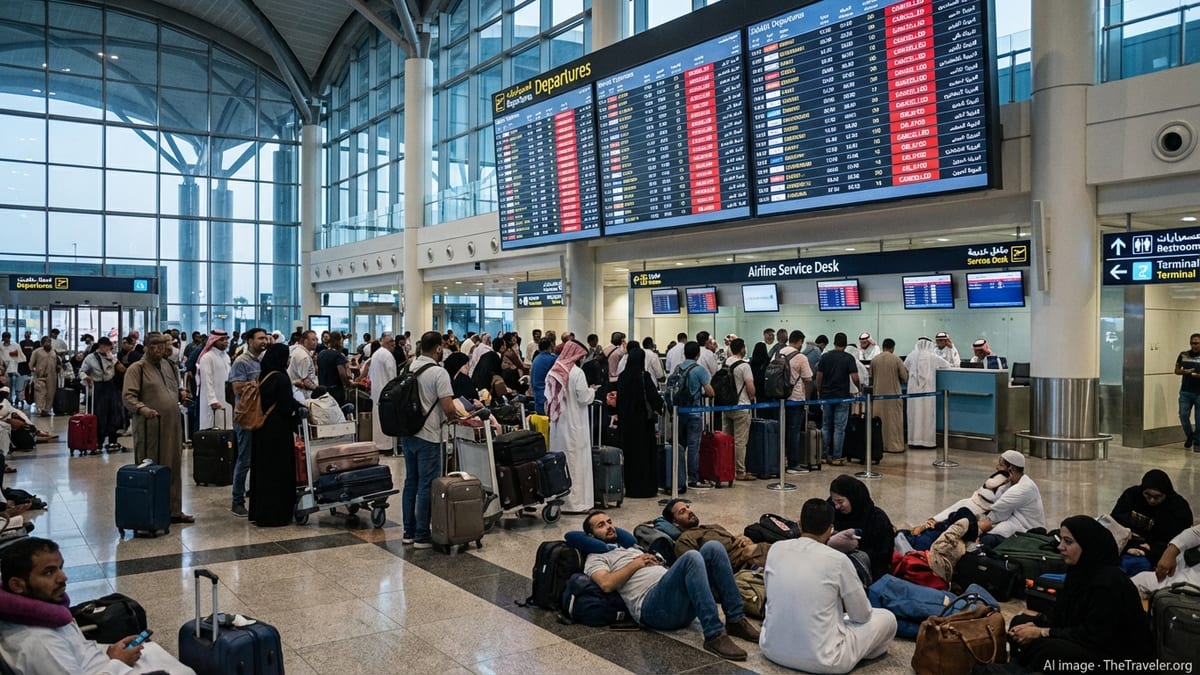
Groundings Hit Jeddah, Riyadh and Key Gulf Gateways
Saudia’s latest round of cancellations has rippled through major hubs including Jeddah’s King Abdulaziz International Airport and Riyadh’s King Khalid International Airport, as well as key Gulf gateways in Dubai, Doha, Kuwait City and Abu Dhabi. The grounded schedule, which includes 43 flights across regional and international routes, has left departure boards filled with cancellations and long stretches of red "delayed" notices.
Among the affected services are high-demand links between Jeddah and Kuwait, Dubai and Doha, as well as shuttle flights that normally connect Riyadh with Dubai and Amman. Services between Saudi cities and hubs in Abu Dhabi, Bahrain and Peshawar have also been disrupted, shrinking options for travelers trying to transit between Asia, the Gulf and Europe.
Passengers report spending the night in terminals as they wait for clarity from the airline on rebooking options. While Saudia has issued general apologies and reiterated that safety remains its top priority, many travelers say they have been given limited information on when normal operations might resume.
The grounding follows a weekend in which aviation authorities across the region warned that some services would be suspended or rerouted in response to the fast-changing security situation and evolving airspace restrictions.
Regional Airspace Closures Deepen the Disruption
The immediate trigger for the latest wave of cancellations has been the closure or severe restriction of airspace across multiple Middle Eastern countries following military escalations involving Iran, the United States and Israel. Authorities in Iran, Iraq, Jordan, Lebanon, Qatar, Bahrain, Kuwait and the United Arab Emirates have all moved to restrict air traffic, forcing airlines to cancel services outright or plan lengthy detours.
As a result, operations at major aviation hubs in Dubai, Abu Dhabi and Doha have been drastically curtailed, with large portions of scheduled arrivals and departures removed from the board. Aviation data providers estimate that regional cancellations have already run into the thousands since the first closures took effect, with the knock-on impact reverberating far beyond the Gulf.
Dubai, Abu Dhabi and Doha typically act as bridges between Europe, Africa, Asia and Australasia. When those links are severed or severely limited, passengers outbound from Saudi Arabia find that many of their onward options simply no longer exist, even if their initial Saudia flight were to operate. That has magnified the impact of Saudia’s own grounding of 43 services, as alternative routings through neighboring hubs become scarce.
Industry analysts note that even flights still appearing on timetables may ultimately not operate, as airlines are forced to adjust at short notice in response to shifting security guidance and the availability of safe flight corridors.
Stranded Passengers Report Confusion and Crowded Terminals
Across the affected airports, the human impact of the disruption is immediate and highly visible. In Jeddah, travelers bound for Kuwait, Dubai or Doha describe long queues at airline desks and crowded waiting areas, with families spread across the floor of departure halls as they wait for new flight allocations.
Similar scenes are unfolding in Dubai and Doha, where stranded passengers from across the region have found that onward flights into Saudi Arabia and other Gulf states are now suspended or heavily delayed. Many are transit passengers who had already flown in from Asia or Europe, only to learn on arrival that their connections are no longer operating.
Travelers have also voiced frustration about inconsistent communication. While some received text messages or app alerts warning of cancellations before leaving for the airport, others say they discovered the disruption only at check-in or after passing through security. Reports from several hubs indicate that not all airlines have provided hotel accommodation or meal vouchers, leaving some passengers to arrange their own overnight stays at short notice.
Local authorities in Saudi Arabia have responded by directing airports and relevant agencies to offer assistance to those stuck in transit. Officials have emphasized that passengers should rely on official airline and airport channels for up-to-date information and avoid unverified social media reports that may be outdated or inaccurate.
Saudi Arabia Moves to Support Stranded Gulf Citizens
In a sign of the scale of the crisis, Saudi Arabia has announced special measures to host citizens from neighboring Gulf Cooperation Council states who are unable to return home due to the continuing flight disruptions. Under instructions issued via official channels, authorities have been tasked with securing accommodation and essential services for stranded GCC nationals inside the Kingdom.
The move is being presented as a gesture of regional solidarity at a moment when air links across the Gulf are under unprecedented strain. With flights into and out of Qatar, Kuwait, Bahrain and the United Arab Emirates all affected by closures and reroutings, some GCC citizens who traveled to Saudi Arabia for work, family visits or tourism now find themselves stuck.
Saudi officials say centralized support services will be established to coordinate with airlines, hotels and local authorities, helping to bridge the gap until airspace restrictions are eased and commercial schedules stabilize. While no official figure has been given for the number of people affected, regional media report that the tally of stranded travelers runs into the tens of thousands across the Gulf.
Travel industry observers note that such emergency hospitality measures, combined with flexible ticketing and waivers from airlines, will be critical to managing the situation in the days ahead. Without coordinated support, they warn, airport congestion and passenger frustration could escalate further as the disruption drags on.
What Travelers Should Do as the Situation Evolves
With conditions changing by the hour and airspace decisions driven by security considerations, aviation authorities and airlines are urging passengers to check their flight status repeatedly on the day of travel and to avoid heading to the airport unless their flight is clearly confirmed as operating.
Saudia has advised customers affected by the 43 grounded flights that they will be contacted directly through the details linked to their bookings, and that options may include rebooking on later services once routes reopen or securing refunds where travel is no longer possible. Other regional and international carriers flying into the Gulf are issuing similar guidance, with many temporarily waiving change fees.
Travel agents across Saudi Arabia and the wider region report a surge in requests for alternative routings that bypass the most restricted airspace, often via longer paths through Africa or southern Europe. However, capacity on these workarounds is limited, and higher demand is already pushing up fares on remaining routes.
For now, both airlines and regulators stress that safety and security considerations will override commercial pressures. That means travelers planning to fly to or through Jeddah, Riyadh, Dubai, Doha, Kuwait City or Abu Dhabi in the coming days should be prepared for extended disruptions, and should build contingency time into any essential journeys while the region’s airspace remains constrained.