

More news on this day
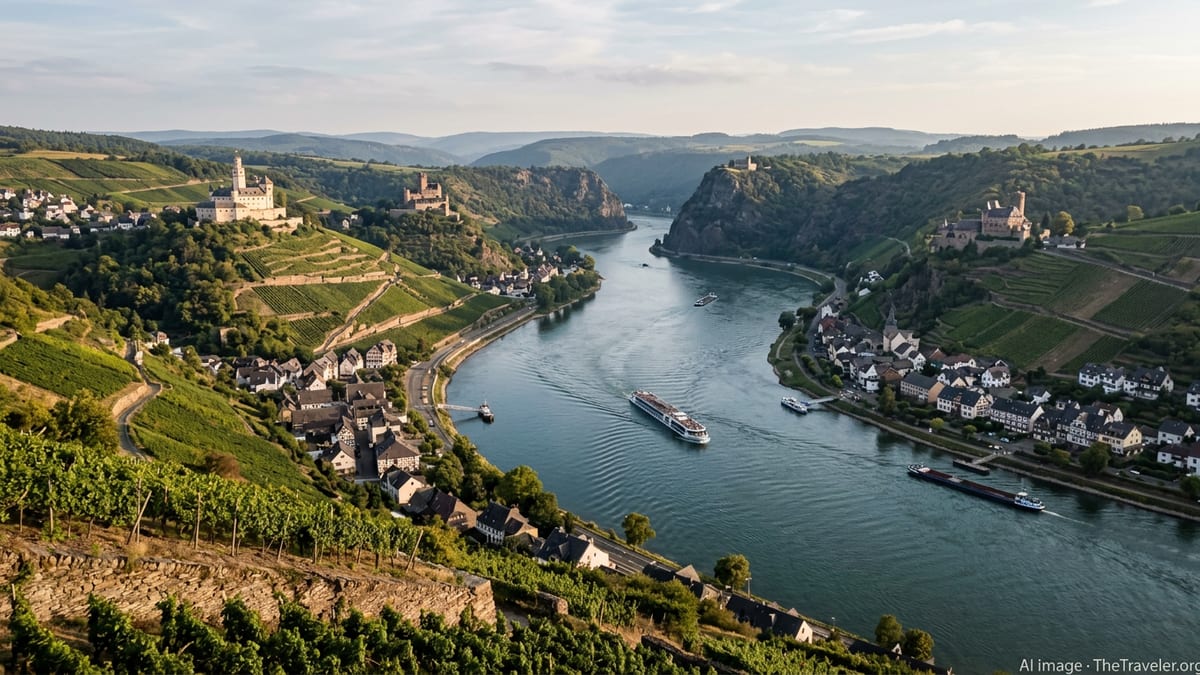
As Europe’s river cruise season ramps up for 2025 and 2026, Germany’s Upper Middle Rhine Valley is emerging as one of the continent’s most coveted stretches of waterway, luring travelers with a compact panorama of hilltop castles, terraced vineyards and legendary river bends packed into barely 40 miles between Bingen and Koblenz.
A UNESCO River Gorge Built for Slow Travel
Designated a UNESCO World Heritage site, the Upper Middle Rhine Valley concentrates centuries of European history into a narrow corridor of cliffs and curves where the Rhine has carved through slate hillsides. Passenger ships thread this gorge in both directions, passing some of the highest densities of medieval fortifications anywhere in the world alongside small wine towns that still look to the river as their main artery.
Many cruise lines now highlight this short but dramatic section as the scenic centerpiece of longer Rhine itineraries. Recent brochures from European and North American operators emphasize unhurried daylight transits through the gorge, often timed so travelers are on deck for the most photogenic hours, with commentary pointing out the castles, villages and sheer rock faces that crowd the channel.
For travelers, that focus translates into more time outdoors on open decks, additional photography sessions and, on some sailings, dedicated guides who join the ship just for the Middle Rhine stretch to interpret the cultural landscape, from ancient trade routes to the engineering that keeps modern barge traffic flowing safely through narrow bends.
Castles at Every Bend, From Marksburg to Pfalzgrafenstein
From the waterline, the defining feature of a Middle Rhine cruise is the sheer number of castles. Marksburg, above Braubach, is often singled out by tour directors as the only hill castle along this stretch never destroyed, giving visitors a rare glimpse of largely intact medieval defenses. Others, such as Schönburg at Oberwesel or Reichenstein and Sooneck near Trechtingshausen, have been rebuilt or adapted as hotels and museums but still dominate their respective bends in the river.
One of the most photographed landmarks is Pfalzgrafenstein, a compact 14th-century toll castle isolated on a rocky island off Kaub. Many itineraries now slow or briefly pivot around the island to allow passengers views of the whitewashed keep framed by vineyards on both banks, a perspective that has become a signature image for Rhine marketing campaigns.
Further upstream, the ruins of Ehrenfels above Rüdesheim and the Mouse Tower below once formed part of a dense toll network. Their silhouettes, along with neighboring fortresses, illustrate the valley’s long history as a contested trade corridor where customs posts once taxed nearly every ship that passed. Modern commentary on board often draws that line from medieval levies to today’s commercial barge convoys still plying the same route.
Legendary Loreley Rock and Storybook Wine Towns
Almost every Middle Rhine cruise builds anticipation around the Loreley, a steep slate cliff near Sankt Goarshausen that narrows the river and has spawned centuries of legend about shipwrecks and sirens. Captains typically sound the horn as they round the sharp bend, while guides point out navigation markers and explain how improved river engineering has tamed, but not erased, the hazard.
On either side of this fabled stretch, compact towns such as Bacharach, Oberwesel, Boppard and Sankt Goar cluster along the water’s edge. Their half-timbered houses, riverside promenades and church spires feature heavily in new cruise brochures and social media campaigns, which frame the valley as a rare European landscape where working communities still occupy a fairy-tale setting.
Operators are pairing these visual highlights with more flexible shore programs. Passengers might disembark in one town to explore cobbled lanes and then rejoin the ship downriver, or combine a visit to a ruined fortress like Rheinfels above Sankt Goar with time at a wine tavern on the riverfront below, before watching the same castle slip by from the top deck at sunset.
Vineyards, Wine Tastings and New Active Excursions
The steep vineyards that flank the river are just as important to the valley’s identity as its castles. Terraced slopes in the Rheingau and Middle Rhine subregions produce Rieslings that are increasingly central to cruise programming, with more lines incorporating guided tastings, cellar visits and vineyard walks into their excursions.
Recent itineraries marketed for 2024 through 2026 place new emphasis on active options ashore, including six-mile vineyard hikes above Rüdesheim and cycling between riverside villages in the core UNESCO zone. Onboard wine lectures, paired menus and meetings with local winemakers are becoming regular features on themed departures aimed at culinary travelers.
For the destinations themselves, this focus on viticulture offers a way to spread visitor spending beyond the peak hours when ships are docked. Local tourism boards and growers have been working with cruise planners to stagger arrivals, extend opening hours and promote smaller, family-run estates that can host intimate groups away from the busiest quays.
Planning a Middle Rhine Cruise in the Coming Seasons
With major river ships now sailing the Rhine from early spring through late autumn, would-be passengers have a wide window to experience the Middle Rhine valley. Spring departures offer fresh green slopes and fewer crowds, summer brings longer daylight for photography and open-air deck time, while late-season sailings pair golden vineyards with cooler air and, later in the year, access to Christmas markets in larger cities upriver and downriver.
Travel advisors note that cabins with full or French balconies tend to sell out first on routes that include the Middle Rhine, as travelers increasingly prioritize unimpeded views for this portion of the trip. Some lines recommend booking at least six to nine months ahead for peak months when multiple ships can be transiting the gorge on the same day.
For North American travelers in particular, the Middle Rhine’s compact scale is proving to be a strong draw in a crowded river cruise market. In a single afternoon on the water, passengers can watch a succession of castles, vineyards and legends unfold around them, turning a short stretch of river into one of Europe’s most memorable scenic journeys.