


More news on this day
The South Central Railway has operated a special train for more than 1,200 passengers stranded at Kazipet after Cyclone Murasu disrupted rail traffic across parts of Andhra Pradesh and Telangana, while additional services and contingency plans were activated to keep travellers moving along key routes.
Get the latest news straight to your inbox!
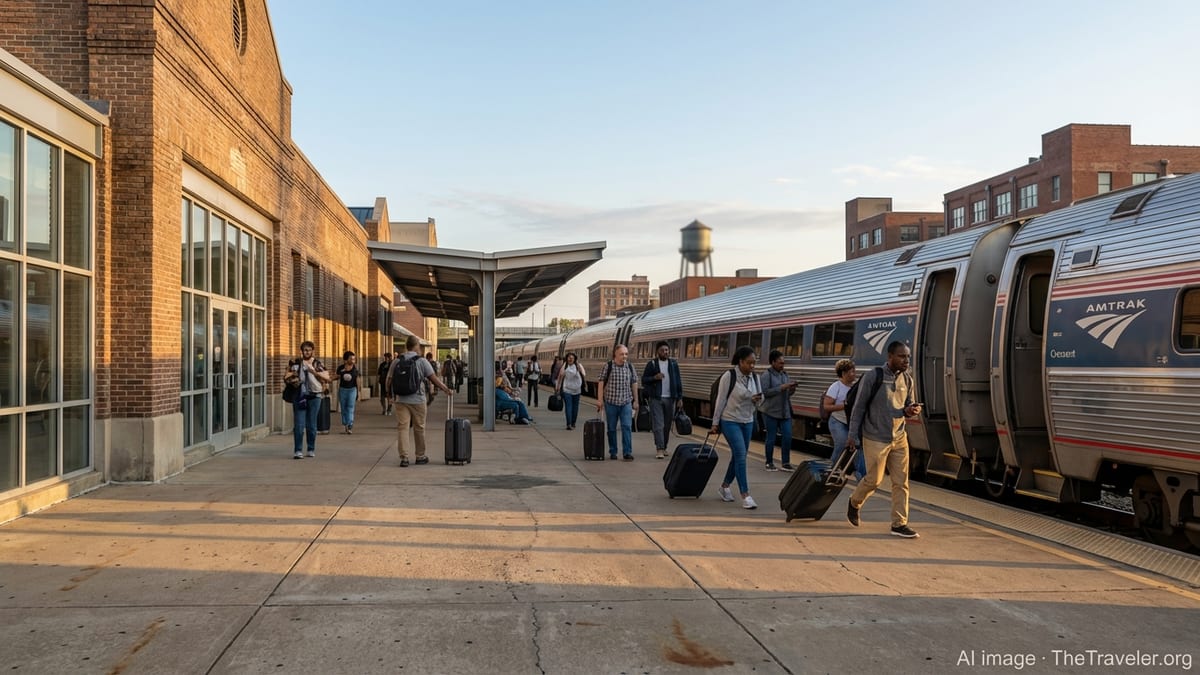
Special Kazipet service moves over 1,200 stranded passengers
Publicly available information shows that South Central Railway arranged a special train from Kazipet to clear 1,226 passengers who had been left stranded when Cyclone Murasu interrupted services on the busy corridor linking Telangana with coastal Andhra Pradesh. The ad hoc service was brought in after multiple long distance and regional trains were cancelled, diverted or held back for safety reasons.
Coverage from regional outlets indicates that the stranded passengers at Kazipet included travellers from several states whose original trains had been rerouted away from the Vijayawada sector, which saw some of the most severe operational disruption. The special train formed at Kazipet allowed many of those passengers to resume their journeys toward Vijayawada and further south without waiting for regular services to be restored.
Reports also highlight that the special working was arranged within a short window as weather conditions evolved over inland Telangana. Railway staff at Kazipet were reported to have focused on quickly identifying passengers from diverted and curtailed trains and guiding them to the additional service, which operated as a relief measure rather than as part of the normal timetable.
Cyclone Murasu impact on key South India rail routes
According to open meteorological summaries and railway updates, Severe Cyclonic Storm Murasu came ashore along the Andhra Pradesh coast before weakening over Telangana, bringing strong winds and heavy rain that affected both track infrastructure and overhead equipment. The Vijayawada Ongole Gudur section on the trunk line toward Chennai was among the worst hit, with train movement suspended around Karavadi station after gale force winds were recorded.
Published coverage from Andhra Pradesh notes that the Vijayawada Division of South Coast Railway regulated or disrupted at least 29 trains on Tuesday, including services in both directions on some of the region’s busiest long distance corridors. Several trains were cancelled, rescheduled or sent on diversionary routes via Kazipet to keep passengers and staff away from the most exposed stretch of coastline while the storm system passed.
These route changes had a knock on effect well beyond the immediate impact zone, with passengers finding themselves displaced in junction stations such as Kazipet and Secunderabad, far from their intended interchange points. Against this backdrop, the special SCR relief train from Kazipet was one element in a broader, constantly adjusted operating plan that also included diversions for services like the Jogbani Erode Amrit Bharat Express and the Hazrat Nizamuddin MGR Chennai Central Garib Rath Express.
Additional special services and student group evacuation
Alongside the Kazipet relief working, publicly available reports refer to multiple special trains arranged across the network in response to Cyclone Murasu. Vijayawada Division announced a pair of specials between Kazipet and Vijayawada on November 3, identified as Train No. 07081 from Kazipet to Vijayawada and Train No. 07082 in the return direction, both scheduled to run as day and overnight links with intermediate halts at Warangal, Mahabubabad, Dornakal, Khammam and Madhira.
The 07081 departure from Kazipet was scheduled for 16:30, with an advertised arrival at Vijayawada around 21:00 the same day. The 07082 return working was planned to leave Vijayawada at 22:30 and reach Kazipet at approximately 04:00 the following morning. Public information indicates that each of these services was formed with 14 coaches, combining reserved second class chair cars with unreserved general coaches and seating cum luggage vans to maximise capacity for disrupted travellers.
Media reports from Kerala describe how one special service from Secunderabad to Thiruvananthapuram carried a 91 member school study tour group that had been stranded in Telangana after their scheduled return train was cancelled because of the cyclone. The group had travelled north on October 31 and discovered only at the station on November 3 that their homebound service would not operate. They eventually secured space on the early morning special, which departed Secunderabad around 05:00 on November 4 and allowed the students and teachers to resume their journey toward home.
On board arrangements and support for disrupted travellers
Reports from Vijayawada and other junctions along the South Coast Railway network state that railway personnel organised food, drinking water and basic medical support for passengers affected by the widespread train regulation. At some stations, vendors were mobilised to provide packed meals and bottled water to those waiting for diverted or rescheduled trains, with particular attention to families travelling with children and elderly passengers.
The relief arrangements align with procedural guidance available in South Central Railway’s own safety and disaster management manuals, which prioritise setting up enquiry offices, public address announcements and coordination with local agencies in the event of major weather related disruption. These documents emphasise both the rapid dissemination of information to passengers and the provision of essentials such as drinking water, simple hot meals and assistance for vulnerable travellers when trains are held or diverted because of cyclones.
While some passengers experienced overnight waits and longer journey times because of altered routes and holding orders, publicly available reports suggest that the provision of the Kazipet special train and other dedicated services helped ease crowding at key junctions and reduced uncertainty for those attempting to connect with onward trains toward Chennai, Kerala and interior Karnataka.
Travel advice as services gradually normalise
By Wednesday, meteorological updates indicated that Murasu had weakened into a depression over east Telangana and adjoining coastal Andhra Pradesh, though intermittent heavy showers and localised flooding risks continued in some districts. Railway advisories circulating on social media channels urged passengers to consult official train tracking applications and helpline numbers for the latest information on cancellations, diversions and revised timings before setting out for stations.
For travellers planning itineraries through Andhra Pradesh and Telangana in the immediate aftermath of the storm, publicly available information points to a phased restoration strategy, with safety related inspections on vulnerable stretches taking place before full speed operations are resumed. Operational updates from both South Central Railway and South Coast Railway signal a focus on normalising the Vijayawada Gudur main line as quickly as inspection and repair works allow, while retaining the flexibility to route selected services via inland junctions like Kazipet if further weather related restrictions are required.
Prospective passengers are being advised in public communications to allow additional time for connections, to monitor service updates closely and to carry essential items such as water and light snacks when travelling through regions recently affected by Cyclone Murasu. As the network transitions back toward its regular pattern, the use of targeted special trains, including the relief operation from Kazipet, illustrates how India’s zonal railways deploy short notice capacity to support travellers when severe weather brings large parts of the timetable to a halt.