


More news on this day
The South Central Railway has operated a special relief train from Kazipet to clear 1,226 passengers stranded after Cyclone Murasu disrupted key rail links across Andhra Pradesh and Telangana, highlighting how India’s rail network is being used to move travellers out of the storm’s path.
Get the latest news straight to your inbox!
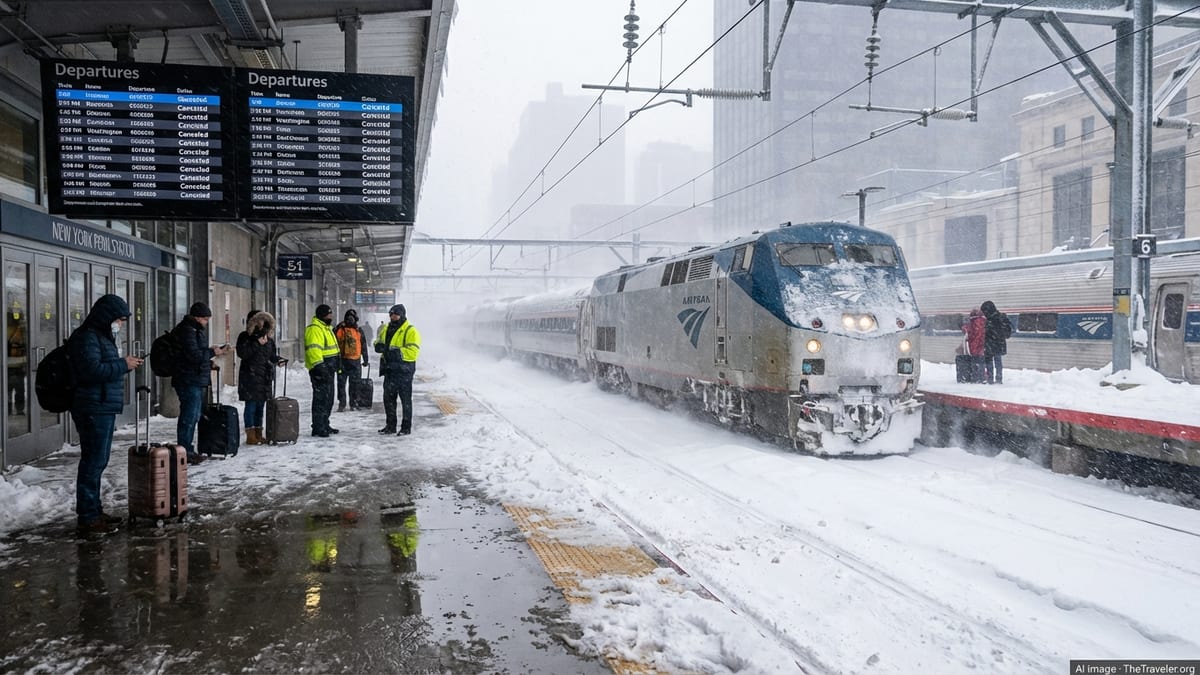
Relief special from Kazipet restores crucial connectivity
Publicly available information shows that the special service was arranged from Kazipet, a major junction in Telangana, where more than a thousand passengers were left waiting after regular trains were cancelled or diverted as Cyclone Murasu crossed the coast and moved inland. The disruption affected important corridors linking Hyderabad, Vijayawada and destinations further south, leaving many travellers unsure how and when they would be able to continue their journeys.
Reports indicate that South Central Railway deployed the special train to move 1,226 stranded passengers from Kazipet once conditions on a safe route were confirmed. The train was operated as an emergency measure outside the regular timetable, with railway staff tasked with managing a heavy rush of passengers seeking berths and unreserved seats at short notice.
The decision to press a relief special into service followed several rounds of cancellations and diversions across the broader South Coast Railway and South Central Railway zones as rain, high winds and waterlogging made certain stretches temporarily unsafe for normal operations. Available coverage notes that this particular movement from Kazipet has become one of the most visible examples of how the railway is attempting to balance safety with the need to get people moving again after the cyclone.
The Kazipet operation also complemented separate special services reported between Kazipet and Vijayawada on November 3, arranged to move stranded travellers along one of the region’s busiest intercity corridors. Together, these trains helped reconnect passengers with major junctions where additional onward options by rail and road were gradually being restored.
Widespread rail disruption as Cyclone Murasu sweeps inland
Cyclone Murasu formed over the Bay of Bengal before making landfall along the Andhra Pradesh coast in early November 2026, bringing intense rainfall and gale force winds to coastal and inland districts. According to open meteorological summaries, the storm weakened as it moved northwards, but not before triggering flooding, power outages and infrastructure damage across parts of Andhra Pradesh and Telangana.
Railway press notes compiled over recent days show that the South Coast Railway cancelled or rescheduled scores of services on the Vijayawada–Ongole–Gudur and adjacent sections after strong winds were recorded at locations such as Karavadi station. At one point, passenger train movements on this busy coastal route were temporarily suspended to avoid running trains through areas with damaged overhead equipment, waterlogged tracks or potential debris.
Separate regional reports describe how some long distance services, including trains linking Andhra Pradesh with eastern and northern India, were held at intermediate stations for long periods as operating staff assessed track conditions and received updated weather warnings. One account from the Vijayawada division notes that 29 trains were either cancelled, short terminated, diverted or significantly delayed during the most intense phase of the storm on November 3 and the early hours of November 4.
In parallel, South Coast Railway and South Central Railway activated their disaster management plans, with field teams deployed to patrol vulnerable bridges, culverts and embankments, clear fallen trees from trackside areas and inspect signalling equipment. Public advisories reiterated that services would only be restored on a section once engineering staff certified the route fit for traffic, a policy that helps explain the extent of cancellations even in locations that did not experience severe flooding.
Stranded travellers across the region rely on special trains
The Kazipet relief train is part of a broader pattern of targeted special services aimed at clearing passenger backlogs once cyclone conditions begin to ease. In Telangana, published coverage highlights that a school study tour group from Kerala, which had been stranded in Secunderabad after train cancellations linked to Cyclone Murasu, was able to start its return journey when a special service departed towards Thiruvananthapuram at 5 a.m. on November 4.
On the South Coast Railway network, social media updates from divisional accounts describe additional specials between Kazipet and Vijayawada on November 3, positioned specifically as services for passengers stranded by the cyclone. Timings publicly circulated for these trains show departures from Kazipet in the late afternoon and corresponding returns from Vijayawada in the late evening, illustrating how railway planners attempted to schedule relief movements around evolving weather windows.
In Andhra Pradesh and neighbouring states, earlier cyclones and flood events have led to similar patterns, with regular timetabled services paused while special trains are run on routes assessed as safe. Disaster management documents from Indian Railways emphasise that such operations are a core part of the railway’s role in emergencies, allowing large numbers of people to be moved with comparatively limited rolling stock and crews once clearances are received.
For passengers, however, the experience can be challenging. With cancellations often announced at short notice as weather conditions change, large groups can accumulate at junctions before information about relief trains becomes widely known. Public advisories around Cyclone Murasu have repeatedly urged travellers to monitor the National Train Enquiry System and official railway communication channels rather than relying solely on printed timetables or earlier bookings.
Safety protocols shape decisions on cancellations and relief runs
The deployment of the special train from Kazipet reflects the safety-first protocols that shape Indian Railways’ response to cyclones. Disaster management circulars issued by zones such as South Central Railway and South Western Railway outline stepwise actions triggered by cyclone warnings, including reducing train speeds, increasing track and bridge inspections, and, when necessary, suspending passenger train movements on exposed stretches.
These documents state that one of the key objectives during severe weather is to avoid passenger trains being caught in the open during periods of maximum wind intensity or flooding risk. That principle was visible during Cyclone Murasu, when services on the vulnerable Vijayawada–Ongole–Gudur coastal segment were held back until on-ground teams confirmed that winds had eased and tracks were clear of obstructions.
Once the immediate threat subsides, operating staff are authorised to run special trains like the Kazipet service to evacuate stranded passengers or to reposition rolling stock. Such trains may run with flexible stoppages depending on demand and line capacity, and details are often finalised only after engineering and electrical teams complete route inspections. This sequencing explains why news of relief specials sometimes appears only a few hours before departure.
Railway advisories around Cyclone Murasu have also highlighted supporting measures, including help desks at major junctions, additional booking counters for processing refunds on cancelled trains, and the use of public address systems to provide updates in local languages. Together with special trains, these measures are presented in official material as part of a broader effort to maintain passenger confidence even as regular schedules remain heavily disrupted.
What the disruption means for upcoming journeys
For travellers planning rail journeys through Andhra Pradesh, Telangana and adjoining regions in the days after Cyclone Murasu, the Kazipet special is an encouraging sign that the network is gradually reopening. However, reports from railway zones and media outlets indicate that residual delays, diversions and selective cancellations are likely to persist while saturated embankments dry out and damaged infrastructure is repaired.
Passengers holding tickets for the first week of November 2026 are being advised in public notices to verify train running status closer to departure, particularly on routes linked to Vijayawada, Gudur, Ongole and intermediate coastal stations. Where trains remain cancelled, zonal railways are providing full refunds under existing rules, and additional special trains may be introduced or extended depending on demand and the pace of restoration.
Travel news outlets tracking the situation note that short haul regional services are typically restored first, followed by long distance trains once crew and rolling stock are repositioned. The relief special from Kazipet, carrying 1,226 stranded passengers, illustrates how targeted operations can quickly reduce crowding at key junctions and free up resources for further services.
For those still waiting to travel, the evolving response to Cyclone Murasu serves as a reminder that in India’s cyclone-prone coastal regions, rail journeys during the late monsoon and post-monsoon months can be significantly affected by extreme weather. The latest experience suggests that while safety-driven cancellations can be disruptive, relief specials such as the one operated by South Central Railway from Kazipet are likely to remain a central tool for moving large numbers of people once conditions allow trains to roll again.