


More news on this day
Regional Rail riders across greater Philadelphia faced significant disruption on Wednesday morning after a SEPTA train derailed near a major junction in North Philadelphia, suspending Manayunk–Norristown Line service and triggering cascading delays on other routes at the start of the busy July 4 travel period.
Get the latest news straight to your inbox!
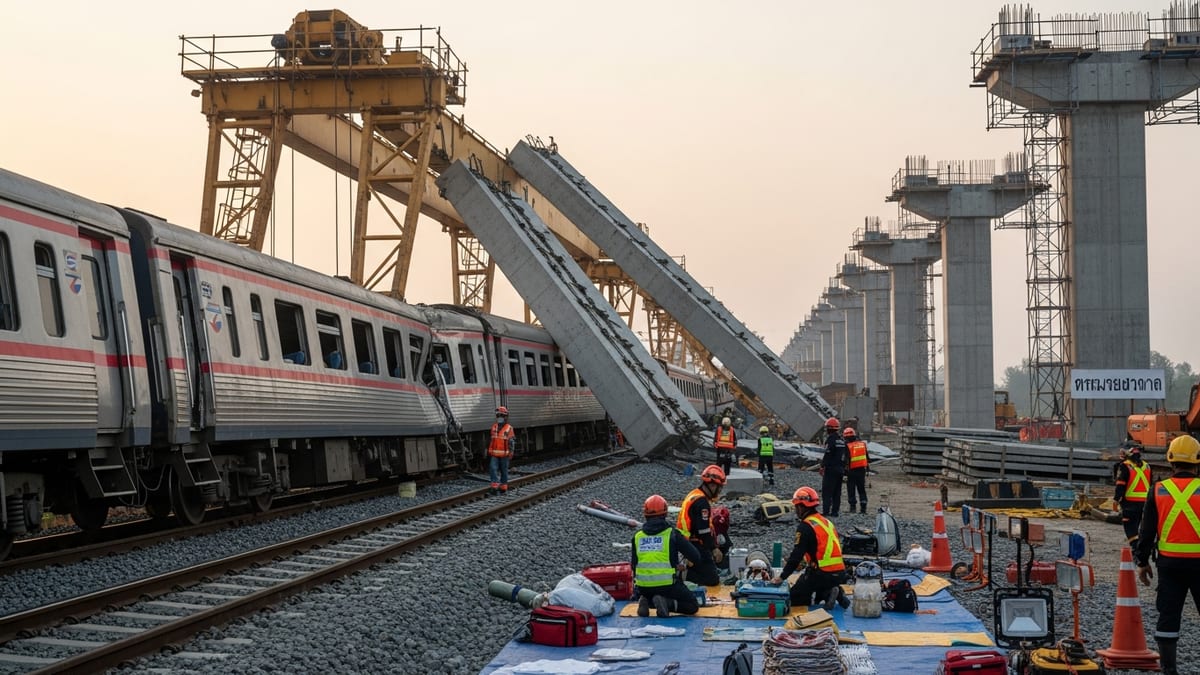
Derailment near key junction disrupts Regional Rail network
Early reports from local news outlets describe a SEPTA Regional Rail train leaving the tracks near a key interlocking in North Philadelphia, a location where multiple lines converge as they approach Center City. The incident occurred in the overnight and early morning hours of July 1, leaving several tracks out of service just as the morning commute began.
According to published coverage, the derailment did not involve a high-speed movement, but it severely constrained capacity through the junction. With one train disabled and infrastructure crews inspecting the alignment, SEPTA reduced traffic through the area and rerouted what trains it could, causing widespread delays and forcing partial suspensions.
Initial information circulating on transit alert channels and rider forums indicated that the Manayunk–Norristown, Fox Chase, and Chestnut Hill East lines were among the services most immediately affected. Riders reported crowding on remaining trains, longer waits on platforms, and limited real-time updates as the system absorbed the shock of the disruption.
By mid-morning, the derailment had evolved from a localized rail operations problem into a network-wide constraint, with impacts felt by commuters and travelers across the region who rely on Regional Rail to reach Center City, the airport, and suburban employment centers.
Manayunk–Norristown Line fully suspended between Center City and Norristown
Real-time status information on SEPTA’s public tracking tools on Wednesday showed the Manayunk–Norristown Line marked as suspended between Center City stations and Norristown. The suspension affected riders in neighborhoods and suburbs along the Schuylkill River corridor, including East Falls, Manayunk, Conshohocken, and Norristown.
The Manayunk–Norristown Line is one of SEPTA’s core Regional Rail routes, connecting central Philadelphia with Norristown Transit Center and serving a dense mix of residential and commercial districts. Background information on the line notes that it typically offers frequent weekday service, with many trains continuing or connecting to other Regional Rail branches during peak periods.
With train movements halted, passengers heading to or from Manayunk and Norristown faced immediate challenges. Regular commuters described turning to ride-hailing services, driving into the city, or attempting to transfer to buses and metro services in order to complete their journeys. The timing, coinciding with early holiday departures and hot weather, amplified the strain on alternate options.
SEPTA’s alternative service guidance for the Manayunk–Norristown corridor, published prior to this incident as part of broader contingency planning, highlights the role of the Market–Frankford Line, the Norristown High Speed Line, and selected bus routes as backup options when Regional Rail is unavailable. Those recommendations quickly moved from planning documents to reality as riders sought any viable route into the city.
Alternate routes and options for affected travelers
Publicly available SEPTA guidance indicates that when the Manayunk–Norristown Line is out of service, riders can often reach Norristown Transit Center via the Market–Frankford Line and the Norristown High Speed Line, then connect by bus or local transit. This multimodal path, while more time-consuming than a one-seat Regional Rail trip, preserves a rail-based connection between Norristown and Philadelphia.
Travelers from Manayunk and East Falls typically rely on the Manayunk–Norristown Line for a direct ride into Center City. During the suspension, many instead turned to nearby bus routes on Ridge Avenue or along the river, or traveled to stations on other lines where service continued to operate, such as the Paoli–Thorndale or Lansdale–Doylestown corridors.
For visitors in town for July 4 events and major sports gatherings, the derailment added another layer of complexity to trip planning. SEPTA had already announced special Regional Rail schedules and additional capacity for the holiday period, making the disruption an unwelcome complication for those expecting a straightforward ride to fireworks displays, concerts, and stadium events.
Local transit watchers emphasized that riders should check SEPTA’s real-time tools and official alerts frequently throughout the day, since track inspections, equipment recovery, and repairs can cause conditions to evolve in stages rather than returning to normal service all at once.
Wider implications for a system already under strain
The derailment arrives at a time when SEPTA’s Regional Rail network is balancing funding pressures, rolling stock replacement, and service adjustments tied to shifting post-pandemic commuting patterns. Planning documents and recent coverage have detailed proposals for service realignments, schedule changes, and possible reductions on some lines as the agency works within constrained budgets.
Past weather-related events and infrastructure failures on the Manayunk–Norristown corridor have demonstrated how disruptions on that line can ripple across the wider system. Studies of previous storms and outages have highlighted its vulnerability to river flooding and tight right-of-way conditions, factors that increase the operational complexity of recovering from an incident.
In parallel, riders have become more vocal about reliability concerns, using social media, transit forums, and community meetings to document missed connections, inconsistent timetables, and equipment issues. The latest derailment is likely to intensify those conversations, especially among commuters who have limited alternatives and depend on the Manayunk–Norristown Line for daily access to jobs and schools.
Transportation analysts note that repeated service shocks, even if they do not result in major injuries or long-term track closures, can gradually erode public confidence in Regional Rail. For a system seeking new riders and stable funding, maintaining safe, predictable operations is central to convincing travelers to choose the train over driving.
What riders can expect in the coming days
As of midday Wednesday, no firm timeline had been made public for restoring full Manayunk–Norristown Line service. Recovery from a derailment typically involves rerailing or removing the affected train, inspecting tracks and switches, and verifying that signal and overhead power systems are functioning properly before passenger trains are allowed back through the area.
In the short term, riders can expect continued reliance on substitute routes, with delays likely to persist even after the initial obstruction is cleared. Rescheduled train patterns, residual congestion, and equipment being out of position often require several timetable cycles to normalize.
Travelers planning to use Regional Rail for July 4 festivities, airport trips, or regional excursions are being advised by public transit information channels to build in extra time, consider contingency options, and stay informed through the latest service updates. For some, that may mean using subway and metro services in the core city for the next several days while Regional Rail operations stabilize.
Longer term, the incident is expected to feed into ongoing discussions about infrastructure investment, resilience, and the role of Regional Rail in greater Philadelphia’s transportation future. For now, though, riders along the Manayunk–Norristown corridor are focused on a more immediate concern: when their trains will reliably return.