

More news on this day
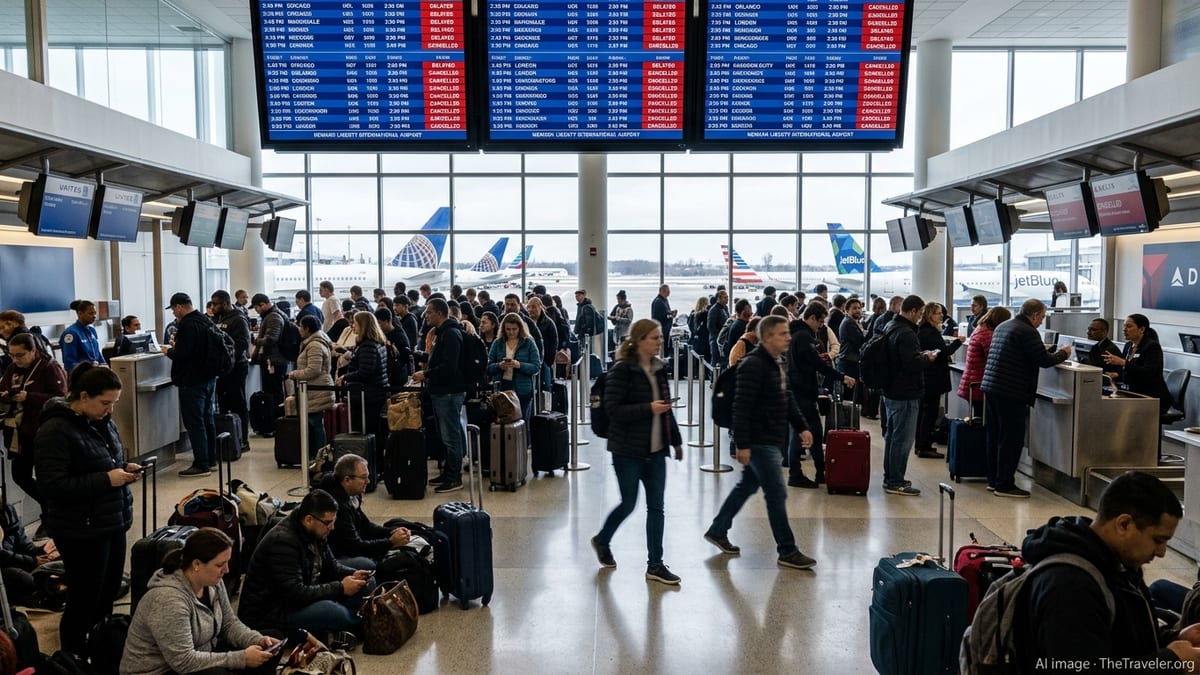
Travelers across the United States and beyond faced a fresh air travel nightmare as heavy disruptions at Newark Liberty International Airport triggered multiple cancellations and 139 delays affecting United, American, Delta and JetBlue flights, snarling key routes to Chicago, Orlando, London and other major destinations.
Get the latest news straight to your inbox!
Newark Hub Hit Hard as Disruptions Cascade Nationwide
Newark Liberty International Airport, one of the country’s busiest hubs and a primary base for United Airlines, experienced a sharp spike in operational disruption, with publicly available flight-tracking data indicating more than a hundred delays and a wave of cancellations concentrated across the late morning and afternoon periods. The ripple effects quickly spread across the domestic network, impacting schedules at airports from Chicago O’Hare to Orlando International.
Reports from flight-status aggregators show United bearing the brunt of the disruption because of its hub presence at Newark, though American, Delta and JetBlue also logged significant delays on routes touching the New Jersey airport. Flights that did depart often did so well behind schedule, with turnaround times stretched and gate changes common as carriers attempted to rebalance aircraft and crews.
Operational data indicates that the disruption was not limited to departures from Newark. Arrivals from major connecting points, including Chicago, Orlando and other East Coast cities, faced holding patterns and ground delays, further compounding congestion. The knock-on effect left aircraft and crews out of position, intensifying delays on subsequent rotations throughout the day.
By late afternoon, the pattern resembled a classic hub meltdown scenario, in which cumulative delays outpace available recovery windows. Airlines appeared to respond by preemptively canceling a subset of flights in order to reduce gridlock and preserve limited capacity for high-demand routes and long-haul operations.
Chicago, Orlando and London Among Most Affected Routes
Key domestic and international corridors were particularly affected, according to published coverage and live-board snapshots from major airports. Routes between Newark and Chicago saw clusters of delayed and canceled services across multiple carriers, a reflection of how tightly these two major hubs are linked within the national network.
Orlando, a high-volume leisure destination with strong ties to the Northeast, also saw substantial disruption as Newark-based aircraft and crews fell out of sequence. Travelers heading to or returning from central Florida encountered extended waits, rolling departure times and, in some cases, last-minute flight cancellations that pushed rebooked itineraries into the following day.
Transatlantic services were not immune. Publicly available flight-tracking boards showed evening departures from Newark to London subject to knock-on delays stemming from earlier inbound issues. Even when long-haul flights were not canceled outright, delayed boarding and crew timing constraints contributed to late departures, raising the risk of missed onward connections at European hubs.
Secondary domestic markets, including mid-sized Midwest and Southeast cities, often felt the impact in more subtle ways, such as downgraded aircraft, reduced same-day options and tight connections that left little margin for error. As airlines prioritized key trunk routes, some regional travelers saw their choices narrow considerably.
Weather, Congested Airspace and Structural Strain
The disruption at Newark came against the backdrop of a turbulent winter for US aviation, marked by severe storms and chronic congestion in some of the country’s busiest air corridors. Recent winter systems, including powerful blizzards and mixed-precipitation events across the Northeast and Midwest, have repeatedly strained airline and airport operations, with tens of thousands of flights canceled or delayed over the course of the season.
While specific causes vary from day to day, publicly available data and prior government reporting have highlighted how quickly delays can escalate at Newark, where dense schedules, constrained runway capacity and heavy reliance on connecting traffic leave little room for recovery once problems arise. When adverse weather in other regions intersects with already tight operations, the result can be a cascading series of disruptions centered on the New York–New Jersey airspace.
In addition to weather, air traffic control constraints have periodically affected the region, with past coverage noting how staffing or technology issues can force ground delay programs that throttle arrivals and departures. When such programs coincide with peak travel periods or complex storm systems, airlines face difficult tradeoffs over which flights to prioritize for the limited takeoff and landing slots available.
Industry analysts regularly point to these structural pressures as a reminder that large hub airports, especially those serving dense metropolitan areas, are vulnerable to system-wide shocks. Newark’s experience in this latest episode underscores how events originating far from the New York area can still cascade into major disruptions for travelers passing through the airport.
Passengers Face Missed Connections, Long Lines and Limited Options
For travelers on the ground, the statistics translated into missed connections, long customer service lines and crowded gate areas as passengers tried to salvage disrupted itineraries. Public posts on travel forums and social platforms described hours-long waits to speak with airline agents, while others detailed repeated rebookings as weather, crew availability and cascading delays forced schedule changes.
Families traveling to and from Orlando reported particular stress as vacation plans collided with limited rebooking options during busy travel periods. Some travelers bound for Chicago and other Midwest cities described being routed through alternate hubs or even different airlines after original flights were canceled, increasing total travel times by many hours.
International travelers experienced their own complications. Delays on evening departures to London increased the likelihood of missed early-morning connections onward to Europe, Africa and the Middle East. Passengers with separate tickets, especially those combining a Newark transatlantic leg with low-cost intra-Europe flights, faced the prospect of out-of-pocket costs to rebook onward journeys.
Travel advocacy groups have previously noted that such disruption clusters can be especially challenging for passengers with tight budgets or limited schedule flexibility. When hotel rooms near major hubs fill up quickly and same-day alternatives are scarce, travelers may have few realistic options beyond waiting for the system to reset.
What Travelers Can Expect in the Coming Days
Although large disruption events often ease as weather systems move on and schedules reset, recovery at a complex hub like Newark can take time. Industry observers note that aircraft and crew rotations may remain out of balance for at least one or two full operating days after the worst of the delays, especially on routes that rely heavily on specific aircraft types or overnight positioning.
Publicly available planning guidance from airlines and aviation agencies also suggests that travelers should expect lingering delays on heavily impacted city pairs, including Newark to Chicago and Newark to Orlando, until aircraft and crews are fully realigned. Long-haul routes to London and other international destinations may stabilize more quickly but can still experience rolling knock-on delays if feeder flights remain disrupted.
Travel experts typically advise passengers to monitor flight status closely, build extra connection time into itineraries that pass through Newark or other Northeast hubs, and remain prepared for potential same-day changes, especially during periods of unsettled winter weather. Flexible travelers may find better odds by targeting early-morning departures, which tend to be less affected by the cumulative delays that build throughout the day.
With winter weather and airspace congestion likely to remain recurring challenges, Newark’s latest wave of cancellations and 139 recorded delays serves as another reminder of how vulnerable complex hub operations can be, and how quickly disruption in one corridor can spread across the wider US and transatlantic air travel system.