


More news on this day
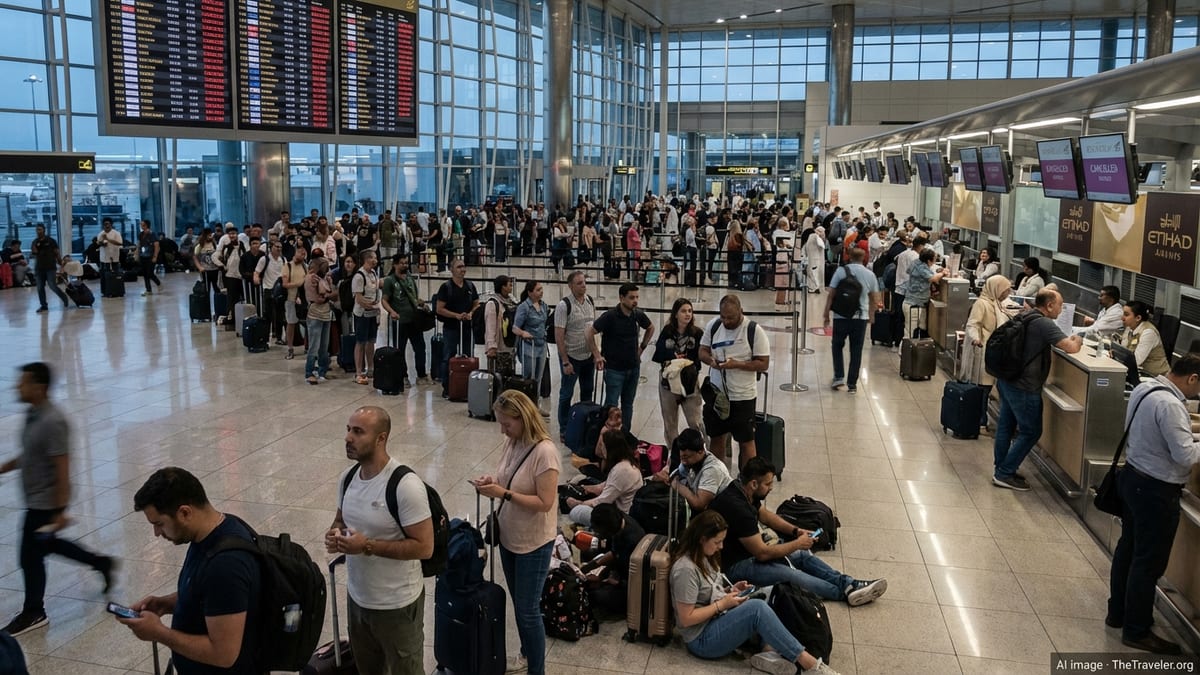
Latest conflict-zone advisories for Gulf and wider Middle East airspace are triggering renewed disruption across major transit hubs in Dubai, Doha and Abu Dhabi, as regulators urge airlines to reassess routes over the Persian Gulf and surrounding regions.
Get the latest news straight to your inbox!
Heightened risk guidance over Gulf waters
Publicly available safety notices from European and US regulators show that airspace over the waters of the Persian Gulf and parts of the Gulf of Oman remains subject to elevated security warnings, even as airports in the United Arab Emirates, Qatar, Bahrain and Kuwait stay open to commercial traffic. Updated European conflict-zone material highlights a continued high risk to civil aviation over the maritime portions of Bahrain, Kuwait, Qatar and United Arab Emirates flight information regions, advising carriers to avoid these segments of airspace except when necessary for arrivals and departures.
According to specialist briefings that aggregate official bulletins, the current European conflict-zone information for the broader Middle East and Persian Gulf has been recast into a series of focused advisories. Separate documents now address high or medium risk for Iran, Iraq, Lebanon, Jordan, Syria, Saudi Arabia and the Yemen Sana’a flight information region, with validity periods running into late November 2026 and, in the case of Yemen, April 2027. This structure reflects a shift away from a single blanket warning toward a more granular map of risk along the main east–west and north–south corridors that long-haul passenger flights rely on.
US notices align with this cautious stance. Security advisories published for the Persian Gulf and Jeddah flight information region in Saudi Arabia emphasize the potential hazards from military activity, air defence systems and possible misidentification of civil aircraft. While these advisories do not close airspace, they place a clear obligation on operators to carry out detailed risk assessments before planning routes across affected zones.
Industry-facing safety resources focused on the United Arab Emirates describe the country’s airspace as open but flagged as medium risk due to the possibility of renewed missile or drone activity linked to wider regional tensions. Operators are encouraged to keep aircraft away from specified overwater areas and to maintain contingency plans for further route changes if the security picture deteriorates.
Major hubs open but operating under strain
Despite the warnings, Dubai International, Abu Dhabi’s Zayed International and Doha’s Hamad International remain fully operational, and airlines based at these hubs continue to operate extensive long-haul networks. However, rerouting around restricted or advised-against zones is stretching flight times, altering traditional great-circle tracks and occasionally reducing daily frequencies on certain routes.
Published operational updates from airline and aviation-tracking services indicate that carriers have been diverting flows away from the most sensitive airspace. Some long-haul services between Europe and the Gulf have been operating via more southerly paths over Egypt, the Red Sea and central Saudi Arabia, while others have adopted longer northerly arcs via Turkey and Central Asia to skirt Iranian and Iraqi regions that are subject to more stringent conflict-zone assessments.
Independent disruption trackers focusing on Gulf operations report that the cumulative effect has been felt in timetables into and out of Dubai, Doha, Abu Dhabi, Riyadh, Kuwait City and Tel Aviv since late summer. Schedule reductions, day-of-operation delays, and occasional suspensions of individual routes have been recorded as airlines rebalance networks to cope with longer block times and air traffic control congestion along remaining corridors.
One industry briefing covering November 2026 describes a pattern in which airlines serving Dubai, Doha and Abu Dhabi have revised their planned flight times and adjusted minimum connection windows. This has eased some of the acute congestion that appeared earlier in the year, although the rerouting still adds significant time to many journeys and leaves little slack when storms, technical issues or further geopolitical developments occur.
European and US carriers trim Gulf schedules
The most visible cuts have come from airlines that are not based in the region but rely on Gulf destinations for connecting flows. Recent public statements from European carriers, for example, show that at least one major airline group has opted to keep Dubai flights suspended until late November 2026, targeting a restart date around the final week of the month. The same group has cancelled services to Riyadh and Dammam until at least late November, reflecting a cautious approach to Saudi Arabian operations while security advisories remain in force.
Separate consumer-facing disruption summaries point to reduced schedules or temporary suspensions affecting a mix of European and Asian airlines on routes into Dubai, Abu Dhabi, Doha, Kuwait City, Riyadh and Tel Aviv. In many cases, flights that do operate are being routed along longer paths that bypass the highest-risk airspace over the Persian Gulf, increasing fuel burn and block times and, in turn, complicating aircraft and crew rotations.
Data collated by airspace monitoring services lists eight active European conflict-zone bulletins for the Middle East as of 10 November 2026, including specific advisories for Iran, Iraq, Jordan, Lebanon, Syria, Saudi Arabia, Yemen and the Persian Gulf and Gulf of Oman. This cluster reinforces the perception among non-regional carriers that there is limited flexibility for direct routings, and encourages a conservative reading of optional paths even where overflight is not outright prohibited.
For travelers, this has translated into fewer nonstop options between certain European cities and Gulf hubs for the 2026 to 2027 winter season, with some itineraries shifted onto partner airlines or re-routed through alternative connection points in Europe or Asia. Published coverage also notes that airline waiver policies and rebooking rules have played a significant role in how easily passengers can adjust plans when flights are altered at short notice.
Knock-on effects for global connections
The Gulf hubs act as critical waypoints linking Europe and North America with South Asia, Southeast Asia, Australia and parts of Africa, so any disruption tends to ripple across continents. Specialist logistics and travel risk bulletins issued since March 2026 describe how closures or constraints in parts of Middle East airspace have lengthened transit times for both passengers and high-value cargo moving through the region.
A June 2026 supply chain update covering the Middle East noted that while Dubai, Abu Dhabi and Doha remained open, persistent rerouting across key Gulf and Levant corridors was increasing journey times and reducing effective capacity. That pattern continues into November, with airspace-monitoring platforms highlighting ongoing diversions around conflict-affected corridors, particularly those near the Strait of Hormuz, the Red Sea and segments of the Arabian Peninsula.
The strain is not limited to the Gulf. When airspace over or near countries such as Iran, Iraq, Jordan or Lebanon is subject to fresh restrictions or risk bulletins, airlines often crowd into a smaller number of approved tracks, especially over Saudi Arabia and Egypt. Briefings from early 2026 already described east–west corridors through Saudi airspace as heavily saturated from an air traffic control perspective, with delays becoming common at peak hours. Renewed pressure from current reroutings has kept those bottlenecks in play.
Travel disruption services tracking the situation in real time show that long-haul flights between Europe and destinations across India, Southeast Asia and Australasia are among the most affected in terms of schedule padding and extended block times. In many instances, connection windows in Dubai, Doha and Abu Dhabi have been lengthened by airlines, reducing the risk of misconnecting passengers but also limiting the number of onward options that fit into a single travel day.
What travelers transiting the region should do now
With major Gulf hubs still receiving and dispatching large numbers of flights despite the security backdrop, most itineraries are continuing to operate. However, the combination of conflict-zone advisories, reroutings and occasionally abrupt schedule changes means that travelers connecting via Dubai, Doha, Abu Dhabi or nearby airports need to build more flexibility into their plans.
Travel-rights organizations focusing on the current disruptions recommend checking booking details repeatedly in the days and hours before departure, rather than relying on information provided at the time of purchase. Many airlines have been proactively adjusting departure times and minimum connection windows during the current advisory period, and these changes may not trigger prominent notifications if they fall short of formal “cancellation” or “significant change” thresholds.
Recent advisories from global mobility and risk consultancies also highlight the importance of monitoring airline waiver policies tied to the Middle East security situation. In earlier phases of the disruption, some carriers made temporary allowances for free date changes or rerouting via alternative hubs when airspace closures or heavy restrictions were announced. At present, travelers are being urged to review the most current conditions attached to their tickets before requesting changes.
For now, publicly available information suggests that Dubai, Doha and Abu Dhabi will remain central pillars of the global air network, operating under heightened security awareness and regulatory scrutiny. The severity of the warnings over specific stretches of Middle East airspace, however, means that long-haul passengers using these hubs should expect continued variability in routes, flight times and, in some cases, the range of airlines and frequencies on offer over the months ahead.