

More news on this day
A powerful late-winter storm centered on Minneapolis–St. Paul on March 15, 2026, has triggered widespread air travel disruption, with tracking data showing at least 668 flight cancellations across multiple carriers including Delta Air Lines, SkyWest, American, Jazz and United, rippling through hubs and regional airports across the United States, Canada and Mexico.
Get the latest news straight to your inbox!
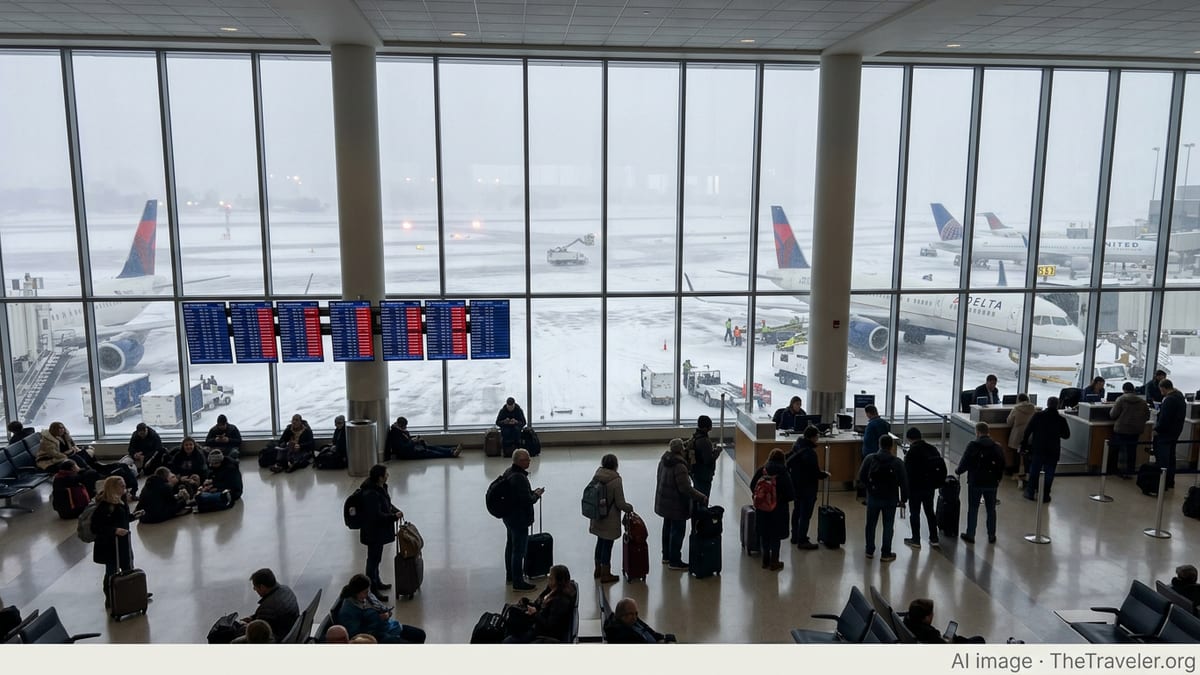
Storm Slams a Key Upper Midwest Hub
The weather system affecting Minneapolis–St. Paul International Airport arrived on the heels of an already active winter season, bringing heavy, wet snow, gusty winds and deteriorating visibility across portions of Minnesota and neighboring states. Forecast discussions and aviation bulletins describe a compact but intense band of wintry precipitation sweeping through the Upper Midwest, with Minneapolis positioned near the core of the storm.
Publicly available flight tracking boards for Minneapolis–St. Paul on Sunday show a dense cluster of red cancellation markers through the morning and afternoon departure banks. Airlines appear to have sharply reduced operations during peak hours, especially on shorter regional segments that are more vulnerable to weather-related disruption and airfield capacity constraints.
Minneapolis–St. Paul functions as a major connecting hub for domestic and international traffic, particularly for Delta and its regional partners. As a result, local weather there often has outsized consequences for travelers well beyond Minnesota, and the current outbreak of cancellations is no exception, rapidly spilling into other parts of North America.
Delta, SkyWest and Partners Lead the Disruption
Data compiled from online flight status dashboards indicates that Delta and its regional affiliates, including SkyWest-operated services, account for a substantial share of the 668 flights canceled as of Sunday afternoon. The bulk of these appear on routes touching Minneapolis–St. Paul, though additional cancellations are visible at secondary hubs where aircraft and crew are out of position.
Recent social media posts and airline community forums describe near-total cancellation of some Delta Connection and SkyWest schedules in and out of Minneapolis during the height of the storm, with only a limited number of mainline Delta flights operating. Several long-haul international services have either been preemptively canceled or rescheduled, while others are still operating but with warnings of potential delays.
Published airline advisories refer to a broader Midwest winter weather waiver spanning March 14 to March 16, allowing affected passengers to rebook without change fees, subject to certain conditions. These waivers, covering Minneapolis and other regional airports, reflect an expectation that operational challenges will continue even after the heaviest snow ends, as airlines work through backlogs and reposition aircraft.
American, United, Jazz and Other Carriers Hit Across the Network
The disruption is not limited to Delta and its regional partners. Flight status pages for American Airlines, United Airlines and Air Canada’s regional affiliate Jazz show scattered but significant cancellations on services that either pass through Minneapolis–St. Paul or rely on aircraft scheduled to transit the region earlier in the day.
United and American appear to be trimming frequencies on some Midwest and Great Lakes routes, in part to avoid sending additional aircraft into constrained operations at Minneapolis and other weather-affected airports. In Canada, Jazz-operated regional flights linked to US hubs are showing cancellations and extended delays, indicating that the storm’s impact is being felt on both sides of the border.
Connections into Mexico are also affected where itineraries rely on disrupted US hubs. Travelers departing warm-weather destinations toward the Midwest and onward to Canada are reporting missed connections and overnight delays, underscoring how a localized bout of severe weather in Minnesota can reverberate through a complex, continent-spanning route network.
Hundreds of Passengers Stranded or Re-Routed
Reports from passengers on social platforms describe long lines at customer service desks, crowded gate areas and extended waits for rebooking assistance at Minneapolis–St. Paul and at outstations fed by the hub. Many travelers have turned to airline mobile apps and websites to self-manage changes, with mixed results as inventory tightens on remaining flights.
Travelers recount same-day itineraries unraveling as initial short-haul legs into Minneapolis are canceled, causing missed onward flights to major cities such as Seattle, New York and Toronto, as well as to leisure destinations in Mexico. In some cases, passengers have been reassigned to routings that bypass Minneapolis entirely, reflecting airlines’ efforts to preserve capacity through less-affected hubs.
Publicly available information indicates that hotel and meal accommodations vary widely depending on the carrier and the cause coded for each disruption. Since the primary driver is classified as severe weather, many passengers are being advised that compensation obligations are limited, even as airlines work to provide goodwill options where feasible.
Ongoing Ripple Effects Expected Into the New Week
Aviation forecasters and airline operations updates suggest that, while snowfall rates are expected to ease late Sunday, lingering low ceilings, runway clearing operations and crew scheduling constraints will likely keep flight schedules strained into Monday, March 16. Aircraft and crews displaced by the storm will need to be repositioned, a process that can take multiple days when multiple hubs are congested.
Carriers are already operating what appear to be recovery schedules, with additional flights on select routes and larger aircraft assigned to high-demand trunk lines where possible. However, limited spare capacity at the end of an already busy winter period means many travelers may not secure same-day alternatives, particularly from smaller regional airports that depend on once- or twice-daily service.
Travel industry analysts note that the Minneapolis disruption underscores how vulnerable modern airline networks remain to concentrated weather events at key hubs, even with improved forecasting and planning tools. For passengers, the episode serves as a reminder of the value of flexible tickets, travel insurance that covers weather-related delays and building extra connection time into itineraries during late-winter storm season.