

More news on this day
As international cruise ships stream back into Shanghai’s Wusongkou terminals, the city is rapidly recasting a simple week at sea into a gilded, ultra-luxury escape that blends big-ship indulgence with one of Asia’s most dynamic urban skylines.
Get the latest news straight to your inbox!
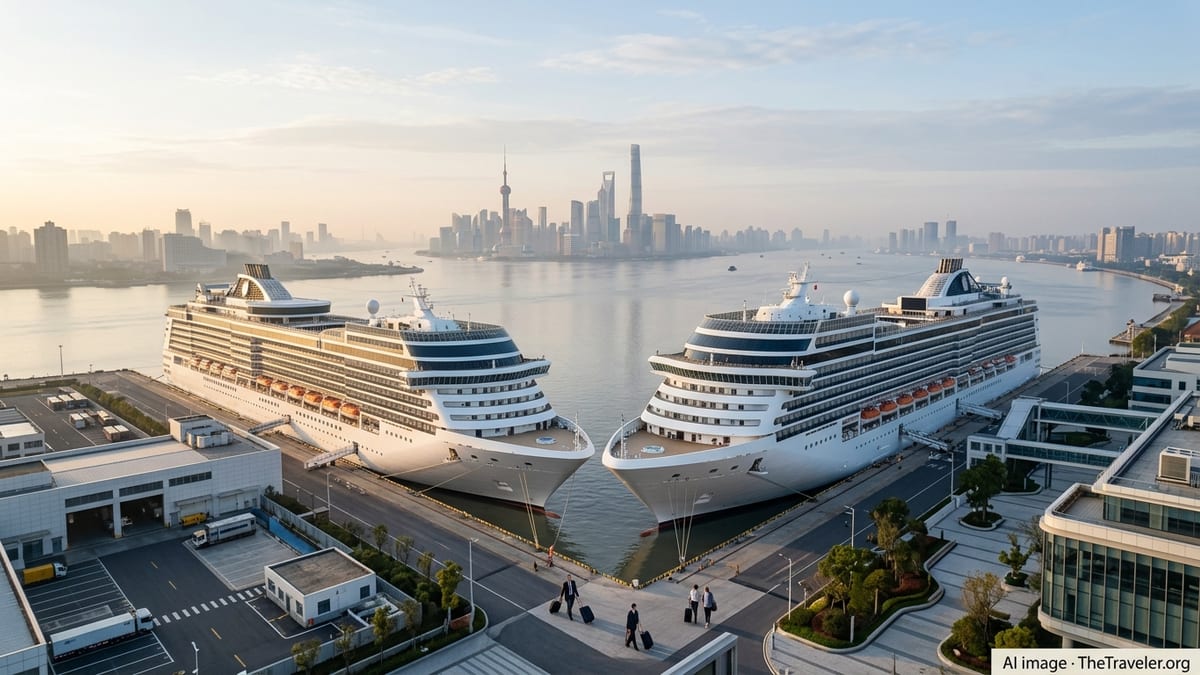
Global Cruise Giants Drop Anchor in Shanghai Again
Shanghai’s return as a major homeport has gathered pace over the past two years, with international cruise brands restoring itineraries that were suspended during the pandemic. Spectrum of the Seas, Royal Caribbean International’s flagship for the Chinese market, resumed sailings from Shanghai in 2024, signaling a renewed focus on higher-spend travelers and short, intensive regional routes to Japan and South Korea.
Publicly available figures from municipal and port authorities show how quickly the sector has rebounded. From January to September 2024, Shanghai recorded more than one million cruise passengers, recovering to around 70 percent of 2019 levels. In January 2025, Wusongkou International Cruise Terminal reported its highest single-day inbound visitor tally since opening, with several thousand foreign passengers arriving aboard multiple vessels.
Industry coverage indicates that national policy shifts have helped fuel this recovery. Expanded visa-free entry schemes for travelers from a growing list of countries, along with simplified transit rules, have made Shanghai more accessible as both a turnaround and port-of-call destination. Travel industry reports describe China’s overall cruise market as entering a new growth phase in 2025, with Shanghai at the forefront of that expansion.
Against that backdrop, operators are repositioning ships known for upscale hardware and premium services. New Chinese brand Adora Cruises, for example, has introduced Adora Magic City, the country’s first domestically built large cruise ship, while international players are marketing concierge-level suites, private dining, and curated shore experiences specifically tied to Shanghai’s luxury districts.
A Port City Reimagined for Ultra-Luxury Arrivals
Shanghai’s waterfront is evolving in step with the return of global cruisers. Around Wusongkou and along the North Bund, new mixed-use clusters are being planned and built, combining high-end hotels, designer retail, and cultural venues intended to capture the spending power of cruise passengers before and after sailings. Earlier district-level plans targeted billions of yuan in investment and hundreds of thousands of square meters of new cultural and commercial space close to the cruise terminals.
These developments are layered onto an already mature high-end hospitality scene. The Bund and Lujiazui offer riverfront suites overlooking one of the world’s busiest ports, while rooftop bars and chef-led restaurants make it easy for visitors to turn a one-night pre-cruise stay into a full urban getaway. Luxury travel operators increasingly bundle these stays into week-long packages that begin and end in Shanghai, effectively framing the city as both gateway and destination.
Port planners are also emphasizing a more refined passenger experience within the terminals themselves. Recent upgrades at Wusongkou highlight expanded check-in halls, improved baggage handling, and more streamlined customs areas designed to move large volumes of guests while maintaining a calm, lounge-like atmosphere. Industry commentary frequently points to Shanghai’s ambition to rank among the world’s most competitive cruise homeports, not just in capacity but in perceived quality.
At street level, the effect is visible in small but telling details: more international luxury brands anchoring riverfront malls, art installations that celebrate Shanghai’s maritime heritage, and better connectivity between terminals, downtown hotels, and airports. For visitors on tight cruise schedules, this integration can turn a few spare hours into a polished, high-value city interlude.
A Week of Gilded Itineraries at Sea
The typical Shanghai-based cruise itinerary now reads like a curated gallery of East Asian coastal highlights. Four to seven-night sailings commonly pair Shanghai with ports such as Fukuoka, Nagasaki, Okinawa, or Busan, offering a compact loop of spas, shopping streets, and onsen towns. Many of these routes have been adjusted in recent months to reflect changing regional dynamics, but the emphasis on short-haul, experience-rich journeys remains clear.
On board, operators are tapping into a rising appetite for ultra-luxury touches. Premium suite categories on ships homeported in Shanghai often include private sun decks, butler service, and exclusive restaurants that serve multi-course menus built around seafood, wagyu, or regional Chinese cuisines. Wine pairings, chef’s table experiences, and tasting menus are marketed as core elements of a “week of indulgence” rather than optional add-ons.
Wellness programming is another focus. Many ships sailing from Shanghai feature expansive spas, thermal suites, and adult-only retreats, with sea days structured around yoga sessions, nutrition workshops, or high-end beauty treatments. Some itineraries add bespoke shore excursions that link to this theme, such as visits to hot spring resorts in Japan or slow-paced tea experiences in historic districts.
For affluent travelers who see cruises as floating resorts, Shanghai’s proximity to a dense cluster of regional ports makes it possible to enjoy a full week of ultra-luxury without the long-haul repositioning common in Europe or the Caribbean. The city’s status as a global aviation hub adds to that appeal, allowing cruisers to align high-end sea voyages with first or business class air travel.
New Passenger Mix and Shifting Expectations
The return of global cruising has subtly reshaped Shanghai’s visitor profile. Travel trade coverage notes that, alongside the domestic market, a growing share of passengers embarking or disembarking in Shanghai now come from Europe, North America, and Southeast Asia, drawn by visa-free entry options and the novelty of a China-based cruise experience.
This mix is influencing how cruise lines design services on ships sailing from Shanghai. Observers point to multilingual signage, expanded international dining choices, and entertainment lineups that blend Western productions with Mandarin-language shows. On certain longer itineraries, travel bloggers and review platforms describe a more diverse guest list than on the city’s shorter, weekend-focused sailings.
At the same time, expectations are rising, particularly at the luxury end of the market. Travelers increasingly compare Shanghai-based ships with top-end products sailing from Mediterranean or Persian Gulf hubs, setting a high bar for service delivery, culinary breadth, and on-board design. Lines competing in this space are responding with refreshed suite concepts, upgraded bedding and amenities, and closer integration between onshore and onboard experiences.
Shanghai’s own reputation as a fashion and design capital supports these efforts. For many guests, a pre-cruise evening in a riverside cocktail bar or a visit to an art museum shapes their perception of the voyage to come. Cruise brands that successfully echo that urban sophistication at sea are better positioned to capture repeat business from a demanding, globally mobile clientele.
Shanghai’s Cruise Future: Bigger Ships, Greener Ambitions
Beyond the passenger decks, Shanghai’s port strategy is closely tied to the broader evolution of its maritime hub. Shanghai International Port Group recorded record container throughput in 2024, crossing the 50 million TEU threshold and reinforcing the city’s status as one of the world’s busiest ports. Although cruise activity represents only a fraction of overall traffic, authorities present it as a highly visible showcase of the city’s international connectivity and service capabilities.
Environmental performance is rising on the agenda for both cargo and cruise operations. In recent years, multiple Shanghai terminals have been recognized under national “green port” schemes, and the city has begun supplying alternative fuels such as domestically produced green methanol to visiting ships. For cruise passengers, these developments remain largely behind the scenes, but they underpin marketing narratives around responsible, next-generation travel.
Looking ahead, city and port planning documents describe ambitions to further expand international cruise berthings and enhance supporting infrastructure, from smart terminal systems to improved public transport links. With cruise passenger numbers across China projected to grow significantly in 2025 and beyond, Shanghai is positioning itself as both a gateway for regional itineraries and a destination in its own right for ultra-luxury ocean travel.
For travelers weighing where to spend a precious week away, that combination is compelling. A Shanghai sailing increasingly promises not only private decks, spa suites, and fine dining at sea, but also a front-row seat on the Huangpu River to watch one of the world’s great port cities reinvent the idea of a gilded voyage.