

More news on this day
Hundreds of travelers were left stranded at Sharjah International Airport on March 7 as a fresh wave of delays and cancellations rippled across the United Arab Emirates following days of regional airspace closures linked to the escalating conflict involving Iran, the United States and Israel.
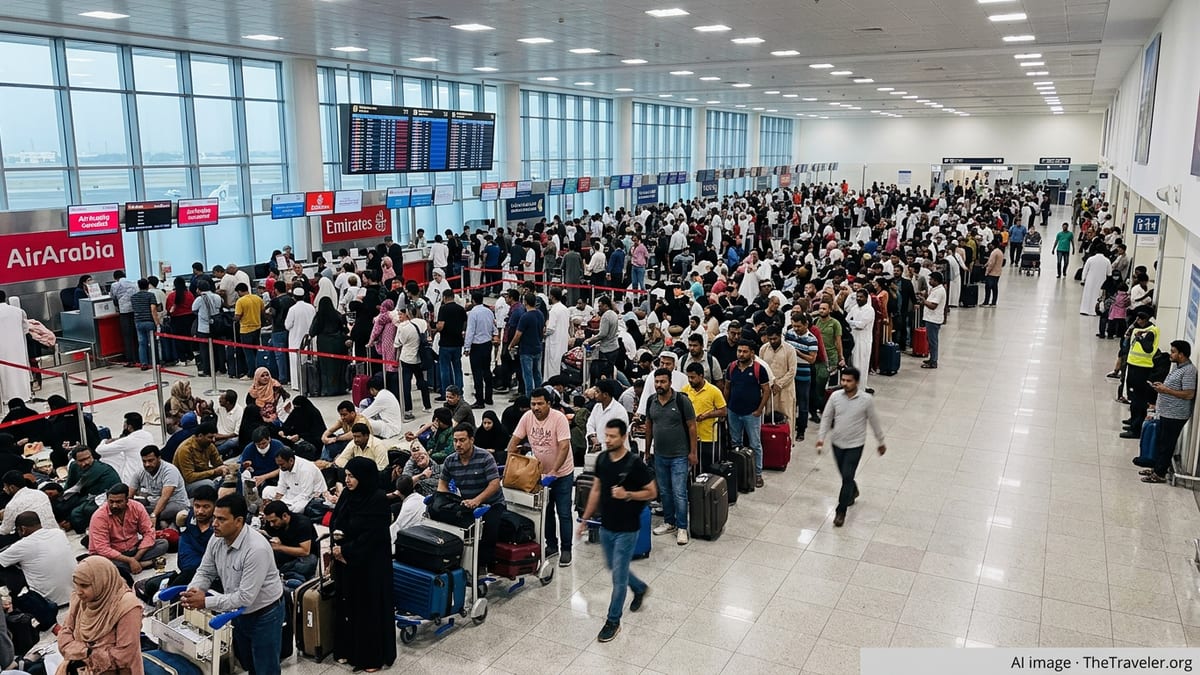
Sharjah Becomes a Flashpoint in Ongoing Middle East Air Crisis
Sharjah International Airport, a key hub for Air Arabia and other regional carriers, saw at least 30 flights delayed and 23 cancelled on Saturday, according to airport and airline updates, compounding a week of severe disruption across the Middle East. The knock-on effects hit services operated or codeshared with Air Arabia, Emirates, flydubai, SriLankan Airlines, Qatar Airways and several South Asian and African carriers.
The cancellations came even as the United Arab Emirates continued a cautious, partial reopening of its airspace after shutting down most traffic on February 28 in response to the widening regional conflict. While limited schedules have resumed from Dubai and Abu Dhabi, Sharjah’s operations remain heavily constrained, with airport authorities restricting terminal access to passengers holding confirmed bookings.
Travel data firms tracking operations across the region report that Sharjah has been among the hardest-hit airports, with a high proportion of scheduled flights scrubbed since the initial airspace closure. Saturday’s disruptions underscored how fragile the recovery remains, as airlines juggle safety restrictions, altered flight paths and heavy backlogs of stranded passengers.
Inside Sharjah’s compact terminals, long queues formed at airline desks as families, migrant workers and transit passengers tried to rebook connections to destinations in Europe, South Asia and Africa. Many faced waits of 24 hours or more, with only sparse information on when normal operations might resume.
Air Arabia at the Center as Limited Services Resume
Sharjah-based Air Arabia, the airport’s anchor carrier, has begun operating a limited number of flights to and from the UAE under a tightly controlled schedule after several days of near-total suspension. The airline has urged customers not to travel to the airport unless they have received direct confirmation by email or text message that their flight will operate.
Passengers whose flights were among the 23 cancelled departures and arrivals on Saturday were offered rebooking or refunds, but many complained of long waits to reach call centers and difficulty securing new seats on near-full services. With capacity still sharply reduced, overbooking and rolling delays have become common, particularly on high-demand routes linking Sharjah with South Asia and the wider Gulf.
Air Arabia has said it is prioritizing travelers who have been stranded in the Emirates for several days, including those stuck in airport hotels following earlier cancellations. That policy has frustrated some passengers flying into Sharjah from other regions, who say they paid high last-minute fares only to discover at check-in that seats had already been reassigned to backlogged travelers.
The airline insists its hands are largely tied by evolving security assessments and airspace permissions, which can change at short notice. Operational planners are continuing to adjust routes and schedules day by day as regional aviation authorities update safe corridors for civilian flights.
Ripple Effects for Emirates, FlyDubai, Qatar Airways and Others
The turmoil at Sharjah is part of a broader pattern of disruption affecting carriers across the UAE and the wider Middle East. Emirates and flydubai have restored only limited services from nearby Dubai International Airport, focusing on repatriation and essential travel while warning that individual flights may still be cancelled even after operations officially resume.
Qatar Airways, which temporarily halted regular services through Doha during the height of the airspace closures, has begun operating selected repatriation flights to major European hubs under special authorizations from regulators. Some of those services are feeding passengers who were originally booked to connect via Sharjah or Dubai, creating a patchwork of rerouted itineraries spanning multiple carriers.
SriLankan Airlines and several South Asian low-cost carriers that rely on Sharjah as a secondary gateway to the UAE have also been forced to slash schedules or divert flights to alternative airports when possible. This has left passengers across the Indian subcontinent, Sri Lanka and Bangladesh grappling with last-minute cancellations and limited options, especially on routes where carriers have not yet reinstated regular service.
In Europe and Africa, travelers bound for the UAE and onward to Asia have seen their plans upended as airlines adjust to new routings that avoid conflict zones and constrained Gulf airspace. Travel agents report a surge in demand for seats on alternative hubs in Turkey and Western Europe, though capacity there is also stretched.
Passengers Face Long Waits, Uncertainty and Mounting Costs
For passengers on the ground in Sharjah, the most immediate challenges are practical: where to sleep, how to pay for extra nights and whether they can secure new tickets before prices rise further. With most flights full and only a fraction of normal capacity operating, some travelers have resigned themselves to remaining in the UAE for several more days.
Airport officials say efforts are underway to coordinate with airlines, tourism authorities and foreign embassies to provide temporary accommodation and basic assistance to those most affected, including families with children and low-income migrant workers. However, support varies by carrier and nationality, and many travelers report relying on personal funds or help from relatives while waiting for updates.
Information has been another point of frustration. Despite repeated government and airline advisories urging passengers not to go to the airport without confirmation, crowds continue to gather at Sharjah’s terminals as people seek face-to-face answers. Check-in halls and departure lounges remain busy, even for flights that later show as delayed or cancelled on departure boards.
Travel experts recommend that passengers booked on services touching the UAE over the next week maintain close contact with their airline or travel agent, monitor flight status frequently and remain flexible about routing. In many cases, rebooking onto different carriers or through alternative hubs is possible, but options may be limited and subject to short-notice changes.
Unclear Timeline for Full Recovery Across the Network
While UAE authorities have signaled that they expect a gradual normalization of air traffic in the coming days, no firm timeline has been given for a full restoration of schedules at Sharjah International Airport. Aviation analysts caution that even after airspace restrictions ease, airlines will need time to reposition crews and aircraft, clear backlogs and rebuild regular timetables.
Carriers are currently prioritizing stranded passengers and essential travel over new leisure bookings, and some have extended flexible rebooking waivers for tickets issued before the February 28 shutdown. That means travelers with existing reservations are more likely to secure seats than those trying to purchase new tickets at short notice.
For Sharjah and its home carrier Air Arabia, the crisis is a stern test of a business model built on high aircraft utilization and tight turnarounds across a vast low-cost network linking the Gulf with Europe, North Africa, the Indian subcontinent and Central Asia. Any prolonged disruption risks eroding confidence among budget-conscious travelers who depend on predictable schedules.
For now, hundreds of passengers remain in limbo at Sharjah and other hubs around the region, watching departure boards and waiting for confirmation that their long-delayed journeys can finally continue.