


More news on this day
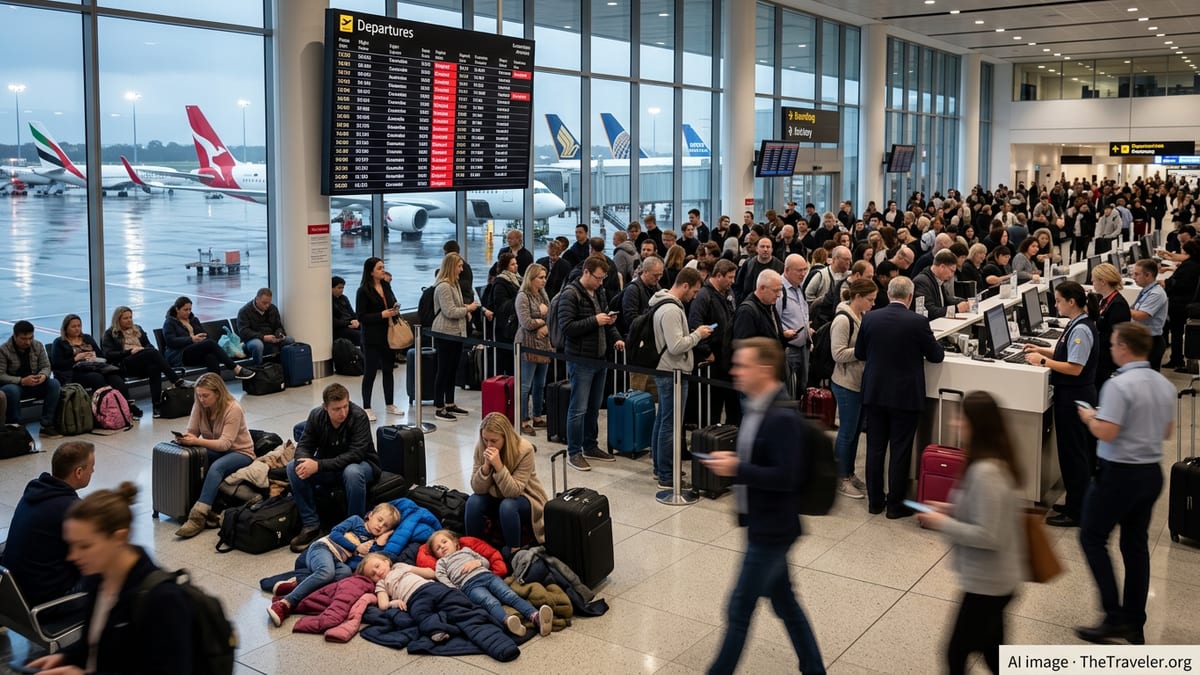
Travelers using Singapore as a major hub are facing renewed uncertainty this week as a series of flight cancellations and schedule adjustments by United Airlines, Qantas, China Eastern and other carriers disrupt connections to San Francisco, Melbourne, Kunming, Bali and several other high-demand destinations.
Get the latest news straight to your inbox!
Half a Dozen Major Routes See Fresh Disruptions
Publicly available flight data and airline notices show that several key routes touching Singapore have seen cancellations and consolidations in recent days, affecting both long haul and regional traffic. While aviation authorities have not declared a single underlying cause, a combination of airspace restrictions, weather-related diversions and broader operational pressures is pushing carriers to trim schedules and reroute aircraft.
Services linking Singapore with major long-haul gateways such as San Francisco and Melbourne have been among the most closely watched. United’s Singapore to San Francisco connection, a critical nonstop for business and tech travel, has seen intermittent cancellations and re-timings in recent weeks, according to flight-tracking platforms. Qantas, meanwhile, continues to fine-tune its Singapore schedules as it juggles Australia–Europe flying and regional connectivity.
On the regional front, China Eastern’s network linking Singapore with Chinese hubs, including Kunming, has been under particular strain. Recent schedule information indicates that some China Eastern services from Singapore have been suspended or consolidated, reducing nonstop options on select days to secondary mainland destinations.
Travelers bound for leisure hotspots such as Bali have also reported disrupted itineraries as Singapore-based connections are reshuffled. With many Australia and Europe passengers relying on Singapore as a transfer point to Indonesia, even a modest number of cancellations can create knock-on disruption across multiple flights and days.
Singapore Hub Pressured by Airspace and Weather Constraints
Singapore’s role as a dense regional hub means that any constraint in local airspace or at Changi Airport can rapidly reverberate through international schedules. Documentation from Singapore’s aviation authorities highlights ongoing periods of restricted airspace linked to military exercises and special events, which can compress available flight windows and push airlines to alter timings or temporarily suspend certain services.
In addition, severe weather around the island has recently forced inbound flights to divert, increasing operational complexity. Earlier this week, a Singapore-bound flight from Guangzhou was diverted to Batam due to intense storms, arriving in Singapore several hours late after holding and rerouting. While all passengers arrived safely, such diversions reduce schedule resilience for the rest of the day’s operations, particularly for aircraft that are planned to turn around quickly for long-haul departures.
These constraints are layered on top of ongoing reroutes around sensitive airspace in the Middle East, which are affecting how airlines plan long-haul flights between Asia, Europe and North America. Qantas has already adjusted some ultra-long-haul operations to route via Singapore for fuel stops, and Singapore Airlines has extended cancellations on its Dubai route into late May, indicating that the broader regional network remains under pressure.
The result is a tightly stretched system in which a closure of a taxiway, a brief airspace restriction or an evening thunderstorm can cascade into missed connections and last-minute cancellations to destinations far beyond Southeast Asia.
Impact on Connections to San Francisco, Melbourne, Kunming and Bali
For travelers heading to San Francisco, the main concern is reliability of nonstop and one-stop links via Singapore. United’s nonstops and partner connections are heavily used by technology, finance and corporate travelers who often build tight schedules around same-day arrivals. When one or two rotations are removed from the timetable, rebooking options can quickly narrow, especially in premium cabins and during peak conference periods.
Melbourne-bound passengers are seeing similar volatility. Qantas relies on Singapore as a staging point for traffic between Australia, Europe and parts of Asia, and schedule adjustments on one end of the network can leave fewer departure choices in and out of Melbourne. Even when alternatives exist, some travelers are finding themselves re-routed via other Australian cities or arriving many hours later than planned.
On the China side, Kunming has been a focus of disruption as China Eastern fine-tunes its post-pandemic international schedule. Flight data from recent months shows that certain Kunming services from Singapore have been paused or operated less frequently, which means passengers may need to route via Shanghai or other Chinese hubs to reach southwestern China. That can add both time and complexity to journeys that were once simple nonstops.
Bali and other Indonesian resort destinations remain accessible, but passengers connecting through Singapore are more exposed to late-notice timing changes. When inbound flights arrive late due to weather or congestion, tight transfer windows can be compromised, leading to missed connections and unexpected overnight stays, particularly during holiday peaks.
What Travelers Need to Know Before Flying Via Singapore Now
For those with upcoming trips through Singapore, travel experts point to preparation and flexibility as the most effective tools. Public guidance from airlines and airport operators consistently stresses the importance of checking flight status repeatedly in the 24 hours before departure, rather than relying solely on the original booking confirmation. Schedules that appear stable a week in advance can still change as airlines respond to evolving airspace and weather constraints.
Travelers with critical same-day commitments in destinations like San Francisco or Melbourne may want to consider earlier departures or overnight connections to build in a buffer. Corporate travel managers are increasingly recommending that important meetings, events or cruises not be scheduled too close to planned arrival times when itineraries depend on multiple connections through busy hubs.
Those flying to secondary Chinese cities such as Kunming, or onward to holiday spots like Bali, are being advised to leave additional time between flights in Singapore. Longer connection windows provide more options if inbound services are delayed or equipment is swapped. Some itineraries may benefit from overnight stays at airport hotels, which can reduce stress and lower the risk of missing the onward leg.
Flexible tickets and comprehensive travel insurance have also become more valuable in the current climate. Many airlines are offering fee waivers or no-cost date changes when they implement significant schedule shifts, but conditions vary by fare type and route. Insurance policies that explicitly cover cancellations and missed connections due to weather or airspace disruption can help offset the cost of extra nights, meals and rebooking fees.
Airlines Adjust Strategies as Operational Pressures Persist
Carriers serving Singapore appear to be taking a more conservative approach to scheduling as they navigate a complex web of operational pressures. Industry commentary suggests that some airlines are choosing to proactively trim frequencies on marginal routes rather than risk extensive day-of-operation cancellations that can damage customer confidence and increase compensation costs.
United has been monitoring demand and operational reliability on the Singapore to San Francisco route closely, with load factors and aircraft availability shaping which specific flights operate on any given day. Qantas is walking a similar tightrope, using Singapore as both a fuel stop and a connection hub while still preserving key long-haul links from Australia to Europe and North America.
China Eastern’s adjustments in and out of Singapore reflect a broader recalibration of its international network, with priority given to routes that feed major Chinese hubs and can sustain higher year-round demand. Seasonal or lower-frequency services to cities like Kunming are more vulnerable to temporary suspension when aircraft are needed elsewhere.
For travelers, the practical takeaway is that disruption around Singapore is likely to remain a feature rather than a brief anomaly in the coming weeks. While most journeys are still operating, the margin for error has narrowed, and those transiting the city-state’s usually ultra-efficient hub are being urged by travel advisers to plan carefully, stay informed up to the day of departure and prepare backup options in case their original flights do not run as scheduled.