


More news on this day
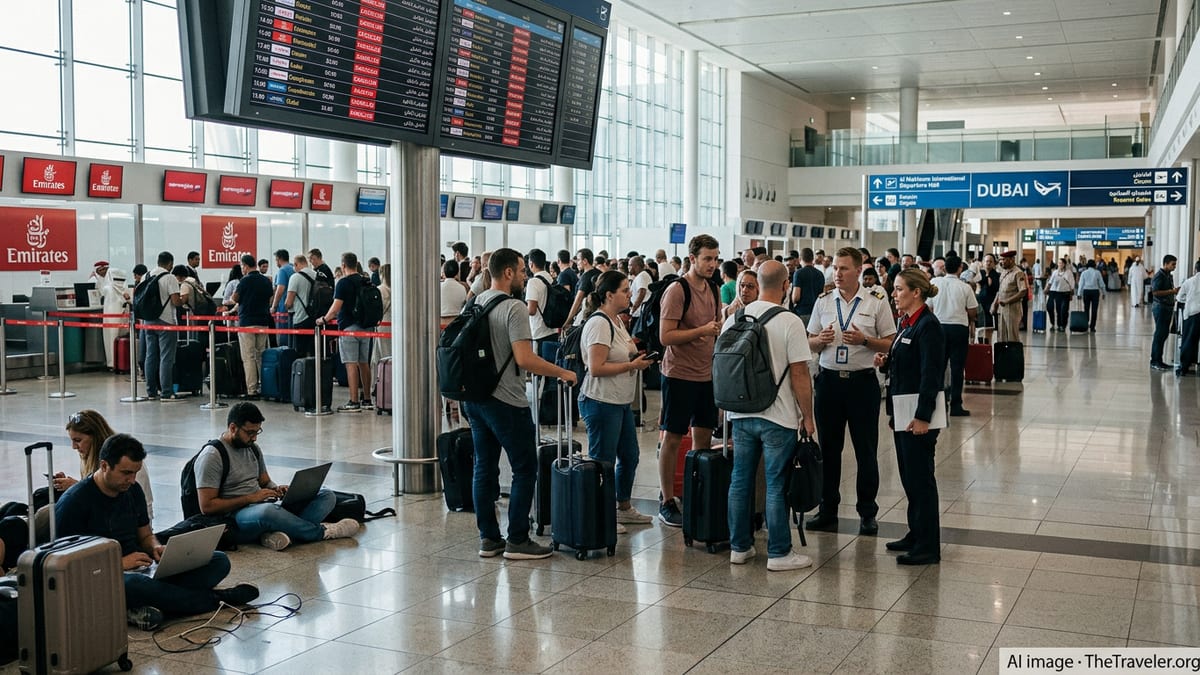
Travelers across the Gulf and South Asia are facing renewed disruption as more than 35 flights operated by carriers including Flydubai, IndiGo and Air Arabia have been canceled or heavily rescheduled, stranding passengers at Dubai, Abu Dhabi and Sharjah airports and affecting connections to major cities such as Mumbai, Delhi, Lahore and Riyadh.
Get the latest news straight to your inbox!
Fresh Wave Of Cancellations Hits Key UAE Hubs
Published coverage and live scheduling data monitored on May 10 indicate that UAE aviation hubs are still operating on a fragile footing, with a fresh round of cancellations on regional and short haul routes. Services on Flydubai, IndiGo and Air Arabia feature prominently among the disrupted operations, alongside selective adjustments by other Gulf and Indian carriers.
The latest disruption follows months of irregular operations triggered by regional security tensions and temporary airspace restrictions. While large parts of scheduled traffic through Dubai International, Abu Dhabi’s Zayed International Airport and Sharjah International have returned, today’s cancelations highlight how quickly pressure on crew, aircraft positioning and slot availability can push airlines back into recovery mode.
Routes linking the UAE with India and Pakistan remain among the hardest hit. Flights serving Mumbai, Delhi and other Indian metros have seen rolling schedule changes, while services to Lahore and additional South Asian destinations have also been affected, compounding the challenges for migrant workers and visiting families attempting to return home ahead of the summer peak.
Traffic to Gulf and wider Middle East destinations has not been spared. Reports of cancellations or equipment changes on services to Riyadh and other Saudi cities underscore the continuing knock on effects of earlier airspace closures and diversions, with some aircraft still out of their normal rotations.
Flydubai, IndiGo, Air Arabia And Others Trim Schedules
Flydubai’s point to point network, which depends heavily on fast aircraft turnarounds at Dubai International, has been particularly exposed to short notice changes. Recent flight status snapshots show a number of Flydubai departures scrubbed or retimed, including on popular regional routes where aircraft and crews were previously redeployed to cover diversions and repatriation services.
IndiGo, already under scrutiny after a major scheduling crisis in late 2025, has again been forced to curtail some services touching the UAE. Publicly available documentation and passenger reports describe cancellations affecting Abu Dhabi and Dubai links to multiple Indian cities, as the carrier attempts to balance fleet utilization constraints with demand from one of its most lucrative international markets.
From Sharjah, Air Arabia continues to rebuild capacity but is still cancelling selected flights, including services to Central and Southeast Asia. Recent examples include Sharjah connections to Tashkent and Kuala Lumpur, where passengers have reported abrupt changes and lengthy rebooking timelines, sometimes compounded by evolving refund and voucher rules.
Other airlines with dense schedules into the UAE, including Emirates, Etihad and Air India group carriers, are maintaining a mixture of regular commercial flights and targeted extra services designed to help clear backlogs. Even so, the concentration of disruption on lower cost and regional operators has left many price sensitive travelers with fewer alternatives on their preferred dates.
Passengers Stranded Across Dubai, Abu Dhabi, Sharjah And Beyond
The renewed cancellations have translated into long queues at transfer desks and check in counters across the major UAE gateways. Social media posts and traveler forums describe passengers sleeping in terminal seating areas in Dubai and Abu Dhabi after learning that their flights to Mumbai, Delhi or Lahore were no longer operating, or had been pushed back by many hours.
Sharjah International, a key base for budget travelers, has seen similar scenes. Some Air Arabia customers report that outbound flights were cancelled close to departure, with limited immediate options to rebook onto near term services. In several cases, travelers state that the earliest available alternatives fall days after their original plans, raising concern among workers facing job deadlines and families dealing with expiring visas.
Downline airports are also feeling the impact. In Mumbai and Delhi, passengers waiting to depart for the UAE have encountered last minute cancelations, often after clearing security and immigration. Travelers headed from Lahore or Riyadh to Dubai report that they were advised to remain on standby or to accept rerouting via secondary hubs, adding further uncertainty to already complex itineraries.
The net effect is an uneven recovery picture in which some long haul and trunk routes appear to be stabilizing, while regional and secondary city links remain vulnerable to cancellation waves whenever operational margins tighten.
Regional Tensions And Operational Constraints Continue To Ripple
Today’s cancellations are unfolding against the backdrop of a wider regional disruption that began in late February, when Iranian strikes on targets in the UAE and neighboring states briefly halted operations at Dubai International and other Gulf airports. Even after the immediate security threat subsided and airspace reopened, airlines were left to deal with displaced aircraft, out of position crews and extensive passenger backlogs.
Since then, carriers across the Middle East and South Asia have gradually rebuilt schedules while operating under tighter safety and routing constraints. Some have opted for conservative capacity planning, preferring to cancel at short notice rather than risk cascading delays across their networks. Others are prioritizing core routes to capital cities such as Riyadh, Mumbai and Delhi, leaving thinner secondary routes more prone to being cut when disruptions flare.
Operational limitations at individual airports add to the challenge. Shortage of spare aircraft, maintenance slots compressed by earlier diversions, and crew duty time restrictions can all intersect to force last minute cancellations. These structural issues, aviation analysts note, often persist long after headlines about the initial crisis have faded, which helps to explain why new waves of disruption continue to emerge weeks later.
In parallel, national aviation plans in the UAE remain focused on managing passenger flows and maintaining safety margins rather than immediately restoring full pre crisis capacity. This approach can mean carefully rationed slots and approvals, particularly for carriers seeking to add extra sections to clear stranded passengers.
What Travelers Need To Know Before Heading To The Airport
With conditions still fluid, travel advisers and consumer advocates are emphasizing the importance of verification before departure. Passengers flying with Flydubai, IndiGo, Air Arabia and other affected carriers are being urged by publicly available guidance to monitor their booking status through airline apps and airport information channels on the day of travel.
Same day schedule shifts have become common enough that a ticket shown as confirmed several days out may later be marked as suspended or cancelled, especially on routes linking the UAE to secondary cities in India, Pakistan and Central Asia. Travelers holding separate onward tickets, such as self made connections via Dubai or Sharjah, face particular risk if an inbound leg is disrupted and should factor in generous buffers or consider more flexible fares where possible.
Those already stranded in Dubai, Abu Dhabi or Sharjah are being advised to stay in regular contact with their airline through digital channels rather than queuing repeatedly at crowded airport desks. Many carriers are offering limited complimentary rebooking windows, waivers on date change fees or credit vouchers, though the specific terms can vary significantly by airline and fare type.
Given the prospect of further rolling cancellations, observers note that the pattern of disruption seen this weekend may not be the last. For now, travelers using UAE hubs or flying on affected regional carriers should prepare for longer journeys, evolving routings and the possibility of unexpected overnight stays as the region’s aviation network continues its uneven recovery.