

More news on this day
Slovenian Railways is pushing ahead with an ambitious renewal of its passenger fleet and cross-border services, using a wave of new rolling stock and EU-backed infrastructure works to turn a network long constrained by bottlenecks into a growing regional and international hub.
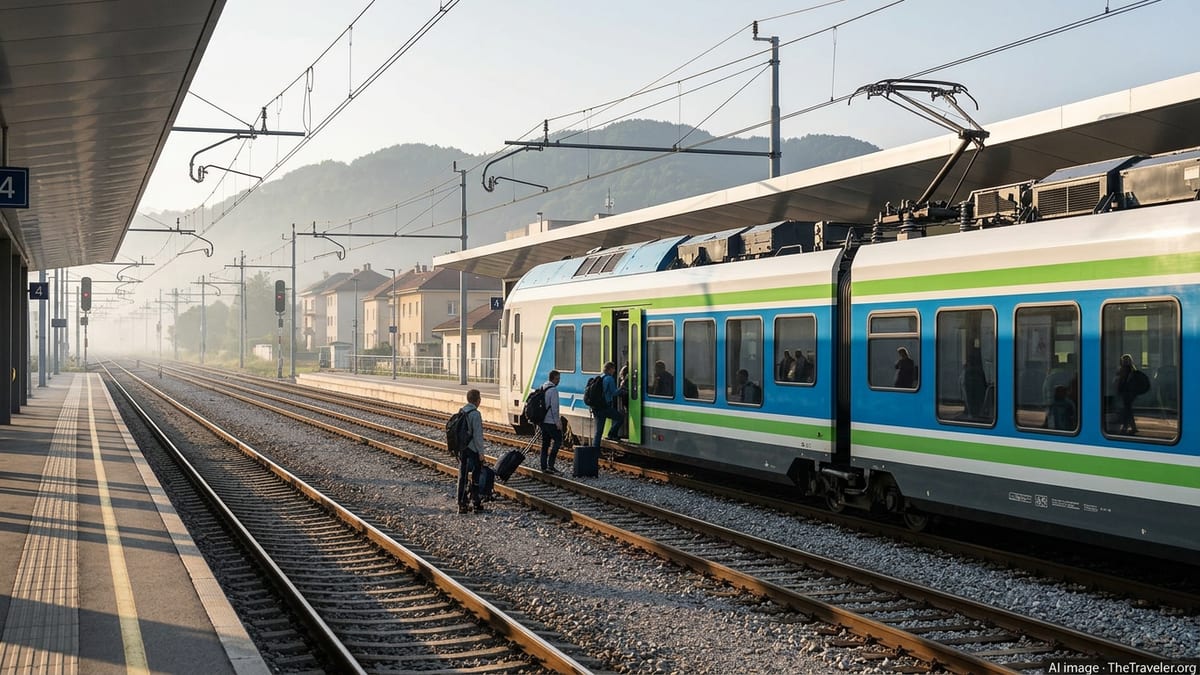
New Trains Anchor a Modern Passenger Fleet
Slovenian Railways has entered a new phase of fleet renewal with fresh orders that will significantly expand its capacity on both domestic and international routes. In December 2025, the operator confirmed a passenger fleet contract worth around 98 million euros for new coaches and locomotives, building on a multiyear investment drive that already brought dozens of Stadler-built multiple units into service. The latest order is designed to strengthen intercity and cross-border operations, giving the carrier greater flexibility to match rising demand.
The new fleet, which will include modern coaches suitable for higher speeds and longer-distance comfort, is expected to run on key intercity corridors linking Ljubljana with major regional centres and neighbouring countries. Slovenian Railways has signalled that the additional rolling stock will help it become more competitive on international routes, particularly where it shares corridors with larger operators from Austria, Croatia and Italy. Management has also indicated that this is not the final step, with plans to invest in dozens more trains in the coming years as older vehicles are phased out.
New diesel multiple units are gradually reinforcing services on non-electrified lines, where legacy trains have often been a weak point in the customer experience. The latest units, part of the broader Stadler fleet, add capacity on regional routes and enable more consistent timetables in areas where infrastructure is still being upgraded. This combination of additional trains and better deployment is central to the company’s attempt to shift passengers out of cars and onto rail, especially for daily commuting and leisure travel inside Slovenia.
Fleet renewal also serves a strategic purpose in terms of maintenance and reliability. Standardised, younger trains allow Slovenian Railways to reduce the number of different vehicle types it must maintain, streamline spare-parts logistics and shorten workshop turnaround times. Executives argue that this consolidation is essential if the network is to offer the punctuality and comfort expected in a competitive Central European rail market.
Infrastructure Bottlenecks and Capacity Works
Even as new trains enter service, Slovenian Railways remains constrained by extensive works on core corridors that limit capacity and affect punctuality. Sections of the historic Ljubljana to Divača line, part of the long-standing Vienna to Trieste “Southern Railway” axis, are undergoing major upgrades to raise speeds, remove bottlenecks and bring infrastructure into line with modern interoperability standards. Once complete, upgraded segments such as Ljubljana to Borovnica will offer higher axle loads, better fluidity and improved reliability for both passenger and freight traffic.
The most prominent project shaping the future of Slovenian rail is the second track between Divača and the port of Koper, backed by a 250 million euro loan from the European Investment Bank alongside EU grants. That line, which carries a large share of Slovenia’s freight flows as well as important passenger services to the coast, is being transformed into a higher-capacity artery in line with European climate and transport policy. Construction has triggered temporary reductions in capacity and timetable changes, but authorities emphasize that the result will be a more resilient and efficient link between the Adriatic and inland Europe.
These works form part of Slovenia’s role on several Trans-European Transport Network corridors, including the Mediterranean and Baltic–Adriatic axes. By upgrading legacy infrastructure that in some cases dates back to the nineteenth century, Slovenian Railways and its infrastructure arm are positioning the network to handle longer, heavier and faster trains. Officials acknowledge that passengers currently experience delays and slower journeys on certain sections, but argue that these are the short-term cost of a once-in-a-generation modernization push.
Freight operators have also had to adapt to construction-related disruptions, particularly on routes from Koper toward Hungary and Slovakia. Capacity restrictions and occasional incidents have forced temporary rerouting and longer transit times, but the long-term expectation is that new alignments and higher standards will improve punctuality and make rail more competitive against road haulage. The company is linking these infrastructure upgrades with digital initiatives, including participation in European programmes to roll out digital automatic coupling and smarter traffic management for freight.
Stronger Regional and Cross-Border Services
Beyond the hardware, Slovenian Railways is reshaping its timetable and partnerships to offer more regional and international services. In cooperation with Croatian Railways, it recently added new cross-border trains on the Zabok to Rogatec route, strengthening links between eastern Slovenia and northern Croatia. These services build on earlier reopenings of cross-border lines and are intended to support daily mobility in border regions where commuters and students rely heavily on rail.
On the western flank, the operator has helped reanimate historic routes across the Italy–Slovenia frontier. Passenger trains now run from Trieste’s hinterland to interior Slovenian towns such as Sežana, Divača and Pivka, following a line first built more than 150 years ago under the Austro-Hungarian Empire. The service offers a scenic alternative to road travel and has been marketed to tourists as a ready-made rail adventure, while also serving local residents. Slovenia is also engaged in broader EU discussions on improving the long-term connection between Ljubljana and Vienna, where plans for higher-speed links could reduce journey times and enhance the country’s integration into the Central European rail network.
Cross-border cooperation has expanded south and east as well. Coordination with neighbouring railways is being stepped up to ensure better connections toward Zagreb and onward routes to the Balkans, as well as toward Villach and Graz in Austria. While some passengers still face uneven frequencies on certain international links, the general direction is toward more regular, clockface timetables and integrated ticketing. Slovenian Railways is using its new fleet to reinforce these corridors, aiming to make cross-border trains more attractive than driving, particularly for weekend leisure travel.
International institutions are keen to see Slovenia play a larger role in European rail flows, given its strategic position between the Adriatic Sea and Central Europe. Enhanced intercity and regional services through Slovenia can support tourism, reduce road congestion in sensitive Alpine and coastal regions, and provide a lower-emission alternative to short-haul flights. For Slovenian Railways, this means not only running more trains, but also aligning service quality and onboard standards with those of its larger neighbours.
Passenger Experience and Reliability Under Scrutiny
For travellers, the transformation of Slovenian Railways is most visible in the contrast between modern multiple units and lingering punctuality issues. Passengers benefit from air-conditioned, low-floor trains with improved accessibility, Wi-Fi and quieter interiors, especially on newer Stadler units. At the same time, ongoing works and capacity constraints have produced delays and occasional overcrowding on key corridors, prompting criticism from commuters and regional politicians.
The company maintains that many of the delays are rooted in infrastructure limitations rather than operational shortcomings, a claim echoed by officials who point to the heavy schedule of works on the core network. Timetables have been repeatedly adjusted to accommodate construction windows and speed restrictions, sometimes causing missed connections and longer travel times. Slovenian Railways has responded with measures such as more transparent disruption information, rolling stock reallocation to protect peak-hour services and targeted use of replacement buses where rail capacity is sharply reduced.
Despite the friction, ridership trends suggest that customers are responding positively to the upgraded trains and new connections once they are in place. Regional authorities report strong seasonal demand on tourist lines, particularly those serving the coast and mountain destinations such as the Bohinj corridor, while daily usage on cross-border services with Croatia has increased following the addition of more trains. The operator is banking on this momentum, arguing that once the most disruptive infrastructure works finish, passengers will see the full benefits of the investments in the form of faster journeys and more reliable operations.
Customer expectations are also being shaped by developments elsewhere in Europe, where high-speed and high-frequency services are becoming the norm on key corridors. Slovenian Railways faces the dual challenge of keeping up with this standard while working within a smaller national market and a network still being modernised. Management has framed the current period as a transitional phase, during which short-term discomfort will give way to a sharper, more competitive product within the Central European rail landscape.
Positioning Slovenia as a Regional Rail Hub
Viewed together, fleet renewal, infrastructure upgrades and expanded cross-border services represent a deliberate strategy to position Slovenia as a key node in regional rail geography. New trains bought with a focus on both domestic and international deployment are intended to unlock the potential of EU-backed investments in tracks, tunnels and signalling. As capacity on the Divača to Koper line increases and bottlenecks around Ljubljana are eased, Slovenian Railways aims to run more frequent and longer trains for both passengers and freight.
The operator is also aligning itself with broader European initiatives to digitalise and decarbonise rail. Participation in programmes related to digital automatic coupling and interoperability supports the goal of smoother freight operations across national borders, while the continued electrification of services and replacement of older diesel stock fit into Slovenia’s climate commitments. The government, for its part, presents rail as a cornerstone of sustainable transport policy, especially as it looks to limit emissions growth from road traffic.
In this context, the recent fleet contracts and cross-border timetable expansions are more than discrete announcements. They signal that Slovenian Railways intends to emerge from a challenging period of works and capacity constraints as a stronger player, capable of connecting Adriatic ports, Alpine resorts and Central European capitals with a modern, competitive rail product. For passengers stepping aboard the latest generation of trains, the visible upgrades are only the start of a broader shift in how Slovenia moves within itself and within Europe.