


More news on this day
Operations at Kelowna International Airport were significantly disrupted on Friday morning after a small private aircraft left the runway during landing, prompting a temporary closure and a cascade of flight delays and diversions across the Okanagan region.
Get the latest news straight to your inbox!
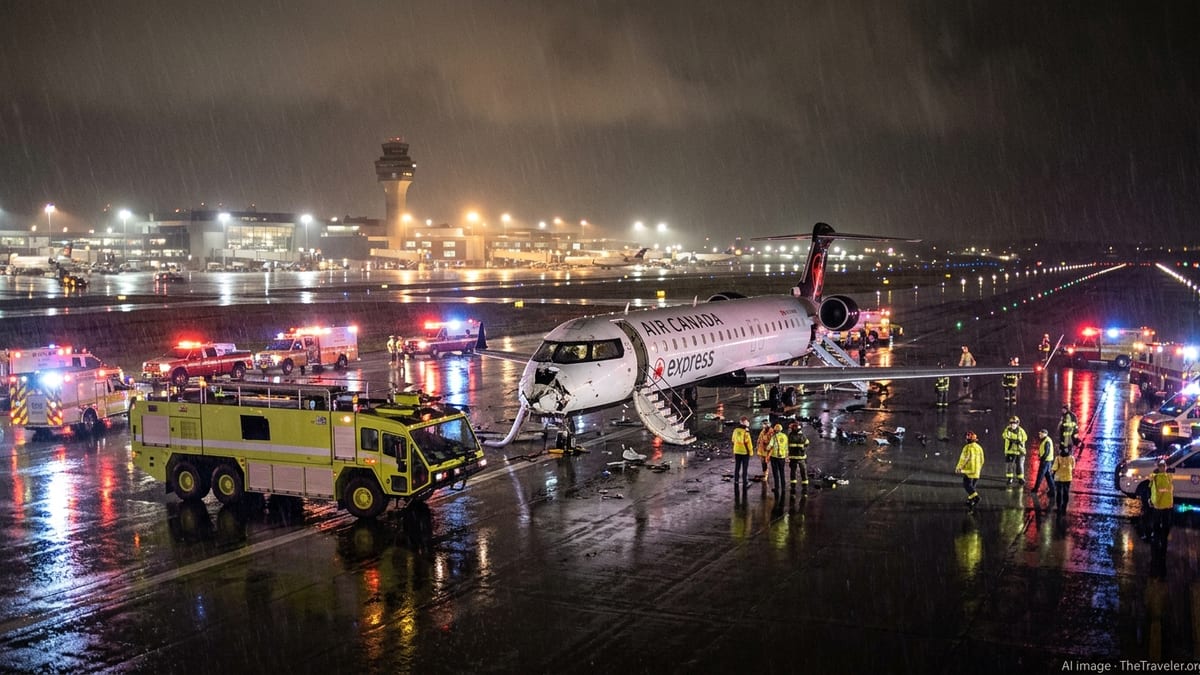
Runway Closed After Landing Incident Involving Private Aircraft
Publicly available information from local coverage indicates that the incident occurred around 10:40 a.m. on July 3, when a privately operated aircraft experienced difficulty while landing at Kelowna International Airport. The aircraft came to rest on the main runway, requiring an emergency response and immediate suspension of arrivals and departures.
Reports describe the aircraft as a small private plane, rather than a scheduled commercial flight. There were no early indications of fire or fuel spill, but standard emergency procedures were put in place as a precaution while responders assessed the aircraft and runway surface.
According to published coverage, there were no injuries reported among those on board the aircraft. The main impact was on airport operations, with the disabled plane blocking the runway and preventing other flights from landing or taking off until it could be removed.
Airport staff began work to clear the runway once the situation was stabilized, with specialized equipment required to safely move the stricken aircraft without causing additional damage to either the plane or airport infrastructure.
Circling Jets, Diversions And Delays Across The Okanagan
Flight tracking data reviewed by local media showed multiple commercial aircraft holding in patterns north and northeast of Kelowna after the runway closure. Several arrivals from major Canadian hubs such as Vancouver, Calgary, Edmonton, Saskatoon, Toronto and Ottawa were forced to circle while awaiting updates.
As the closure extended, some flights ultimately diverted to other airports, including Vancouver, to refuel or disembark passengers. Travel boards for Kelowna displayed long strings of delays and revised arrival times, with some services pushed back by more than an hour.
Trip-planning platforms and airline status pages reflected the disruption through the late morning and early afternoon. At least one Edmonton-bound service from Kelowna showed a revised departure deep into the afternoon, illustrating how a single runway incident at a regional hub can ripple across multiple routes and carriers.
Travelers already in the air toward Kelowna faced extended flight times, while those waiting to depart from the city encountered uncertainty as the airport worked to safely reopen the runway.
Impact On Passengers And Airlines
The runway closure added to an already challenging travel day for many passengers moving through Kelowna and other Western Canadian airports. Some travelers reported extended waits as inbound aircraft were rerouted or ground times increased, while departure gates remained frozen until the runway status improved.
Airlines adjusted operations in response, holding flights on the ground at origin airports or revising schedules to accommodate the unexpected closure. Published airline updates signaled delays on routes linking Kelowna with major cities, and some carriers faced knock-on effects in the form of aircraft and crew displacements.
Passengers were encouraged through online advisories and media reports to monitor airline and airport information channels closely for updated departure and arrival times, rather than relying on original itineraries. For some, that meant same-day rebookings or missed connections at onward hubs.
The incident also underscored the limited operational flexibility of airports like Kelowna that rely on a single primary runway. When that runway is unavailable, even temporarily, normal traffic can quickly back up, and recovery may take hours as aircraft and schedules are realigned.
Safety Procedures And Runway Operations At Kelowna
Kelowna International Airport, located in British Columbia’s Okanagan Valley, operates as a busy regional gateway, handling a mix of commercial jet traffic and general aviation. The airport has one main runway, so any obstruction or safety concern on that strip tends to affect all operations simultaneously.
Publicly available information about the airport’s emergency planning shows that response protocols are designed to prioritize life safety, secure aircraft and infrastructure, and then restore operations as quickly as conditions safely allow. In this incident, the absence of injuries and the focus on carefully removing the aircraft reflects that tiered approach.
Aviation safety agencies typically review such events involving runway excursions or landing incidents, even when they do not result in serious damage or injuries. Those assessments can inform future operational guidance, pilot training, and airport procedures, especially at facilities where commercial and private aviation share the same airfield.
While small aircraft incidents are rare relative to the volume of flights handled each year, they highlight the importance of runway condition monitoring, pilot decision-making during approach and landing, and the readiness of airport emergency teams to respond when something goes wrong.
What Travelers Should Know If Heading Through Kelowna
For travelers planning to use Kelowna International Airport in the hours following the incident, publicly available updates indicated that delays were likely as airlines and airport staff worked through the backlog created during the closure. Even after a runway reopens, it can take time to reposition aircraft and crews and to reschedule delayed services.
Passengers booked on flights into or out of Kelowna are advised in media coverage to check airline status tools and airport departure and arrival boards frequently on the day of travel. Same-day notifications, mobile apps and email alerts are often the fastest way to learn about revised departure times, gate changes or rebooking options.
For those connecting through larger hubs, experts generally recommend allowing extra time between flights when regional airports experience disruptions of this kind, as knock-on delays may appear several hours after the original incident. Travel insurance providers may also treat runway closures and related diversions as eligible events for certain types of coverage, depending on policy terms.
As the small plane involved in the Kelowna incident is removed and normal operations resume, attention is likely to turn to any forthcoming safety assessments and whether additional measures could further reduce the risk of similar events in the future at this key Okanagan gateway.