


More news on this day
SNCF Voyageurs has been confirmed as the operator of a major regional rail network in northern France, after the Hauts-de-France regional council selected the company to run its first competitively tendered passenger services under a long-term public service contract.
Get the latest news straight to your inbox!
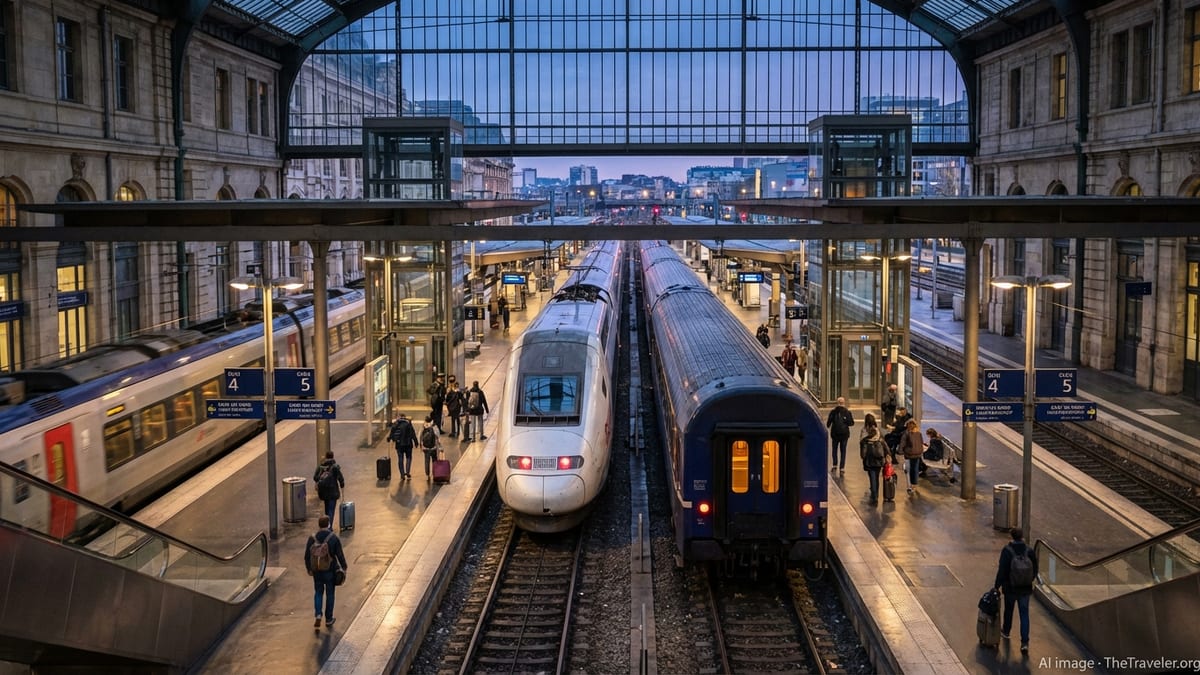
A milestone contract for the Amiens rail hub and beyond
According to publicly available information from the regional council and industry publications, Hauts-de-France has awarded SNCF Voyageurs a public service obligation contract to manage and operate a large share of its TER regional services, focused on the so-called “Amiens star” network. The package covers several lines radiating from Amiens, a key junction on north France’s rail map, connecting coastal, rural and commuter routes.
The contract is reported to run for around ten years, starting in mid-December 2024, aligning with the timetable change used across Europe. Under this agreement, SNCF Voyageurs is responsible for day-to-day train operations, crew management and customer-facing services, while infrastructure management remains with SNCF Réseau. The region retains the role of transport authority, defining service levels, fares policy and investment priorities.
Coverage indicates that the Hauts-de-France award followed a competitive tender, in line with European rules that require regional passenger rail services to be opened to competition. Several operators submitted bids, but SNCF Voyageurs was ultimately selected as preferred bidder, securing its role on a network that already records some of the highest TER ridership figures in France.
The deal is described in company reporting as part of a broader strategy to create dedicated entities within SNCF Voyageurs for each large regional contract. For Hauts-de-France, this means a specialised operating unit focused on local performance targets, punctuality and passenger satisfaction, within the wider national group structure.
Opening to competition reshapes regional rail in France
The Hauts-de-France decision forms part of France’s phased liberalisation of regional rail, launched after a 2018 rail reform law. Under this framework, regions are progressively required to tender their Transport express régional contracts, which were historically awarded directly to SNCF without competition.
In practice, this has created a mixed picture across the country. Some regions, such as Provence Alpes Côte d’Azur and Grand Est, have already awarded parts of their networks to private operators such as Transdev, ending SNCF’s monopoly on selected lines. Others, including Hauts-de-France and Bourgogne Franche Comté, have run tenders that ultimately resulted in SNCF Voyageurs retaining or winning contracts against rival bids.
Industry analysis suggests that the regional authorities’ goals include better control over operating costs, stronger performance incentives and more tailored services for commuters and local communities. Competitive tendering allows regions to compare detailed proposals on timetables, staffing, maintenance strategies and customer service, rather than negotiating only with a single incumbent operator.
For travelers in Hauts-de-France, the immediate impact remains continuity of the SNCF Voyageurs brand on regional trains, but framed by a more formal contractual relationship. The contract sets measurable targets for on-time performance, service reliability and passenger information, with potential financial penalties or bonuses linked to results over the life of the agreement.
Passenger growth and investment priorities in Hauts-de-France
Recent regional data highlighted in public reports indicates that TER ridership in Hauts-de-France has reached record levels, reflecting both the region’s dense commuter flows and efforts to shift travel from cars to rail. This growth places added pressure on punctuality, rolling stock capacity and station facilities across the network.
Alongside the operating contract, Hauts-de-France and SNCF Réseau have signed a multi-year performance agreement aimed at improving infrastructure reliability. The document outlines shared commitments for renewing track, modernising signalling and enhancing accessibility at stations. The region co-finances these upgrades with the national state, while SNCF Voyageurs adapts its operations to accommodate construction work and new equipment.
SNCF Group communications also point to the region’s role as a testbed for innovation. Battery-powered regional trains are being developed with rolling stock manufacturer Alstom for non-electrified lines serving Hauts-de-France and several other French regions. These projects are intended to cut diesel use, reduce emissions and support quieter, more efficient regional services in the coming years.
For daily passengers, the combination of a new operating contract and planned infrastructure works is expected to translate gradually into more frequent, more reliable trains and modernised rolling stock. However, improvements are likely to be phased in over several timetable changes, as new trains are delivered, infrastructure schemes are completed and operational changes bed in.
Implications for travelers and competing operators
The decision to entrust the Hauts-de-France network to SNCF Voyageurs is being closely watched by other French regions preparing their own tenders, as well as by competing transport groups. It demonstrates that the incumbent national operator can still win contracts on price and quality criteria when faced with private rivals, even as some lines elsewhere are handed to alternative providers.
For travelers, continuity of branding means that ticketing, digital platforms and onboard standards remain familiar, but within a more performance-driven framework. Regional authorities have highlighted punctuality, clear passenger information and improved accessibility as priorities, suggesting that future changes may be more visible in service reliability and customer care than in the liveries of the trains themselves.
At the same time, the Hauts-de-France award sits alongside examples where other operators are entering the market, such as Transdev-operated regional lines in the south and east of France. Industry observers view this as a sign that regional rail in France is moving toward a diversified model, where several operators coexist under contracts set by elected regional councils.
For visitors exploring northern France, from the Channel coast to historic cities such as Amiens and Lille, the continued presence of SNCF Voyageurs on local trains provides a degree of stability during this transition. The new contract framework, however, means that the company’s performance in Hauts-de-France will be under closer scrutiny, with the potential for future tenders to reopen if regional objectives are not met.