

More news on this day
South Korea’s major airlines are raising fuel surcharges on popular long haul and regional routes, including services to New York and Tokyo, as a renewed surge in global oil and jet fuel prices begins to filter through to airfares across Asia.
Get the latest news straight to your inbox!
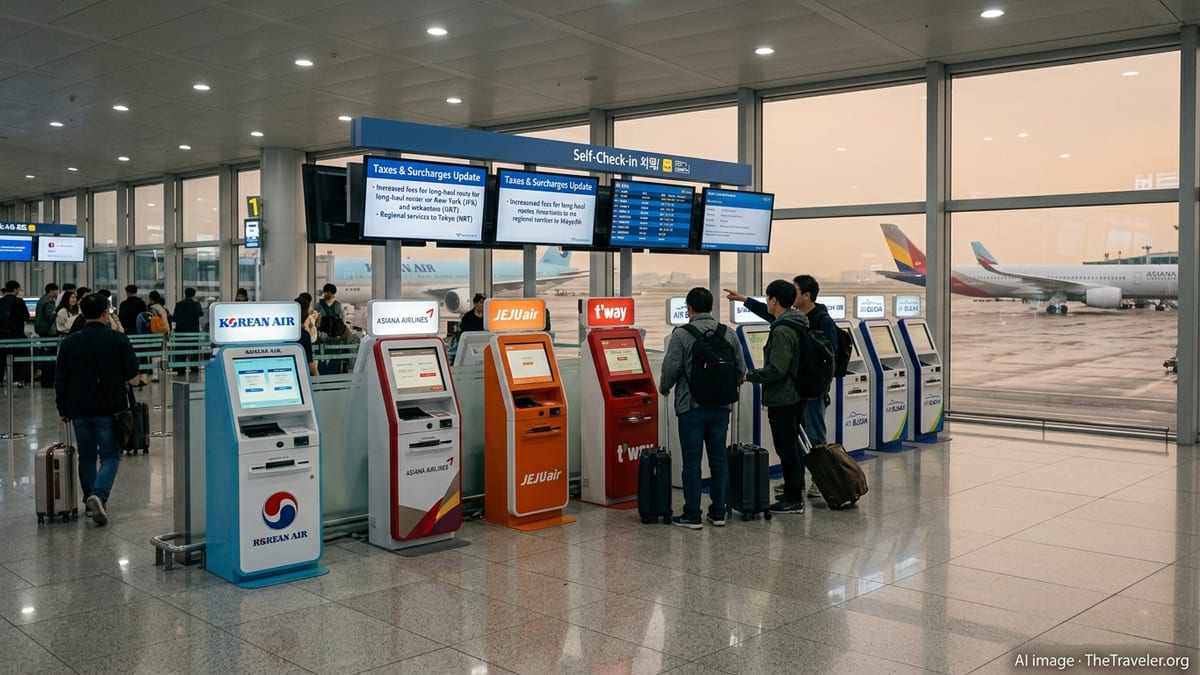
South Korean Carriers Move in Step as Fuel Costs Climb
Publicly available fare and tariff notices from Korean Air and other South Korean carriers show a fresh round of fuel surcharge increases rolling out across international networks, reversing the downward trend seen through much of 2025. After several months in which surcharges had been pared back, the sudden rise in jet fuel prices tied to disruptions in global oil supply is prompting airlines to adjust pricing on tickets issued for departures from late March and into the northern summer season.
The adjustments affect both flagship and low cost operators. Korean Air, together with merged Asiana operations, is lifting fuel surcharges on a wide range of long haul routes, including flights from Seoul Incheon to New York. Regional specialists such as Jeju Air, Air Busan, T’way Air and Eastar Jet are similarly revising surcharges on high demand sectors such as Seoul to Tokyo and Osaka, along with other Northeast and Southeast Asian destinations.
Industry data out of South Korea through early 2026 indicates that typical international surcharges, which had been cut back to some of their lowest levels in more than three years during mid 2025, are now climbing in line with the renewed cost of aviation turbine fuel. While base airfares may not change immediately on every route, the higher add on fees are already pushing up the total price paid by passengers booking new tickets.
What Is Changing on Key Routes Like New York and Tokyo
The impact for travelers is most visible on fuel intensive long haul flights, particularly transpacific services linking Seoul with New York. These routes burn significantly more fuel than short hops within Northeast Asia, magnifying the effect of rising jet fuel prices and making them prime candidates for higher surcharges. Fare information circulating in the market indicates that round trip tickets between Incheon and major North American hubs are now carrying noticeably higher fuel add ons than at the start of the year.
Popular regional links such as Seoul to Tokyo, Osaka and other Japanese cities are also seeing adjustments. Although flight times are shorter, these sectors are among the busiest in the South Korean network, so even modest increases in per segment fuel surcharges can translate into a substantial additional cost for frequent travelers and families. Jeju Air and other low cost carriers that rely heavily on these routes are updating their surcharge tables in line with higher benchmark fuel prices, narrowing the price gap with full service competitors on some departure dates.
Domestic and shorter international routes from secondary airports such as Busan and Daegu are not exempt. Air Busan, Eastar Jet and T’way Air have begun reflecting the new environment in their pricing, particularly on routes where aircraft operate longer stage lengths or overnight rotations. For travelers planning multi city itineraries, the cumulative effect of several higher surcharges across consecutive legs can be material, even if any individual increase appears modest on paper.
Global Oil Market Turbulence Behind the Increases
The renewed push higher in South Korean fuel surcharges comes against a backdrop of sharp volatility in global oil and refined product markets. Recent coverage of jet fuel pricing trends indicates that benchmark aviation fuel costs have jumped since late February and early March 2026, as conflict in the Middle East has constrained exports and disrupted key refining and shipping corridors. Analysts point in particular to tensions around the Strait of Hormuz, a vital chokepoint for crude and refined product flows, as a catalyst for rapid price spikes.
International aviation bodies and market research groups had previously noted multi year highs in jet fuel prices across 2024 and 2025, driven by strong post pandemic travel demand and tight refining capacity. While there was some easing through late 2025, the latest surge has pushed costs sharply higher in a matter of weeks. For airlines, fuel typically accounts for a quarter or more of total operating expenses, and in some Asia Pacific markets the share can be even larger when prices are elevated.
South Korean carriers are especially sensitive to these swings because their networks are heavily weighted toward long haul and regional international traffic rather than domestic flying. Longer sectors to North America, Europe and Southeast Asia expose them more directly to jet fuel price volatility, while competition on key regional routes to Japan and China limits the ability to raise base fares. Fuel surcharges, which can be adjusted more frequently than headline ticket prices, have become a primary tool for passing cost changes through to passengers.
How South Korea’s Fuel Surcharge System Works
Fuel surcharges on South Korean airlines are typically structured in bands, with specific surcharge levels applying to tickets issued within a given period based on average jet fuel prices over the preceding weeks. When benchmark prices cross into a higher band, carriers are permitted to lift surcharges within a defined range on international itineraries. When prices fall, the applicable band and surcharge range can drop as well, which is what occurred through mid 2025 before the latest reversal.
In practice, this means that two travelers flying the same route in the same booking class can pay different total prices depending on when their tickets were issued. A passenger who locked in a Seoul to New York itinerary before the latest band adjustment may see a significantly lower fuel surcharge on their receipt than someone buying the same flight this month. The same pattern applies on Seoul to Tokyo and other high frequency regional services, where fares fluctuate not only with demand but also with the timing of surcharge changes.
Low cost carriers such as Jeju Air, T’way and Eastar Jet generally mirror the banded approach used by full service airlines, although the absolute surcharge amounts may be lower given their different fare structures. Nevertheless, for travelers accustomed to very low advertised base fares, the fuel component can represent a large share of the final ticket cost. Industry observers note that as oil prices have risen, the distinction between base fare and surcharge has become less transparent for many consumers, reinforcing calls from some regulators and passenger advocacy groups for clearer all in pricing displays.
What Travelers Can Do to Manage Higher Costs
Travel analysts suggest that passengers planning trips involving South Korean carriers can take several practical steps to lessen the impact of rising fuel surcharges. One of the most effective is to book early when there are signs that jet fuel prices are moving higher. Because surcharges are tied to fuel averages over prior weeks and can only be adjusted on a scheduled basis, travelers who purchase tickets before a new band takes effect may be able to secure lower total prices, even if base fares later move up or down.
Flexibility with travel dates and routing can also help. On some days, itineraries that avoid the most expensive long haul sectors or that combine different carriers may yield a lower overall surcharge burden, especially for travelers connecting beyond Seoul to third country destinations. In a few cases, choosing an alternative gateway in the region for Japan or North America and then making a separate connection can reduce exposure to the highest band surcharges currently in force on specific Korean routes.
Frequent flyer miles and bank reward points may become more valuable as out of pocket cash costs rise. While most airline loyalty programs still pass fuel surcharges through on award tickets, using miles can offset the base fare component, leaving the passenger to pay only taxes and fees. For travelers with large points balances, this can be an attractive way to preserve cash while still taking advantage of peak season travel opportunities, even as oil markets remain unsettled.