

More news on this day
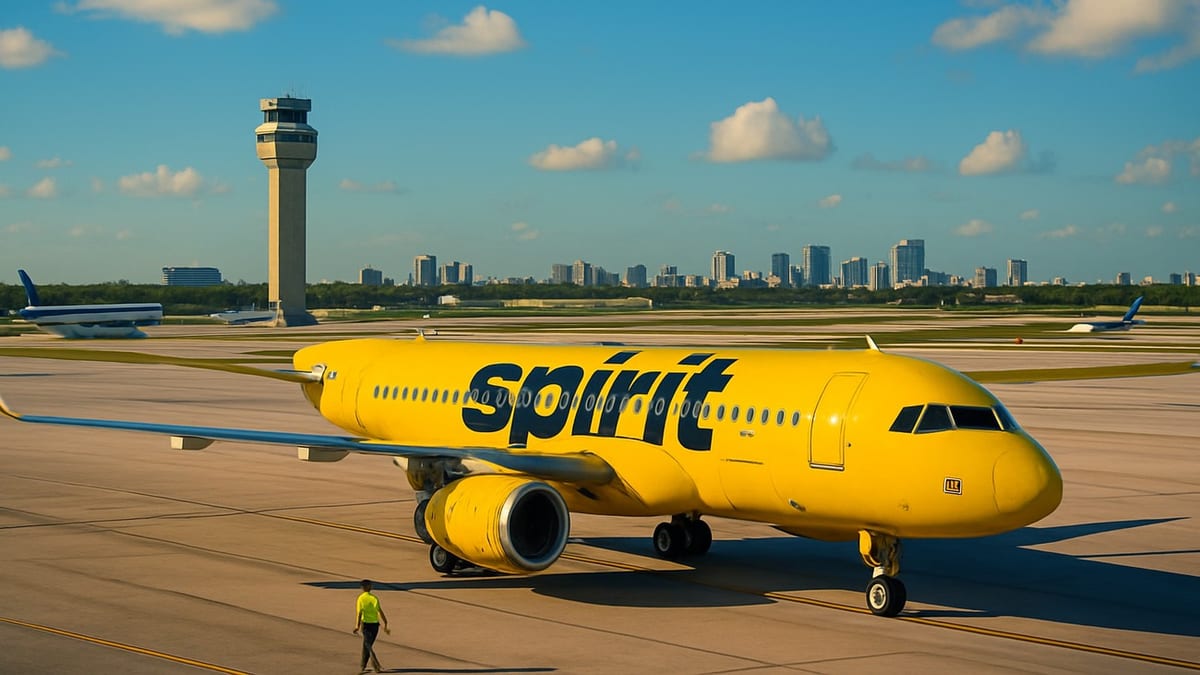
A strategically placed Spirit Airlines flight grounded at Miami International Airport in mid April 2026 has triggered a rolling series of delays, with publicly available tracking data indicating at least ten late departures rippling across a network of more than fifty destinations in North America, Europe and beyond.
Get the latest news straight to your inbox!
Targeted Cancellation at a Busy Hub
Published operational snapshots for April 12, 2026 show a tightly concentrated disruption pattern at Miami International Airport, where one Spirit Airlines flight cancellation coincides with a much larger field of delays affecting multiple carriers. Reporting from aviation focused outlets describes a day dominated by late departures rather than mass cancellations, with Spirit’s grounded service standing out because of its role in feeding onward connections across the carrier’s point to point network.
Coverage of the Miami disruption indicates that the canceled Spirit departure was scheduled during a peak bank of flights, when aircraft and crews are heavily utilized and turnaround times are short. In such conditions, the loss of a single aircraft rotation can immediately reduce schedule flexibility, forcing the airline to hold subsequent departures while it repositions aircraft or crews.
Recent summaries of Spirit’s overall performance in early 2026 portray an airline already operating with narrow margins for error after cost cutting, fleet reductions and staffing adjustments. Within that context, a lone grounded flight at a major gateway like Miami can act as a trigger point, amplifying minor schedule slippage into a pattern of rolling delays.
Delays Spread Across North American and European Corridors
Based on data cited in travel industry reporting on April 12, disruption linked to the Miami cancellation has been most visible on routes connecting to major hubs in the United States, Canada and Europe. Published accounts highlight knock on delays affecting services tied to airports in Charlotte and Toronto, with additional schedule pressure appearing on links that touch transatlantic gateways such as London, Frankfurt and Amsterdam.
These routes play a dual role in Spirit’s network and in the broader system at Miami International Airport. For Spirit, they function as bridges between leisure oriented markets and large connecting hubs, where passengers can link to other carriers or long haul services. For the airport, they are part of a delicate choreography in which late turns on a small number of flights can push arrival and departure banks out of sync.
Publicly available disruption tallies for the same April travel window show that Miami has experienced triple digit delay counts on several recent days, involving a mix of U.S. and foreign airlines. Within that wider pattern, Spirit’s latest issues form one component of a broader congestion picture, yet they stand out for the way they intersect with the carrier’s restructuring pressures and its reliance on high daily aircraft utilization.
Why One Grounded Aircraft Can Affect Dozens of Cities
Industry analysis of low cost carrier operations points to several structural reasons why a single cancellation can have outsized consequences. Spirit typically schedules its aircraft on tight rotations, with multiple short and medium haul legs stitched together over the course of a day. When one of those early legs is removed, the remaining schedule may lack spare capacity to absorb delays, especially when spare aircraft and reserve crews are limited.
As a result, what begins as a localized problem in Miami can quickly involve aircraft that were due to operate services to and from airports as far afield as Mexico, the Caribbean and Europe, via codeshares, onward connections or interline transfers handled at other hubs. Reports referencing the April 12 disruption describe a chain of at least ten delayed flights whose routings, when combined, touch more than fifty end destinations, underscoring how intertwined modern airline networks have become.
Operational specialists often note that such cascades are not unique to any single airline, but can be more pronounced at carriers undergoing fleet changes or financial restructuring. In Spirit’s case, recent coverage of its cutbacks, refocused route map and capital constraints suggests that the carrier has less buffer than in previous years, making each disruption event more likely to spill across multiple regions.
Passenger Experience and Practical Options
For travelers caught up in the Miami centered disruption, the immediate impact has been extended waits, missed connections and in some cases overnight stays as they attempt to rebook. Consumer advocacy organizations that track delays at major U.S. airports emphasize that most such events are delay driven rather than cancellation heavy, meaning that many passengers ultimately complete their journeys on the same day, albeit several hours behind schedule.
Guidance compiled by passenger rights groups for similar events in early April 2026 encourages affected travelers to document boarding passes, delay notifications and any written explanation of the disruption reason. Publicly available information on Spirit’s policies indicates that travelers may be eligible for refunds or fee free rebooking when cancellations are within the airline’s control, while weather and air traffic constraints tend to limit compensation to re accommodation on the next available flight.
Analysts advise that passengers facing cascading delays across multiple segments should proactively explore alternate routings, including nearby airports served by other carriers, and remain alert to schedule changes communicated through airline apps or departure boards. Given the scale of Miami’s April delays, this kind of flexibility can help travelers reduce the risk of being stranded as the network adjusts.
Broader Signals for Spirit and Miami’s Spring Travel Season
The Miami incident arrives at a delicate moment for Spirit Airlines, which has been working to stabilize its finances, trim underperforming routes and refocus on core markets in Florida and the Northeast. Recent industry coverage points to a strategy centered on higher yielding routes and more disciplined capacity, but also highlights ongoing operational strain manifested in clusters of cancellations and chronic delays across several hubs.
For Miami International Airport, the April disruptions underscore the challenges of managing a dense mix of legacy carriers, low cost operators and long haul international airlines during a period of strong travel demand. Reports from the first half of April 2026 describe repeated days with more than one hundred delayed flights, influenced by a blend of storm systems, airspace congestion and tight staffing across the aviation ecosystem.
Observers tracking the situation suggest that the grounded Spirit flight and its downstream effects serve as a reminder of how sensitive the global network remains to localized shocks. As the spring peak gives way to the summer travel build up, performance at airports like Miami will be closely watched as an indicator of whether airlines, including Spirit, have enough resilience built into their schedules to prevent isolated disruptions from cascading across dozens of destinations.