

More news on this day
Washington Dulles International Airport is facing a sharp rise in flight delays this April as a volatile mix of spring storms and ongoing air traffic control constraints converges at one of the nation’s key international gateways.
Get the latest news straight to your inbox!
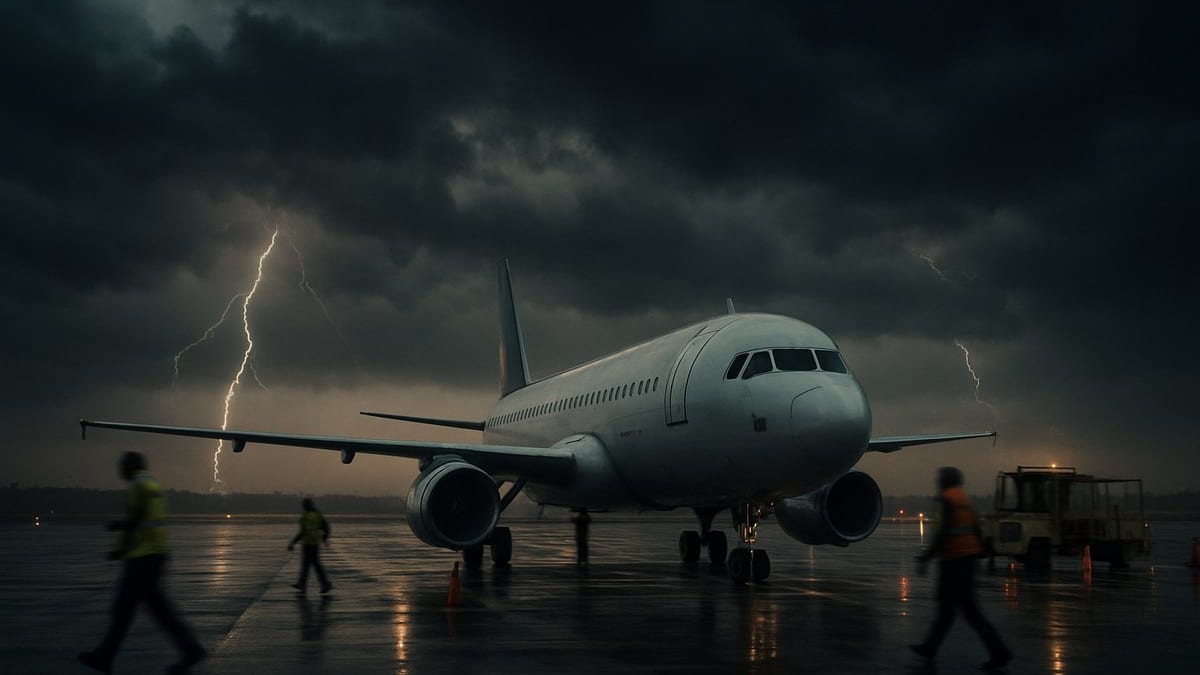
Stormy Start to April Disrupts Mid-Atlantic Skies
Early April has brought an unsettled weather pattern to the Mid-Atlantic, with fast-moving fronts, heavy rain and strong crosswinds sweeping across the Washington region. Meteorological reports show that several of these systems have tracked directly over northern Virginia, forcing airlines at Washington Dulles International Airport to slow arrivals, extend departure queues and, at times, divert aircraft to other East Coast hubs.
These spring disturbances follow a late February winter storm that grounded thousands of flights across the Northeast and Mid-Atlantic, leaving airlines with little margin to absorb fresh disruptions as the peak of spring travel approaches. The lingering operational hangover has meant that when thunderstorms or low ceilings move into Dulles airspace, delay programs are activated more quickly and recovery takes longer than in previous years.
Thunderstorms typical of April in the Washington area can rapidly trigger ground stops and route restrictions, particularly when lightning moves close to ramp operations. Publicly available data from national delay tracking services indicates that on several recent days, a significant share of Dulles departures has been held at the gate or on taxiways as storm cells passed, contributing to rolling knock-on delays throughout the day.
While some of the worst impacts are concentrated in late afternoon and evening convective periods, early morning banks have also been affected as aircraft and crews arrive out of position from weather-hit cities in the Midwest and along the East Coast. That ripple effect has left travelers facing longer lines, tight connections and unexpected overnight stays in the Washington region.
Strained Air Traffic Control System Limits Flexibility
The weather pattern is colliding with a national air traffic control system that is already under strain. Federal staffing plans and independent analyses released in recent months describe a multiyear effort to rebuild the controller workforce after a prolonged hiring lull, pandemic-era training interruptions and the 2025 federal government shutdown slowed the pipeline of new controllers.
Government watchdog reports and aviation workforce assessments note that many large radar approach facilities and en route centers remain below target staffing levels, even as total flight volumes rebound. Washington-area airspace is managed in part by the Potomac TRACON facility, which has experienced its own operational interruptions in recent weeks due to safety-related evacuations linked to chemical odor reports, temporarily halting flights into Dulles and other regional airports.
Industry analyses indicate that controller shortfalls have translated into more frequent use of flow-management initiatives such as miles-in-trail spacing, reduced arrival rates and extended holding. At Dulles, these measures can become particularly restrictive during stormy conditions, when controllers must increase separation between aircraft and reroute traffic around convective weather, effectively shrinking usable airspace and reducing capacity.
The broader backdrop is a system in which normal staffing levels are not expected to return until late this decade, according to projections cited in public policy coverage. That leaves less flexibility to surge personnel when storms or operational incidents occur, increasing the likelihood that localized disruptions at a major hub like Dulles will propagate across the network.
Regional Incidents Highlight System Vulnerabilities
Recent incidents across the Washington airspace region have underscored how sensitive flight operations are to even brief interruptions in air traffic services. In late March, a strong chemical smell at the Potomac TRACON prompted a precautionary evacuation and a temporary halt to flights serving Washington, Baltimore and several Virginia airports. While operations resumed after safety checks, residual delays persisted into the evening, illustrating how a short disruption can cascade during a busy travel period.
Nationally, high-profile accidents and near misses over the past year have prompted closer scrutiny of controller workload, fatigue and procedures. Investigations into a deadly runway collision at New York’s LaGuardia Airport and a series of close calls at other large hubs have led to new guidance and, in some cases, additional spacing requirements in complex terminal airspace. When applied alongside weather restrictions, these safety-driven measures can further reduce the number of movements an airport can handle per hour.
Policy debates in Washington are increasingly focused on how to stabilize the aviation workforce during funding disputes. Legislative proposals introduced in Congress in March seek to ensure pay continuity for air traffic control and security workers during future shutdowns, reflecting concern that repeated budget standoffs erode staffing and morale in key operational roles. For travelers passing through Dulles this spring, those broader debates translate into a practical reality of thinner staffing margins when storms strike.
Analysts note that while Dulles benefits from multiple parallel runways and modern terminal infrastructure, it remains tightly coupled to the wider National Airspace System. Disruptions at nearby hubs, or at key en route centers on the East Coast, can quickly feed into the Dulles schedule, particularly when the airport is serving as a diversion point for weather-hit cities elsewhere.
Spring Travel Demand Magnifies Delays
The timing of these operational headwinds coincides with a robust spring travel season. Industry trade groups estimate that U.S. carriers will transport close to three million passengers per day through the end of April, with traffic driven by spring break, Easter holidays and early business travel ahead of summer. Washington Dulles, a major transatlantic and long-haul gateway, experiences pronounced peaks in both domestic feeder flights and international departures during this period.
Reports from airline operations centers indicate that when thunderstorms slow departures from Dulles, the impacts can ripple through complex bank structures designed to connect regional passengers to long-haul flights. Missed connections on evening transatlantic departures are particularly disruptive because replacement options are limited until the following day, leading to hotel accommodation challenges and pressure on rebooking desks.
Travel industry coverage suggests that some carriers are proactively trimming schedules or adding block time on routes that are consistently affected by congestion and weather. While these measures may improve on-time performance statistics, they also reduce overall capacity and can make remaining flights more crowded and expensive. At Dulles, schedule adjustments are being made against a backdrop of strong demand for Europe, the Middle East and Africa, leaving limited room for further cuts without spilling traffic to competing hubs.
Consumer advocates caution that travelers should be prepared for elevated delay risks on peak days throughout April, especially on late afternoon and evening departures when convective storms are most likely. The combination of tight schedules, constrained airspace and staffing limitations means that even modest weather systems can lead to multi-hour disruptions.
What Travelers Can Expect at Washington Dulles This Month
For passengers flying from or through Washington Dulles in April 2026, publicly available operational data and recent patterns point to a few clear themes. Delays are more likely on days with forecast thunderstorms or strong frontal passages, particularly for flights to other congested East Coast and Midwest hubs. International departures that rely on inbound aircraft from weather-affected regions are also at higher risk of late departures.
Airlines and airport managers are emphasizing contingency planning, with aircraft repositioning, revised crew schedules and flexible routing used to limit disruption where possible. However, the structural limits imposed by air traffic control staffing and the need to preserve safety margins mean that not every delay can be absorbed by internal adjustments. When arrival rates are reduced by weather or procedural constraints, queues build quickly and can take hours to clear.
Travel information services recommend that passengers build extra time into connections at Dulles during this period and monitor flight status closely on days when severe weather watches or warnings are issued for the Mid-Atlantic. Early morning departures that leave before convective activity develops may offer somewhat more reliability, although they remain vulnerable to aircraft arriving late from the prior evening’s operations.
As April progresses, aviation observers will be watching whether incremental staffing additions and seasonal weather shifts can ease the pressure on Dulles and other major hubs. For now, the convergence of spring storms and a still-recovering air traffic control system is making the Washington region a focal point of broader strains in the national air travel network.