

More news on this day
Washington Dulles International Airport is heading into April 2026 with an elevated level of flight delays, as a volatile spring storm pattern combines with recurring regional air traffic control disruptions and a nationally strained controller workforce.
Get the latest news straight to your inbox!
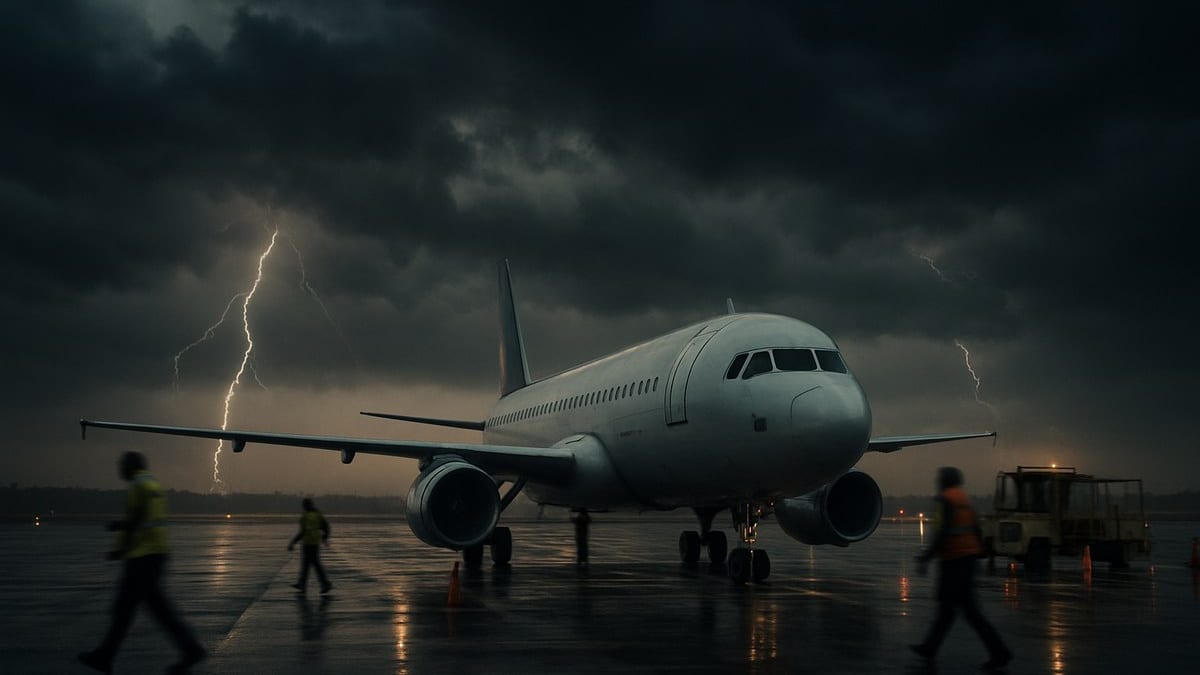
Stormy Skies Turn Spring Travel Into a Test
Spring weather across the eastern United States has already produced multiple rounds of severe thunderstorms and low cloud ceilings, and forecasts point to more unsettled systems tracking through the Mid-Atlantic in early April. National tracking data compiled over the Easter holiday period showed several days with thousands of delays across major hubs, with ripple effects reaching Washington Dulles even when storms were centered hundreds of miles away. For passengers, that has translated into longer tarmac waits, extended gate holds and missed connections on one of the busiest leisure travel stretches of the year.
Analyses of March and early April disruption patterns highlight that relatively routine spring squall lines can have outsized impact when they intersect with saturated schedules. Industry coverage of the Easter weekend described a convergence of storm cells and low visibility that forced delay programs at business hubs from Chicago to Houston, constraining the flow of aircraft across the national network. With Washington Dulles heavily reliant on inbound aircraft from those same hubs, any slowdown upstream has been quickly visible on departure boards in the Washington region.
Travel platforms tracking real time operations report that national carriers, including those with large presences at Dulles, have struggled to recover quickly once a weather system slips into evening peak periods. The combination of displaced aircraft, crew duty time limits and congestion in airspace corridors along the Eastern Seaboard has meant that even short-lived thunderstorms can continue to disrupt schedules deep into the night. As the calendar turns to April, aviation analysts expect this pattern to repeat whenever cold fronts collide with warm, humid air over the Mid-Atlantic.
Recent Ground Stops Expose Regional ATC Vulnerabilities
The Washington region’s airspace has also faced direct operational shocks unrelated to typical convective weather. In March, a strong chemical odor at the Potomac Terminal Radar Approach Control facility, which manages arrivals and departures for Dulles and other Washington-area airports, twice triggered temporary halts to flights. Publicly available reporting on those incidents indicates that departures and arrivals were paused while the facility was investigated and some controllers were moved out of the workspace.
Those interruptions, which affected Dulles along with Reagan National and Baltimore-Washington, led to rolling delays that persisted after the immediate stoppages were lifted. Data compiled by aviation news sites on one of the March episodes showed average delays at the affected airports stretching to around two hours at the peak, with roughly a quarter to one-third of flights departing late. For long haul routes operating on tight daily rotations out of Dulles, those delays cascaded into late-night and next day operations.
Separate coverage of Washington Dulles performance in mid-March highlighted at least one day on which more than 90 flights were reported delayed and several canceled, affecting a mix of domestic and international services. The disruptions were linked to a blend of local weather, upstream storms and the ongoing sensitivity of the region’s airspace to any constraints at the Potomac facility. For travelers passing through Dulles, the result has been a less predictable operating environment even on days with relatively benign local conditions.
National Controller Shortage Amplifies Local Disruptions
While the most visible triggers of April’s disruptions at Dulles are storm cells and technical incidents, underlying structural pressures in the U.S. air traffic system are intensifying the impact. Federal planning documents and independent policy analyses describe a multi-year shortfall in certified air traffic controllers, particularly at high complexity facilities that manage dense approach and departure flows. Recent estimates put the national staffing gap in the low thousands compared with internal targets, with some large terminals operating well below desired levels.
Aviation trade publications reporting on the 2026 spring travel season note that when storms or equipment issues arise, facilities with thinner staffing have less flexibility to absorb surges in workload. That can translate into more frequent use of ground delay programs and flow restrictions, as controllers manage safety margins by slowing the rate of arrivals and departures. For Dulles, whose traffic is tightly interwoven with other constrained East Coast and Midwest hubs, any such restrictions can quickly create lineups of inbound aircraft and delayed departures waiting for takeoff slots.
The Washington area has also been in the spotlight following the release of investigative findings into a fatal midair collision over the Potomac River in 2025. Coverage of those reports and subsequent regulatory changes has emphasized the need for tighter separation standards and more conservative procedures in the region’s busy airspace. Combined with staffing challenges, the operational environment around Dulles now features both heightened safety protocols and limited staffing reserves, conditions that tend to favor delay-inducing caution when storms develop.
Hub Expansion Meets Operational Growing Pains
Washington Dulles is entering this turbulent spring against a backdrop of rapid growth. United Airlines has positioned the airport as a key transatlantic and domestic hub, and earlier expansion announcements detailed plans for increased daily departures and new routes through the middle of the decade. Construction of a new concourse and other infrastructure projects is intended to support higher long term capacity, but in the short term the hub’s denser schedule means there is less slack when weather or airspace constraints emerge.
On heavily banked days, with waves of connecting flights scheduled in tight clusters, any disruption in arrival streams can leave aircraft holding in the air or waiting for gates once they land. Industry observers note that at Dulles, where a significant share of passengers are connecting between domestic and international flights, relatively small schedule slippages can cause missed onward flights, prompting additional rebooking activity and crowding at customer service points. These effects were especially visible on some late March and early April dates when thunderstorms combined with regional ATC constraints.
At the same time, airlines operating at Dulles are testing technology designed to smooth the travel experience at the margins. For example, new app-based tools for monitoring security wait times and real time gate information are being rolled out at the airport as part of broader hub initiatives. While such tools do not reduce delays driven by weather or air traffic restrictions, they can help passengers make faster decisions about when to leave for the airport and how to navigate tight connections once disruption sets in.
What April Travelers Through Dulles Should Expect
Looking ahead through April 2026, forecasts from meteorological outlets suggest that the Mid-Atlantic will remain under the influence of recurring frontal systems, with thunderstorms and heavy rain a periodic risk on travel days. Aviation data specialists caution that any such systems intersecting with peak travel weekends or evening departure banks are likely to produce another round of widespread delays at Dulles, even if outright cancellations remain comparatively limited. The national air traffic network is functioning, but with little spare capacity when multiple hubs are simultaneously constrained.
Publicly available guidance from travel advisory services emphasizes that passengers using Washington Dulles this spring should build additional buffers into their plans, particularly when connecting to long haul flights. Suggestions include booking longer connection windows where possible, avoiding the final departure of the day on critical routes, and monitoring the status of inbound aircraft rather than relying solely on scheduled departure times. Travelers with flexibility are also being encouraged to consider mid-morning or early afternoon flights, which historically have slightly better on time performance during storm seasons.
For now, Washington Dulles remains fully operational, but the combination of volatile spring weather, regional ATC sensitivities and broader staffing constraints is likely to keep delay levels elevated compared with historical norms. As airlines and federal agencies work on longer term solutions, from infrastructure upgrades to controller hiring initiatives, April 2026 is shaping up as another stress test for the resilience of one of the nation’s most important international gateways.