

More news on this day
One of Air France’s most recognizable long-haul workhorses is quietly exiting the Caribbean and African skies, closing a chapter that linked Paris, St. Maarten and multiple African gateways for more than two decades.
Get the latest news straight to your inbox!
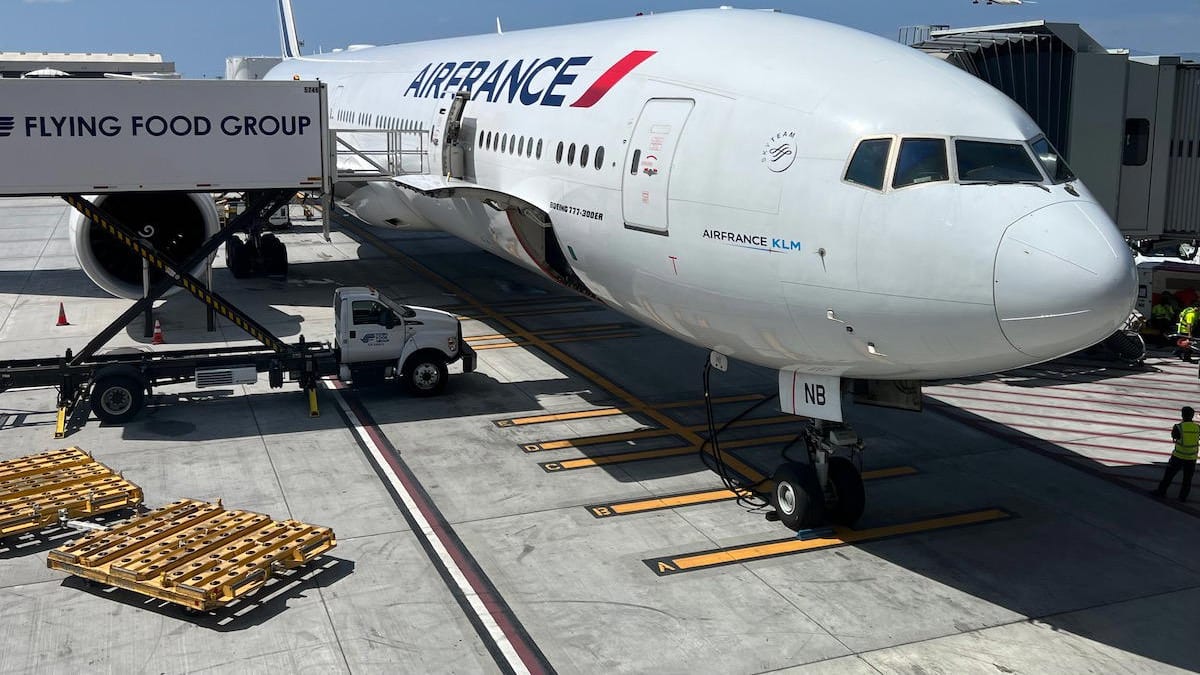
A Quiet Farewell to a Long-Haul Mainstay
Air France is advancing a multi-year renewal of its long-haul fleet, progressively removing older Airbus widebodies from scheduled service. Publicly available fleet data and recent industry coverage indicate that the airline’s Airbus A330 family, which has been a backbone of services to St. Maarten and several African destinations, is now firmly on a retirement path as newer Boeing 787 and Airbus A350 aircraft take over long-range duties.
The transition has particular resonance in St. Maarten, where widebody arrivals from Europe are central to the island’s aviation identity. For years, Air France’s four engine Airbus A340, and later the twin engine A330, provided dramatic approaches over Maho Beach and reliable links to Paris. As the type is phased out from the network, the island is saying goodbye to an aircraft that helped cement its reputation as a global planespotting destination.
In Africa, the A330’s withdrawal marks the end of an era on routes that connected Paris Charles de Gaulle with a mix of business and leisure markets. Operations data show that these aircraft have been heavily deployed to West and Central Africa in recent years, often serving capital cities and regional hubs with long established Air France presence. Their gradual replacement by more efficient twins closes the chapter on one of the carrier’s most versatile long-haul types.
While the shift has been planned for some time as part of the group’s decarbonization and modernization strategy, the convergence of changes in both the Caribbean and Africa gives the current phase-out added symbolic weight. For many travelers, it is the final chance to experience the widebody that defined their first transatlantic or intercontinental journey with the French flag carrier.
St. Maarten’s Planespotters Lose a Signature Sight
Princess Juliana International Airport on St. Maarten occupies a special place in global aviation culture, where jetliners cross just above the heads of beachgoers before touching down on a short strip extending into the sea. Air France’s widebody operations have long been part of that spectacle, featuring first the Airbus A340 and later the A330 on scheduled services from Paris.
Historical coverage and enthusiast archives show how the four engine A340, in particular, became an icon at St. Maarten. Its distinctive silhouette and powerful takeoffs over Maho Beach made it one of the most photographed aircraft types on the island. Even after Air France ended A340 operations, the A330 maintained the airline’s widebody presence, keeping a European long haul link that combined tourism demand with strong brand visibility.
Recent routing information for the Paris to St. Maarten service demonstrates how this link has already begun to evolve. Air France has adjusted frequencies and aircraft types in line with seasonal demand and fleet availability, with the A330 increasingly giving way to newer, more fuel efficient jets in the broader network. Industry analyses point to the A350 as the centerpiece of Air France’s long term strategy, suggesting that future St. Maarten operations will rely on a different generation of aircraft when widebody capacity is required.
For the island, the end of regular A330 services marks more than a technical fleet decision. Aviation tourism is a recognized niche in St. Maarten’s visitor economy, and photographs of Air France widebodies over the beach are widely used in promotional imagery. As the type disappears from scheduled operations, local tourism stakeholders may seek to highlight a broader mix of carriers and aircraft, even as the memory of the Air France A340 and A330 era remains a defining part of the island’s aviation story.
Africa’s Routes Reshaped by Fleet Renewal
The impact of Air France’s fleet transition is equally visible across Africa, where the A330 once formed a substantial share of the airline’s long haul capacity. Published route planning data in recent seasons show that the A330 has been concentrated on services from Paris Charles de Gaulle to the African continent, connecting France with destinations ranging from West African capitals to Indian Ocean gateways.
As the airline accelerates retirement of the type, these routes are shifting to newer widebodies. Reports on Air France’s strategy indicate that the Boeing 787 9 and Airbus A350 900 are slated to take over much of the flying now performed by the A330, offering lower fuel burn and reduced emissions per seat. This change aligns with group level commitments to modernize the fleet and meet increasingly stringent environmental expectations in the European market.
For African airports and travelers, the transition brings both continuity and subtle change. Cabin products on the latest Air France aircraft typically feature updated business and premium economy seats, refined inflight entertainment and improved connectivity. At the same time, the retirement of the A330 closes the book on an airplane that, for many communities, represented the first regular widebody link to Europe under the Air France brand.
From an operational perspective, the replacement of the A330 with more capable long range aircraft can give the airline additional flexibility in scheduling and payload on hot and high routes. This may support future expansion or optimized frequencies on select African markets, even as the visual footprint of the older Airbus type fades from airport ramps in cities where it has been a familiar presence for decades.
New Aircraft Take the Spotlight
Air France’s long haul renewal is centered on a significant commitment to new generation aircraft, notably the Airbus A350 family. Public fleet disclosures show a growing number of A350 900s in service, with additional frames on order, including dedicated freighter variants to be operated by the group’s cargo arm. Alongside the A350, the Boeing 787 9 plays a complementary role, allowing the airline to tailor capacity and range across a spectrum of long haul markets.
These aircraft bring tangible efficiency gains compared with the A330 and the earlier quad engine A340. Industry analyses cite lower fuel consumption, reduced maintenance costs and improved environmental performance as key drivers behind their deployment. For routes to the Caribbean and Africa, such economics are particularly important, as carriers balance seasonal leisure demand, premium traffic and cargo flows against increasingly competitive conditions.
On the passenger side, the introduction of newer aircraft also reshapes the onboard experience. Air France has been rolling out refreshed cabins with updated seating, redesigned galleys and improved lighting to better reflect its brand identity. Travelers on former A330 markets in Africa and the Caribbean are gradually encountering these cabins as the airline rotates modern aircraft into schedules previously dominated by older types.
The strategy reflects a broader shift in global aviation, in which long haul carriers retire legacy widebodies such as the Airbus A340 in favor of twin engine jets capable of similar or greater ranges with lower operating costs. In that context, the departure of the A330 and earlier A340 from Air France’s Caribbean and African networks is both a local story for St. Maarten and a regional story for Africa, as well as one chapter in a worldwide rebalancing of long haul fleets.
Legacy of an Air France Legend
Although newer aircraft are now taking center stage, the legacy of Air France’s long serving Airbus types remains strong in the collective memory of travelers and aviation enthusiasts. The A340’s striking low approaches into St. Maarten and the A330’s steady connection between Paris, the Caribbean and Africa are preserved in extensive photo and video archives, as well as in tourism marketing material that continues to circulate globally.
In African markets, the aircraft’s legacy is tied to the role it played in deepening air links between France and the continent. Over the years, A330 operations supported business ties, diaspora travel and tourism, serving as a visible symbol of connectivity on airport ramps from West Africa to the Indian Ocean. As newer aircraft assume those missions, they do so on foundations laid by the retiring fleet.
For St. Maarten, the end of regular Air France A330 and earlier A340 operations marks the close of a particularly photogenic era. Yet the island’s appeal to airlines and visitors remains strong, with other carriers upgrading fleets and increasing frequencies. The departure of an Air France legend may change the shape of the aircraft overhead, but it leaves behind an enduring image of widebodies sweeping low over Maho Beach on their way to one of the world’s most distinctive island runways.