

More news on this day
Thousands of U.S. air travelers are facing major disruptions this weekend after a powerful, fast-moving storm over Atlanta forced hundreds of flight cancellations and delays, crippling operations at the nation’s busiest hub and causing a nationwide ripple effect for Delta Air Lines, Endeavor Air, Frontier Airlines and several other carriers.
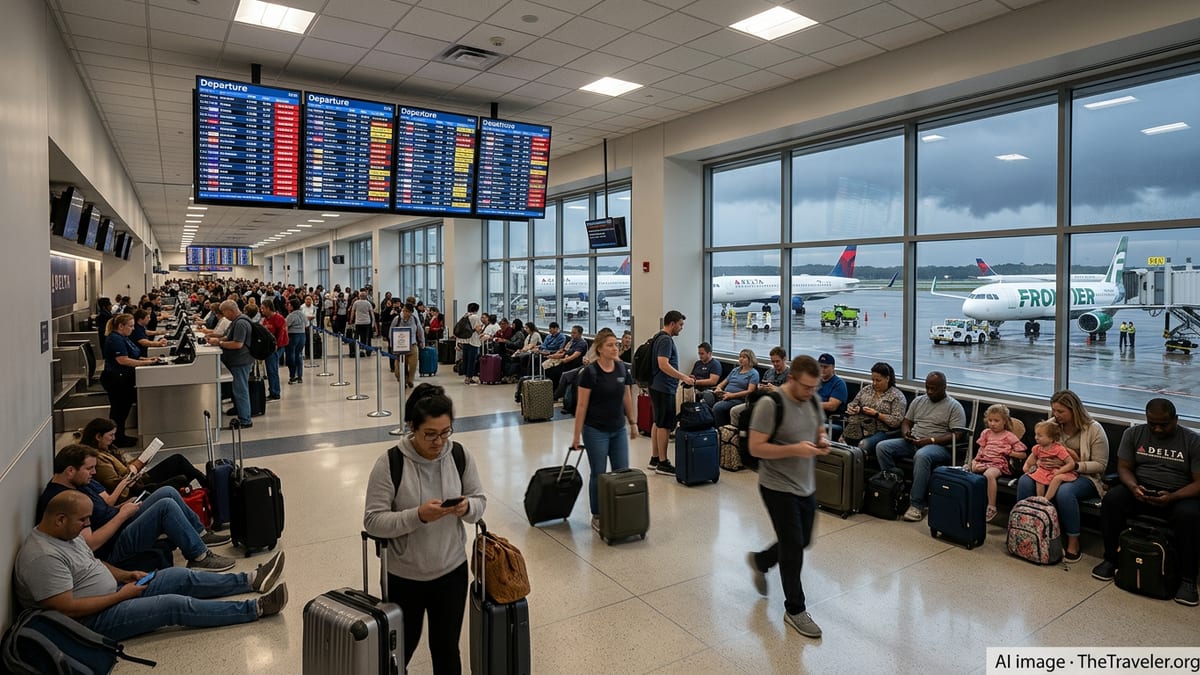
Hailstorm Slams Atlanta and Grounds Aircraft
The disruption began late Friday night and continued into Saturday, March 7, when severe thunderstorms and unforecast significant hail pounded Hartsfield-Jackson Atlanta International Airport. Delta, which operates its largest hub at the airport, said dozens of its aircraft required inspections for hail damage before they could be cleared to fly, instantly constraining capacity and throwing schedules into disarray.
Passengers reported being stuck on tarmacs for hours as operations slowed to a crawl while maintenance teams worked through a backlog of safety checks. Social media posts described aircraft that had taxied out ahead of the storm only to be held in position as the weather intensified, with some planes later returning to gates for inspections and refueling.
By Saturday morning, data from flight tracking services showed roughly 300 cancellations and more than 460 delays tied to Atlanta, with Delta and its regional partner Endeavor Air accounting for the majority. Frontier Airlines and several other domestic and international carriers operating into the hub were also hit as arrival and departure queues backed up.
Airport officials said runways and taxiways remained open once lightning and hail subsided, but operations were effectively throttled by the need to inspect aircraft and reset crew schedules. The scale and timing of the storms created what one operations manager described as a "rolling disruption" that could not be resolved quickly once the skies cleared.
Ground Delays, Crew Timeouts and Network Gridlock
As conditions deteriorated overnight, Delta requested that the Federal Aviation Administration implement a formal ground delay program for its traffic into Atlanta. Under the program, flights bound for the city that had not yet departed were held at their origin airports, with average delays approaching an hour as of Saturday morning.
The FAA restrictions, layered on top of the weather and maintenance challenges, contributed to a cascade of crew timeouts. Pilots and flight attendants reached the limits of their federally regulated duty hours while sitting through lengthy delays on the ground or waiting for maintenance clearance, forcing airlines to cancel or further delay subsequent flights when replacement crews were unavailable.
Operationally, Atlanta’s role as the central hub in Delta’s domestic network turned a local weather event into a national problem. Travelers connecting through the city reported cancellations and missed connections from cities as far apart as Houston, Detroit and Boston, as aircraft and crews that should have been positioned overnight in Atlanta were stranded out of place.
Regional carrier Endeavor Air, which operates a large portion of Delta’s short-haul flights under the Delta Connection brand, was particularly exposed. With many of its regional jets cycling in and out of Atlanta, inspections and crew limitations led to a string of scrubbed departures and late arrivals, compounding the congestion.
Passengers Stranded and Tempers Rising
Inside Hartsfield-Jackson, departure boards were dominated by red and yellow alerts as travelers woke to find morning flights canceled or heavily delayed. Long lines snaked around rebooking counters, while passengers scrambled on their phones to secure scarce alternative routes on other airlines or via different hubs.
Many travelers shared stories of spending hours on parked aircraft only to be told to deplane when maintenance inspections or crew duty limits made their flights untenable. Others reported overnight waits in crowded concourses and difficulties retrieving checked luggage from canceled flights, with some being advised to return the next day to file baggage claims.
The mood at the airport grew increasingly tense as families missed vacations, business travelers lost entire workdays, and those with tight international connections watched their itineraries unravel. Some passengers questioned why more flights had been allowed to board after the worst of the storm had already passed, suggesting the airlines had underestimated the downstream impact of maintenance checks and staffing constraints.
Despite the frustration, safety remained the dominant message from airlines and airport officials. They stressed that every aircraft exposed to hail needed to be inspected before it could carry passengers, regardless of the resulting inconvenience or cost.
Airlines Work to Recover as Disruptions Ripple Nationwide
By midday Saturday, Delta said it was working to "reset" its Atlanta operation, prioritizing the inspection and return to service of grounded aircraft and repositioning crews where possible. The airline warned, however, that irregular operations would persist throughout the weekend as it tackled a backlog of misplaced aircraft, crews and passengers across its network.
Frontier Airlines and other carriers with a smaller but still significant presence in Atlanta also faced lingering fallout. With limited spare aircraft and crews, low-cost carriers in particular struggled to absorb the shock, leading to scattered cancellations and multi-hour delays throughout their systems.
Travelers across the United States continued to feel the knock-on effects well beyond Georgia. Flights that neither originated nor terminated in Atlanta but relied on aircraft or crew scheduled to pass through the hub encountered last-minute schedule changes, further complicating recovery efforts.
Industry analysts noted that heavy reliance on a single mega-hub, such as Atlanta in Delta’s case, can leave airlines especially vulnerable when unpredictable severe weather collides with tight schedules and high aircraft utilization. Even a storm lasting only a few hours can translate into a multi-day disruption if it strikes at peak connection banks.
What Travelers Can Expect Through the Weekend
With hundreds of flights already canceled or delayed and more adjustments likely as airlines rebalance their schedules, travelers booked through Atlanta over the coming days are being urged to monitor their flight status closely and allow extra time for connections. Same-day rebooking options are becoming limited on many routes as remaining flights fill up.
Most major carriers are waiving change fees for affected passengers, although fare differences may still apply on some itineraries. Customer service channels, both online and at the airport, are facing heavy demand as stranded travelers request new routings, hotel vouchers and meal assistance.
For those yet to travel, experts recommend considering early-morning departures, which are often the first to operate once airlines regain control of their schedules. Travelers with flexibility are also being advised to route around Atlanta, where possible, by choosing alternative hubs until operations fully stabilize.
While the worst of the storm has passed, the operational hangover in Atlanta highlights how quickly severe weather can unravel even the most robust airline networks. For passengers caught in the middle, the weekend has become an exhausting test of patience, with little choice but to wait for airlines and regulators to untangle one of the most significant weather-related disruptions to hit a U.S. hub so far this year.