

More news on this day
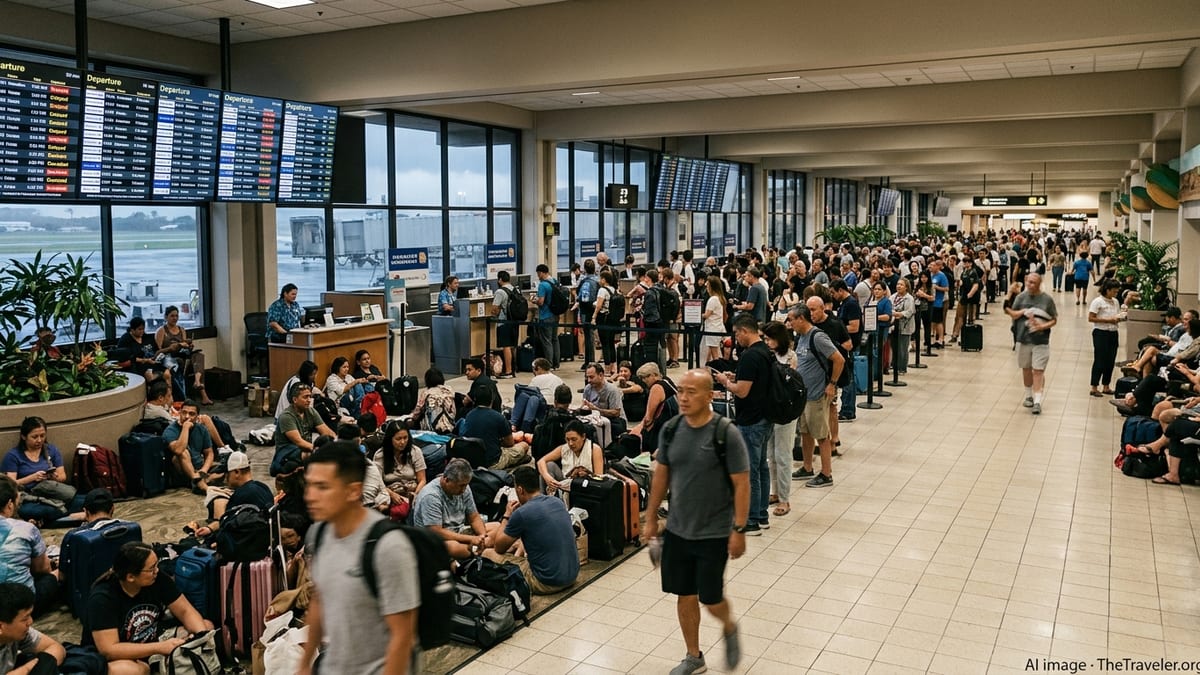
Hundreds of travelers were left stranded in Honolulu on March 20, 2026, after widespread disruptions at Daniel K. Inouye International Airport delayed 84 flights and canceled six, snarling operations for Hawaiian Airlines, United, American, Delta, and other carriers at one of the Pacific’s busiest hubs.
Get the latest news straight to your inbox!
Severe Weather and System Disruptions Ripple Through Honolulu Hub
Publicly available flight tracking data for March 20 indicated a sharp spike in delays and cancellations at Daniel K. Inouye International Airport, far above the airport’s usual daily averages. The disruptions followed a powerful storm system moving across the central Pacific, combining heavy rain, gusty winds, and low cloud ceilings that affected both arrivals and departures.
The operational strain was compounded by broader system issues in recent days, including reports of staffing challenges and residual schedule disarray across several U.S. carriers. Honolulu, which functions as a crucial bridge between the mainland United States and Asia Pacific destinations, became a bottleneck as aircraft and crews fell out of position.
While flight operations continued, the cumulative impact produced rolling delays throughout the day. Aircraft arriving late from the mainland pushed back subsequent departures, and a limited number of open gates further slowed turnarounds at peak times.
The Hawaii Department of Transportation’s most recent traffic statistics show that Daniel K. Inouye International routinely handles millions of passengers in a few months, underscoring how even a single day of disruption can affect a large number of travelers across the islands and beyond.
Airlines Struggle to Rebook Passengers as Schedules Unravel
The day’s 84 delayed and six canceled flights affected a broad mix of airlines, with Hawaiian Airlines, United Airlines, American Airlines, and Delta Air Lines among the most impacted. Online flight boards and tracking services showed prolonged delays on interisland hops as well as transpacific routes to cities such as Los Angeles, San Francisco, Seattle, and select Asian gateways.
Published coverage and customer accounts from recent weeks already described a challenging operating environment for Hawaiian Airlines in particular, including aircraft availability issues and schedule changes touching routes into and out of Honolulu. The latest wave of disruptions added new complications for passengers traveling at the tail end of the recent storm period and amid a busy spring travel window.
As aircraft and crews became misaligned, rebooking options narrowed quickly. Travelers on late evening flights reported limited same-day alternatives to the mainland, and some were offered overnight accommodations or next day departures where capacity allowed. Others turned to multi-stop routings via alternate hubs, extending journeys that were originally planned as single nonstop segments.
For interisland passengers, missed connections in Honolulu meant unplanned overnights or lengthy layovers before onward flights to Kahului, Kona, Lihue, or Hilo. With Daniel K. Inouye International serving as the main connecting hub, disruptions on one leg often cascaded across entire itineraries.
Long Lines, Crowded Gate Areas, and Confusion Inside the Terminal
Inside the terminal complex, travelers encountered long check in queues, crowded gate areas, and intermittent congestion at security checkpoints. Social media posts and recent online discussions about Honolulu’s airport operations described travelers waiting for hours at their gates while departure times were repeatedly revised in small increments.
The atmosphere was further strained by uncertainty over connection times and luggage handling. Some travelers reported concerns about checked bags making tight connections or being delayed overnight, a recurring theme in passenger accounts from prior disruption events involving Honolulu connections.
Recent commentary about the airport also highlighted mixed experiences with lounge access and terminal amenities during lengthy waits. With some third party lounge options having changed access rules in the past year, many delayed passengers spent their time in general seating areas or food courts, which became increasingly crowded as the day wore on.
New electric terminal trams that were introduced earlier in 2026 offered some relief by easing movement between concourses, but they did little to mitigate the core challenge of insufficient seating and space once heavy delays stacked up at multiple gates simultaneously.
What Stranded Passengers Can Do When Flights Are Delayed or Canceled
Consumer guidance from the U.S. Department of Transportation explains that airlines are generally not required to provide compensation for weather related delays, but policies differ by carrier when disruptions involve mechanical issues or significant schedule changes. Travelers affected by the Honolulu disruptions faced a patchwork of options depending on their airline, ticket type, and route.
Publicly available information on U.S. regulations states that passengers are entitled to a refund if a flight is canceled and they choose not to travel, even when they purchased a nonrefundable fare. Separate rules govern what constitutes a significant delay, and each airline publishes its own customer service commitments that may include meal vouchers, hotel accommodations, or rebooking on later flights when disruptions are within the carrier’s control.
Travel experts often recommend that stranded passengers pursue multiple channels simultaneously, including mobile apps, airline websites, and customer service phone lines, rather than relying solely on airport counters during mass disruptions. Same day availability can appear suddenly as other travelers accept refunds, rebook via different routings, or voluntarily move to alternate flights with connection stops.
Passengers connecting through Honolulu are also encouraged to allow ample buffer time on future trips, particularly during storm season or busy holiday periods, to reduce the risk that a delay on one leg will cause a missed long haul departure.
A Growing Test for Honolulu’s Role as a Pacific Gateway
The March 20 disruptions underscore the vulnerability of a highly concentrated hub like Daniel K. Inouye International, where interisland, mainland, and international traffic all intersect. With airlines adjusting schedules and fleet plans across the Pacific, Honolulu is under pressure to manage both routine growth and irregular operations days more smoothly.
Recent state transportation reports show that passenger volumes at Honolulu remain high compared with pre pandemic levels, even as some routes and carriers have shifted capacity. That growth, combined with aging terminal infrastructure and complex weather patterns, increases the risk that a single day of adverse conditions can ripple widely through airline networks.
As airlines refine merger plans, adjust staffing, and update fleets serving Hawaii, consumer advocates argue that reliability and recovery from disruptions should remain a central focus. For travelers, the latest episode in Honolulu serves as a reminder that flexible plans, travel insurance that clearly covers delays, and familiarity with refund rights can soften the impact when an entire day’s worth of flights is suddenly thrown off course.