


More news on this day
Operations at Hartsfield-Jackson Atlanta International Airport are ramping back up after a weather-related ground delay and ground stop expired, following a round of strong summer storms in the Atlanta area.
Get the latest news straight to your inbox!
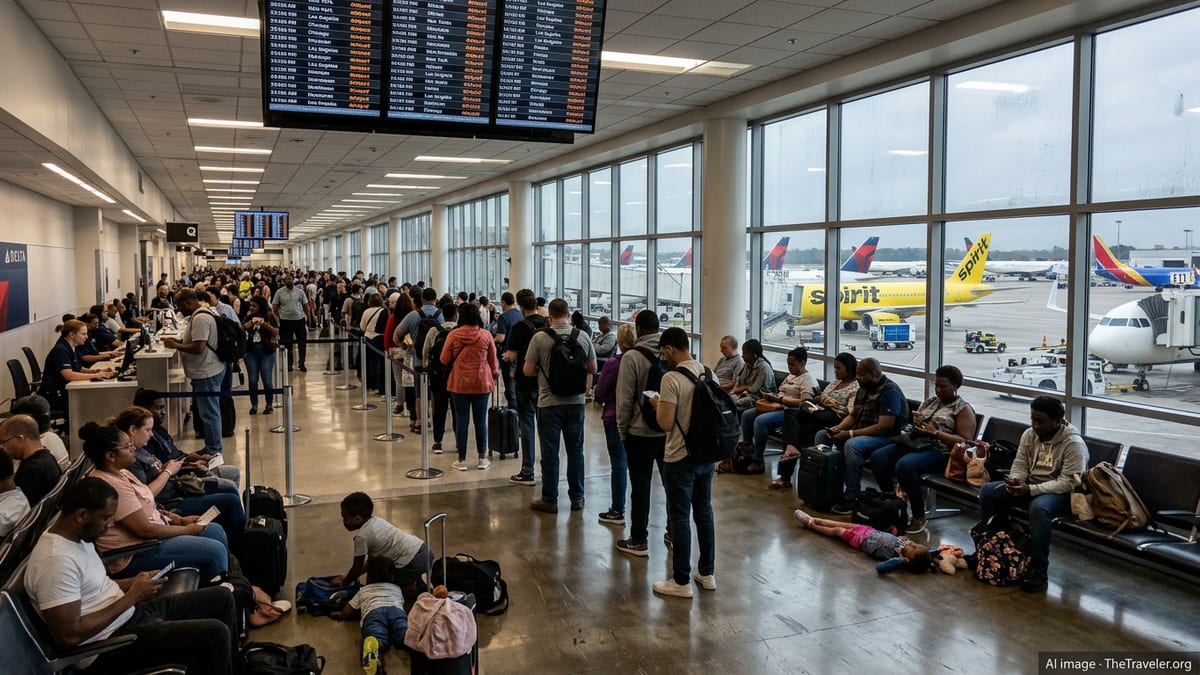
Ground restrictions lifted after afternoon thunderstorms
Flights bound for and departing from Hartsfield-Jackson Atlanta International Airport experienced a period of halted or heavily regulated movements when air traffic control implemented a ground stop and ground delay program in response to thunderstorms near the field. The restrictions, which affected both arrivals and some departures, have since expired, allowing traffic to resume under more routine management.
According to publicly available information from federal aviation traffic coordination channels and local media coverage, the measures were timed to coincide with the most intense phase of the storm cells in the metro Atlanta area. As lightning, low clouds and heavy rain moved across key approach and departure corridors, controllers temporarily reduced the airport’s arrival rate and then paused some inbound flights altogether.
Once radar and surface conditions improved, the ground stop was lifted and the structured arrival delays were gradually relaxed. Flight tracking data and airline status boards show that the flow of aircraft into the world’s busiest passenger hub has been increasing, although not yet back to fully normal patterns.
The timeline mirrors several recent weather events in Atlanta during the peak convective season, in which short but intense bursts of thunderstorms prompted similar traffic management steps, followed by a slow recovery as airlines worked through queues of delayed aircraft and crews.
Lingering delays and missed connections for travelers
Even after the ground delay and ground stop expired, many passengers continued to feel the effects in the form of rolling delays and missed connections. At a large connecting hub such as Hartsfield-Jackson, disruption during a busy afternoon or early evening bank can take hours to unwind across domestic and international networks.
Publicly accessible airline status pages on Friday and Saturday have shown clusters of departures pushed back by 30 minutes or more, especially on routes tightly connected to earlier inbound flights that arrived late. Some domestic routes into and out of Atlanta remained under gate holds and revised departure times while carriers repositioned aircraft.
Travel forums and social media posts from flyers transiting through Atlanta indicate crowded gate areas, long customer service lines and frequent rebooking activity. Passengers connecting onward from delayed inbound flights have reported sprinting across concourses, only to find that onward departures were also delayed as the network adjusted to the earlier stoppage.
Airlines typically prioritize restoring mainline trunk routes and high-demand connections once a ground stop is lifted, then turn to smaller regional flights as aircraft and crews become available. This pattern can lead to uneven recovery, with some routes normalizing quickly while others face extended disruptions through the evening.
Why storms prompt ground stops and delay programs
Ground stops and ground delay programs are among the primary tools used by national air traffic managers to maintain safety and manage congestion during severe weather around major hubs. The measures limit or meter departures from other airports bound for the affected field, rather than allowing large numbers of aircraft to depart and then holding them in airborne queues near the destination.
In the case of Hartsfield-Jackson, summer thunderstorms can sharply reduce the number of arrivals the airport can safely handle per hour. Strong downdrafts, wind shear concerns, frequent lightning and low visibility all reduce usable runways and constrain how closely aircraft can be spaced on final approach. When those conditions collide with peak passenger demand periods, even a short-lived storm line can overwhelm the system unless flows are temporarily curtailed.
National guidance on traffic management initiatives describes a ground delay program as a way to assign controlled departure times to inbound flights, helping to align their arrival with the reduced capacity window. A ground stop, by contrast, pauses certain inbound traffic entirely for a limited period. At times, the two tools are used sequentially, with a ground stop imposed during the most hazardous phase of a storm and a delay program used as conditions begin to improve but capacity remains constrained.
Atlanta’s role as a central domestic and international hub means that such initiatives rarely remain a purely local issue. Delays originating from a weather event at Hartsfield-Jackson can propagate throughout airline systems, affecting flights and airports hundreds or even thousands of miles away.
Seasonal pattern of convective disruptions at Atlanta
The latest storms and resulting ground restrictions fit a broader seasonal pattern that has been evident across the Southeast this year. Forecast discussions from meteorological agencies and recent local coverage point to recurring afternoon and evening thunderstorm complexes forming along boundaries of heat and humidity over Georgia.
These convective outbreaks frequently track across or near the airport, which sits southwest of downtown Atlanta and directly under several key arrival and departure routes. Even when the most severe weather passes just north or south of the field, outflow boundaries and rapidly changing winds can still significantly disrupt the traffic pattern.
Historical analyses of delay data in the national airspace system consistently identify Hartsfield-Jackson as one of the airports most sensitive to summer convective activity. When the airport’s arrival rate falls, airlines operating through Atlanta often experience knock-on effects that last into subsequent days, particularly if storms coincide with already busy weekends or holiday periods.
This year’s storm season has also overlapped with ongoing airfield improvement projects at major hubs around the country, a factor that can further limit flexibility during high-impact weather. While recent construction reports indicate that Atlanta has been working to maintain overall capacity during upgrades, any reduction in runway or taxiway availability can compound the impact of thunderstorms.
Advice for passengers traveling through ATL after the disruption
With the latest ground delay and ground stop now expired, most upcoming flights through Hartsfield-Jackson are expected to operate, but travelers may still encounter residual challenges. Schedules can remain fragile for several hours after a major weather disruption, as aircraft and crews work their way back into place.
Passenger advocates and experienced travelers routinely recommend checking flight status frequently on airline apps and airport displays, paying close attention to both departure times and any noted changes to gates or routing. For connecting passengers, longer layovers through major hubs such as Atlanta can provide a buffer when storms affect operations.
Travelers whose flights were significantly delayed or misconnected during the weather event are encouraged by consumer groups to retain boarding passes and receipts in case they pursue assistance or reimbursement for out-of-pocket expenses where airline policies allow. While severe weather is typically categorized as outside a carrier’s control for compensation purposes, many airlines will still provide meal vouchers, hotel discounts or rebooking support during large-scale disruptions.
As the busy summer travel period continues, the latest episode at Hartsfield-Jackson serves as a reminder of how quickly conditions can change at even the most sophisticated hubs. For passengers planning trips through Atlanta, closely monitoring weather and building flexibility into itineraries can reduce the risk of being caught off guard by future storm-related ground delays.