

More news on this day
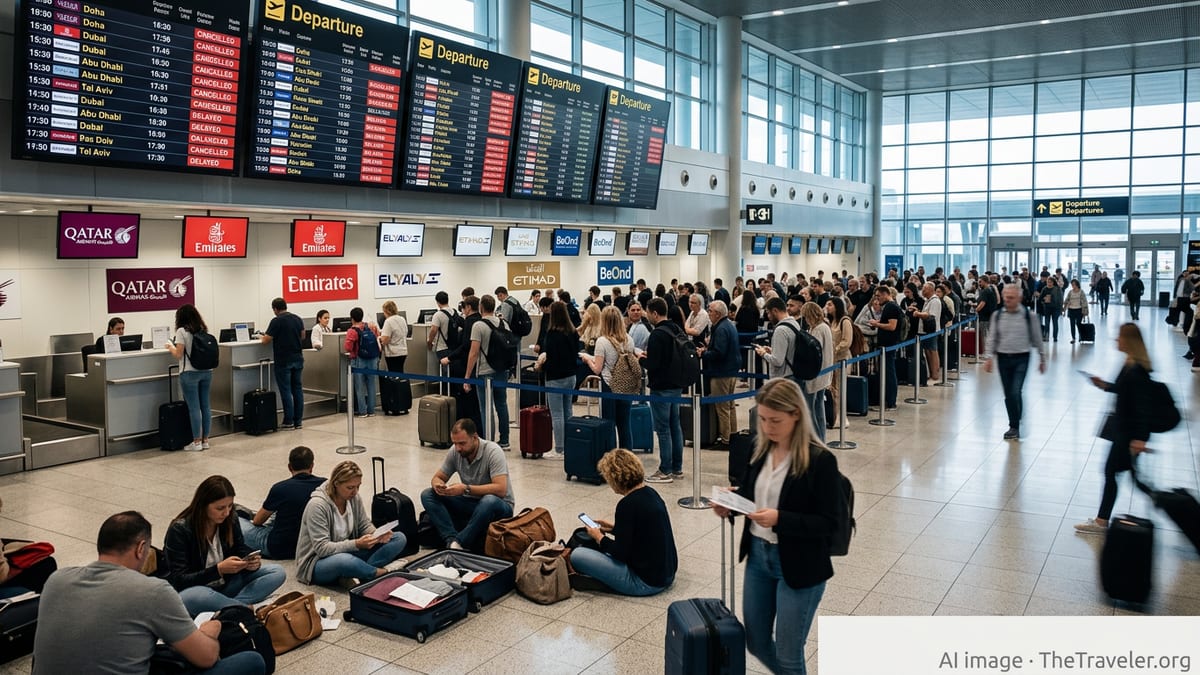
Travelers at Milan’s Malpensa International Airport on Thursday faced mounting disruption as 19 flights were cancelled and many more delayed, with services operated by Qatar Airways, Emirates, El Al, Etihad, BeOnd and other international carriers among those hardest hit.
Weather and Regional Tensions Converge on a Key European Hub
Airport and airline data on 5 March indicate that a band of late-winter weather moving across central Europe combined with ongoing airspace restrictions over parts of the Middle East to trigger a fresh wave of cancellations at Milan Malpensa. The airport, which normally handles a high volume of long-haul traffic to and from the Gulf and Israel, saw 19 flights scrubbed from the schedule alongside a series of rolling delays.
Operational summaries from industry analysts show a similar pattern at other major hubs, including Frankfurt, where dozens of flights were delayed or cancelled after snow and low visibility reduced runway capacity. Airlines such as Emirates, Qatar Airways, Etihad and El Al have already been grappling with longer routings and schedule cuts linked to airspace closures, leaving networks more vulnerable when local weather deteriorates.
At Malpensa, the knock-on effects were immediate. Departure boards in the morning and early afternoon showed a string of long-haul services to Doha, Dubai, Abu Dhabi and Tel Aviv marked as cancelled, while several inbound flights from the same cities were diverted or held at origin. Airport officials described the disruption as “significant but manageable,” noting that ground handling and de-icing resources were stretched at peak times.
The timing could not be worse for travelers using Malpensa as a connecting gateway between Europe and the Middle East or Asia. With many carriers still operating reduced schedules on key trunk routes, options to reroute on the same day proved limited, particularly for those traveling in economy cabins or on heavily booked regional feeders from elsewhere in Italy.
Qatar Airways, Emirates, El Al, Etihad and BeOnd Among Affected Carriers
Long-haul operators bore the brunt of Thursday’s disruption. Qatar Airways, which has already been forced to trim its global network in recent weeks amid airspace constraints, cancelled multiple services in and out of Europe, including at least one Malpensa rotation. Passengers reported being notified of cancellations overnight, with some rebooked via alternative European hubs where capacity allowed.
Emirates and Etihad, both already running limited schedules compared with their pre-disruption timetables, also saw selected Milan flights scrubbed or heavily delayed. Industry trackers noted that aircraft and crew stuck out of position across the wider network constrained the airlines’ ability to recover quickly, leading to longer gaps between remaining departures and fuller loads on those that did operate.
El Al, which relies heavily on its European network to feed traffic to Tel Aviv, cancelled at least one Malpensa service as operational planners adjusted rotations in response to shifting security assessments and weather-related delays at other airports. For passengers, that meant tight connections evaporated and same-day alternatives were scarce, especially for those headed onward to North America or Asia.
BeOnd, the boutique premium carrier linking European cities with Maldivian resorts, also encountered schedule disruption. While operating a much smaller fleet than the Gulf majors, any cancellation or extended delay has outsized effects on passengers who often have fixed resort transfer windows and onward seaplane connections that cannot easily be rebooked on short notice.
Passengers Confront Long Queues, Rebooking Challenges and Uncertain Timelines
Inside Malpensa’s departure halls, the visible impact of the cancellations was immediate: lengthy queues at airline ticket desks, call centers at capacity and passengers camped out near charging stations refreshing mobile apps for updates. Social media posts from travelers stranded at the airport described a mix of overcrowded check-in zones and relatively calm airside areas as security queues eased once cancellations filtered through.
Many passengers holding tickets with Qatar Airways, Emirates, Etihad and El Al reported being offered rebooking on later dates or, where interline agreements allowed, onto partner airlines via alternative hubs. However, with widespread disruption affecting much of the Middle East-focused long-haul network, those options were limited and often extended travel times by many hours or more than a full day.
Travel agents and corporate travel managers said they were fielding urgent requests from clients seeking to reroute via other European gateways such as Rome, Zurich, Munich or Paris. Yet those airports were already absorbing displaced passengers from earlier waves of cancellations, pushing some itineraries into next week. For leisure travelers with fixed holiday dates, particularly those connecting to cruises or resort stays, the prospect of losing valuable days on the ground added to frustration.
Airlines urged passengers not to travel to the airport unless their flight status was showing as confirmed and operating. Several carriers reiterated that customers whose flights had been cancelled would be eligible for refunds or free date changes under their disruption policies, but warned that processing times might be slower than usual due to the sheer volume of cases.
What Travelers Through Milan Malpensa Should Do Now
Travel experts recommend that anyone scheduled to travel through Milan Malpensa over the coming days take a proactive approach. The first step is to check flight status directly with the airline, either via mobile app or official channels, before leaving for the airport. Given the combination of weather-related constraints and ongoing airspace closures further east, schedules remain fluid and same-day changes are possible.
Passengers whose flights are still listed as operating are advised to allow extra time for travel to the airport and check-in, as residual disruption may affect security lanes and boarding procedures. Those holding separate tickets for onward connections should be particularly cautious, since missed self-connecting flights are not typically protected under standard airline policies.
For travelers whose flights have already been cancelled, the key is to understand the options on offer. Many carriers, including the Gulf airlines and El Al, are providing fee-free date changes, refunds to the original form of payment, or rebooking on later services where capacity exists. Some airlines may also reroute passengers via partner hubs if there is available inventory, though this can extend journey times considerably.
Travel insurance may provide additional protection in limited circumstances, especially for travelers who purchased policies that explicitly cover weather-related disruption. However, coverage for events linked to regional conflict or airspace closures can vary widely between providers, so policyholders are urged to review the fine print and contact their insurer for clarification before incurring significant additional costs.
Broader Impact on Europe–Middle East Connectivity
The problems at Milan Malpensa are part of a wider pattern of fragility in air connectivity between Europe and the Middle East. With core carriers such as Qatar Airways, Emirates and Etihad operating curtailed networks and rerouted paths around restricted airspace, day-to-day reliability has diminished even at normally resilient hubs.
Analysts warn that as long as airspace restrictions and security concerns persist, the margin for absorbing localized shocks such as winter storms will remain thin. Aircraft and crews are already operating on tighter rotations, and any delay in one part of the network can cascade rapidly across multiple continents, leading to the kind of multi-airline cancellations seen in Milan.
For Italy, disruptions at Malpensa place additional pressure on other gateways including Rome Fiumicino, which is also handling diverted and rerouted traffic. Regional airports that previously relied on smooth long-haul connections through Milan may see knock-on effects in the form of missed inbound tourists and more complex itineraries for outbound travelers.
In the near term, industry observers expect airlines to continue making day-by-day schedule adjustments while monitoring both weather forecasts and geopolitical developments. For passengers, that means building flexibility into travel plans, staying closely attuned to airline communications and being prepared for last-minute changes whenever long-haul journeys route through Milan and other major European hubs.