

More news on this day
Hundreds of cruise passengers still confined to ships in Dubai are describing a climate of mounting anxiety as geopolitical tensions snarl airspace, strand vessels in Gulf ports, and leave families at home “worried sick” about when their loved ones will make it back.
Get the latest news straight to your inbox!
Conflict Fallout Turns Holiday Cruises Into Open-Ended Ordeals
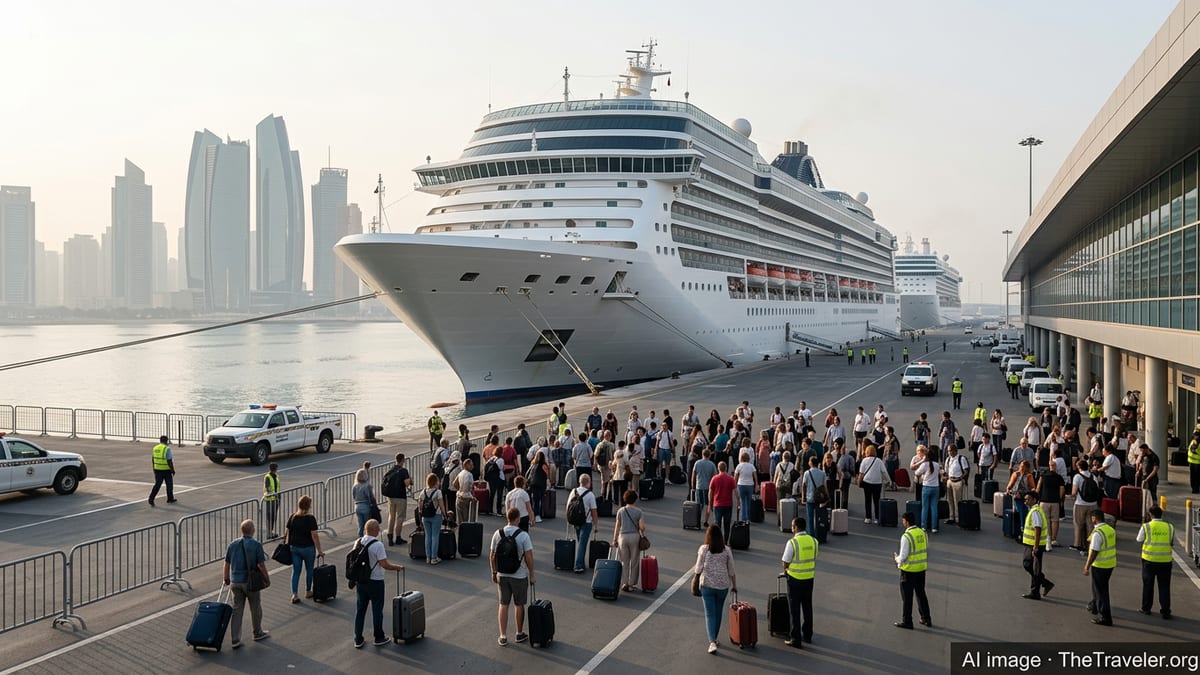
Weeks of conflict-related disruption in the Middle East have upended the region’s once-booming winter cruise season, transforming what was meant to be a routine fly-cruise itinerary into an open-ended ordeal for some travelers. Reports indicate that at least several large ocean liners remain idling in or near Dubai while operators scramble to rebook flights and redesign sailings around closed or restricted airspace.
Coverage from regional and travel-focused outlets describes a patchwork of outcomes. On some ships, the majority of guests have been able to disembark in Dubai and connect to scarce long-haul flights out of the Gulf. On others, a contingent of passengers remains onboard, waiting for confirmed seats or safe corridors while crew keep the vessels in “hot lay-up” mode and maintain a full slate of safety procedures.
For travelers who budgeted for a one- or two-week voyage, the sudden extension is not just an inconvenience. The uncertainty over how long they will stay in Dubai, what route they will take home, and whether further escalation could shut down additional transport links has turned the situation into a stressful, and in some cases frightening, experience.
Social media posts and passenger accounts compiled by cruise forums describe a pervasive sense that the situation can change overnight, with itineraries, transfer plans, and even port access being revised with little warning as operators respond to shifting risk assessments.
Families at Home Describe Sleepless Nights and Patchy Communication
As ships remain alongside in Dubai, much of the emotional impact is playing out thousands of miles away. Relatives at home, following fragmentary updates through messaging apps and news alerts, say they feel “worried sick” as each day brings new headlines about missile alerts, closed airspace, and diverted flights across the wider region.
Online discussion boards frequented by cruise travelers carry long threads from people trying to track the movements of individual ships, confirm whether loved ones have been moved into hotels, and compare the latest emailed advisories from different lines. Some contributors report waking up during the night to check ship-tracking apps, only to see vessels still anchored or berthed at Dubai’s cruise terminal.
The time difference between the Gulf and major source markets in Europe and North America has added to the tension. Families describe hours-long gaps between messages while passengers sleep or attend briefings on board, amplifying fears that something may have gone wrong whenever a promised update is delayed.
At the same time, some travelers have emphasized that connectivity on modern ships and in Dubai’s port area has allowed regular contact in most cases. Publicly available accounts suggest many guests are able to reassure relatives via video calls, even as both sides acknowledge that the lack of firm departure dates continues to weigh heavily on everyone involved.
Cruise Lines Race to Repatriate Guests and Rewrite Schedules
Publicly available information shows that cruise companies are responding with an array of measures, from charter flights to wholesale cancellations of upcoming Gulf seasons. Several operators that had positioned ships in Dubai and nearby ports for the winter have announced the suspension of Arabian Gulf itineraries, with some vessels being reassigned to the Mediterranean, Caribbean, or other markets.
Recent coverage of the situation highlights how complex the repatriation effort has become. In some instances, lines have organized special flights in coordination with major Gulf carriers, moving hundreds of passengers at a time from Dubai to European hubs. In other cases, travelers are being rebooked onto a patchwork of commercial services, with priority reportedly given to those with pressing medical or family needs.
Travel-industry reports indicate that operators are offering a mix of refunds, future cruise credits, and hotel stays in Dubai for guests whose voyages were cut short. However, passengers still confined to ships say they feel caught between reassurances that plans are progressing and the visible reality of waking up each day in the same berth, with no departure date on the horizon.
The upheaval is also prompting a broader rethink of deployment strategies. Some cruise lines are signaling a shift away from the Gulf for at least the next season, while others that had planned maiden Dubai-based programs are now weighing whether the risk of renewed closures is compatible with their business models and safety frameworks.
Onboard Life: Safety Briefings, Changed Routines and Lingering Anxiety
For those still on the affected vessels in Dubai, daily life has settled into an uneasy routine. According to publicly available passenger descriptions, shipboard entertainment continues in a limited form, dining venues remain open, and crews are working extended hours to keep services running while dealing with their own concerns about families back home.
Reports compiled by cruise-focused media suggest that additional safety briefings and updates are now a regular feature, alongside reminders about where to seek shelter in the event of external security alerts. Even in the relative calm of Dubai’s modern port, the backdrop of regional conflict and the knowledge that exit routes are constrained have heightened sensitivity to every announcement over the public-address system.
Some travelers liken the experience to being in a “floating hotel” that they are not entirely free to leave. While Dubai’s infrastructure and tourism facilities remain open, excursions are more limited and closely managed, and many passengers say they prefer to stay close to the ship in case plans change quickly.
Observers note that the psychological toll of the limbo is unevenly distributed. Seasoned cruisers who have experienced itinerary changes before often express more patience, while first-time passengers, older travelers, and those with young children are more likely to describe the situation as “scary” and emotionally draining, even if immediate physical safety is not believed to be at risk.
Travel Advisories and Future Bookings Under Scrutiny
The disruption in Dubai is already feeding into a wider reassessment of travel risk among cruise customers and the broader tourism industry. Travel media report that prospective guests are studying government advisories more closely, paying added attention to fine print on force majeure, and asking detailed questions about how lines handle evacuations, flight cancellations, and sudden changes in security conditions.
Analysts tracking the Gulf’s tourism sector note that a significant drop in cruise traffic would ripple through local economies that have invested heavily in new terminals, hotels, and shore-excursion infrastructure. For now, much depends on how quickly operators can clear the current backlog of stranded passengers and present a convincing case that routes through Dubai and neighboring ports can be managed safely and reliably.
For passengers currently waiting aboard ships in the emirate, that strategic debate feels distant. Their immediate focus remains on receiving a confirmed flight, a clear timeline, and the reassurance that they will soon be back with families who, from thousands of miles away, are watching a once-celebratory vacation unfold into an anxious, open-ended wait.