


Paranormal travel has shifted from niche curiosity to a mainstream reason to book a flight. Around the world, historic hotels advertise resident ghosts alongside spa packages, and after-dark walking tours sell out in the shoulder season once reserved for budget travelers. For visitors, the appeal is not just jump scares. The best haunted stays and ghost tours blend credible local history, theatrical storytelling and controlled doses of fear in settings that are already worth visiting for their architecture and landscape alone.
Get the latest updates straight to your inbox!
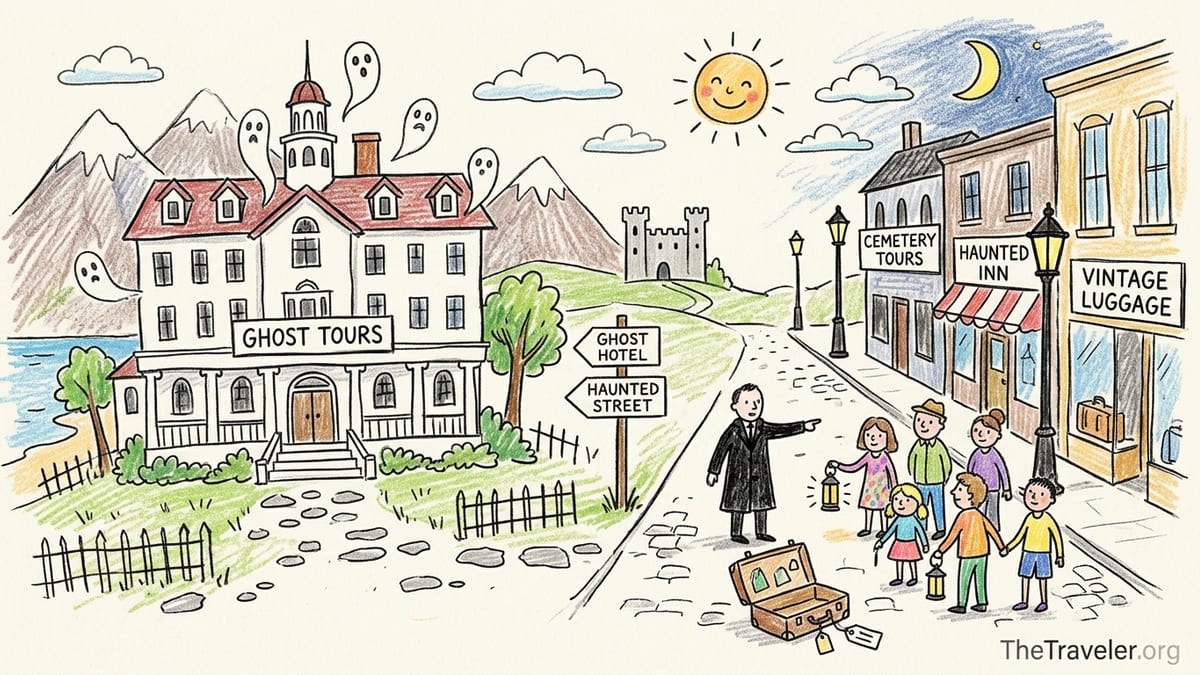
Why Paranormal Travel Is Booming
Interest in ghost tours and haunted hotels has grown alongside broader demand for experiences with an emotional punch. Travel trend reports tracking cross border tourism in 2024 and 2025 note that more travelers now choose trips for the feelings they deliver rather than simply the sights. While wellness and nature get most of the attention in those reports, the same appetite for intense, memorable emotions is driving people toward dark tourism, including paranormal themed experiences that are still relatively affordable compared with luxury wellness retreats.
Research into ghost tourism in destinations such as England and Wales suggests that supply is rising to meet that demand. Academics mapping haunted attractions have found a spread of commercial ghost tours beyond capital cities into smaller historic towns and villages, as local operators realize there is year round appetite for stories of crime, punishment and the supernatural layered onto existing heritage sites. This shift has economic implications, giving old hotels, inns and municipal museums new evening revenue streams without major capital investment.
Consumer research also shows that ghost stories travel well. A VisitScotland study published earlier in the decade, for example, found that around three in ten UK adults said they were interested in hearing ghost tales as a story theme when exploring Scotland. That kind of interest helps explain why atmospheric destinations from New Orleans to Prague now package ghost walks not as fringe curiosities, but as headline evening activities marketed alongside food tours and river cruises.
For travelers, the rise in paranormal offerings means greater choice and a wider quality range. In the same city, you might find a theatrical but loosely researched ghost walk pitched at pub crawlers, and a more historically rigorous lantern tour led by a local archivist. The key is to match your tolerance for fear and appetite for credible history with the right operator, and to understand that the most satisfying haunted experiences tend to be rooted in real events documented in court records, newspapers or family archives, rather than invented legends.
Stanley Hotel, Colorado: Shining Fame and Serious Ghost Tours
Few properties embody the crossover between pop culture horror and serious haunted history like the Stanley Hotel in Estes Park, Colorado. Opened in 1909 as a luxury mountain resort, it famously inspired Stephen King’s novel “The Shining” after the author stayed there in the 1970s. Today the hotel trades openly on that association while also promoting a layered story of reported hauntings, from a 1911 gas explosion to persistent tales of piano music and footsteps in empty corridors.
The Stanley has developed a structured tour program that gives visitors several ways to engage with its past. According to recent visitor guides and tour descriptions, the Historic Day Tour typically focuses on architecture and the lives of founders F.O. and Flora Stanley, while The Shining themed tour leans into the literary and film connections for fans. The headline draw for paranormal enthusiasts is the night or ghost tour, which usually lasts around 60 to 90 minutes and takes small groups into parts of the building associated with reported activity, sometimes with basic investigative equipment.
Pricing has risen in recent years as demand has surged. Independent tour overviews compiled in 2026 describe standard historic or Shining tours starting around 25 to 30 US dollars per adult, with ghost focused options in a similar range and more in depth “ghost hunt” style experiences priced higher per person. Some Colorado recreation departments even bundle Stanley ghost tours into full day excursions from the Denver area that cost just under 100 dollars including transportation, illustrating how widely the brand now features in regional tourism programming.
Access is straightforward. You do not have to be an overnight guest to book tours, and the hotel grounds and public areas attract day visitors who simply want a photograph of the white façade above Estes Park. For a deeper immersion, nightly cash rates for standard rooms at the Stanley commonly start in the low to mid 200 dollar range outside major holidays, according to recent hotel industry coverage. Premium themed rooms linked to The Shining or specific ghost stories command higher rates and book up early around Halloween and peak foliage weekends, so serious paranormal travelers should plan months in advance.
Ballygally Castle, Northern Ireland: A Coastal Ghost Story
On the Antrim Coast north of Belfast, Ballygally Castle offers a very different haunted hotel experience. The 17th century castle, now a modern hotel overlooking the sea, is known across Northern Ireland for its resident spirit, Lady Isabella Shaw. Local legend holds that she died after being locked in a tower room, and contemporary hotel marketing leans into that story by inviting guests to visit a dedicated “ghost room” in the tower during their stay.
Unlike some properties that treat ghost stories as an embarrassed afterthought, Ballygally Castle presents its haunted reputation as part of its charm. Promotional material from the hotel describes Lady Isabella as a friendly presence, and travel features about haunted European hotels routinely highlight Ballygally among the most atmospheric. Visitors report that staff will point you toward the tower if you ask, and it is sometimes possible for non residents who are dining or having afternoon tea to visit the ghost room during quieter periods, though policies can vary with events and occupancy.
Room rates reflect its dual identity as both coastal retreat and paranormal curiosity. Recent European hotel rate surveys show entry level rooms at Ballygally Castle commonly priced from around 180 pounds sterling per night room only during regular periods. On high demand nights around Halloween, premium rooms with sea views or extra space can climb dramatically, with some October 31 rates for superior categories reported in the mid 500 pound range or higher on prepaid terms. For travelers, that means shoulder season midweek stays in spring or early autumn often offer the best value if you want the atmosphere without the holiday price spike.
Access from Belfast is relatively easy by car or organized coach tour along the Causeway Coastal Route, and Ballygally often features as a lunch or coffee stop on day trips to the Giant’s Causeway. For paranormal focused travelers, combining an overnight stay at the castle with visits to nearby historic sites, such as ruined castles, churchyards and coastal villages that also trade on ghost lore, can create a full themed itinerary within a compact area that is manageable without a car.
Historic Inns and City Ghost Tours in Europe
Beyond headline properties, Europe is rich in smaller haunted inns and structured ghost walks that weave paranormal tales into historic cityscapes. In England, centuries old coaching inns such as the Mermaid Inn in Rye are frequently cited in travel media and enthusiast forums as hotspots of reported activity, with stories of phantom figures in Tudor passageways. Travelers often discover these places not through official paranormal branding but through word of mouth, books about haunted Britain and local tourist information centers that discreetly mention their reputations.
City ghost tours have become evening staples in destinations like Edinburgh, York and Prague, where dense layers of history lend themselves to storytelling. In Edinburgh, for instance, multiple operators run nightly walks through the Old Town and underground vaults, some pitched as family friendly history with a few chills, others marketed explicitly as adult oriented with darker subject matter. Ticket prices across European cities frequently fall in the range of 15 to 30 euros per adult for group tours lasting 60 to 90 minutes, with smaller group or private tours costing more.
The quality of these experiences varies widely. Well regarded operators typically employ guides with strong local history knowledge, who can distinguish between documented events and later embellishments while still delivering theatrical flair. Lesser offerings sometimes recycle urban legends without context or rely heavily on sudden loud noises and jump scares. Reading recent reviews in mainstream travel media and user feedback platforms can help visitors filter for tours that balance rigorous history with atmosphere.
For haunted hotel stays in Europe that combine ease of booking with a strong sense of place, look for properties featured in recent roundups of haunted or atmospheric hotels rather than relying solely on long standing local rumours. Travel journalists in 2026 have highlighted options such as London’s grand Victorian railway hotels, former convents in Spain and castle hotels in rural France that acknowledge ghost stories in their official descriptions. Many of these properties price standard rooms from the equivalent of 180 to 250 US dollars per night, positioning them as splurge stays that are still accessible for a short break.
Southern Gothic: Savannah, New Orleans and the American South
In the United States, few regions market their haunted history as successfully as the American South. Cities like Savannah, Georgia and New Orleans, Louisiana layer Civil War history, epidemics, slavery, voodoo and maritime tragedy into a dense tapestry of ghost lore that has become a tourism asset in its own right. Evening ghost walks are heavily promoted in visitor brochures and hotel lobbies, and some of the oldest hotels and inns now openly list haunted rooms as booking draws.
In Savannah, the Marshall House is frequently named among the city’s most haunted hotels, with its mid 19th century building once used as a hospital during the Civil War and later yellow fever outbreaks. Contemporary travel coverage describes stories of children playing marbles in hallways, apparitions of wounded soldiers and the occasional sound of typewriter keys in rooms associated with former long term residents. Despite, or perhaps because of, that reputation, recent hotel rate surveys during the 2026 Halloween season still show standard cash rates starting around 190 to 200 US dollars per night, competitive with other historic properties in the city’s core.
New Orleans offers a slightly different paranormal travel profile, with fewer haunted hotels that market themselves explicitly and a large number of walking tours, carriage rides and cemetery visits that focus on ghosts, vampires and voodoo. Group ghost tours in the French Quarter commonly cost around 25 to 35 US dollars per adult for 90 minute evening walks, with premium small group tours and visits that include above ground cemeteries or haunted bars priced higher. Because the city’s nightlife is robust, many operators run multiple departures each night, which helps spontaneous travelers find last minute tickets outside peak holidays.
Visitors interested in both authenticity and atmospheric storytelling should pay close attention to how tours describe their content. It is worth looking for operators who mention licensed guides, references to specific archives or historical societies, or partnerships with local museums. In both Savannah and New Orleans, there are tours that lean more heavily into costumed performance and others that foreground the difficult histories behind many hauntings, including slavery, disease and violence. Choosing the latter can turn a spooky evening into a more reflective encounter with the region’s past.
How to Judge the Quality of a Ghost Tour
With so many operators now offering paranormal themed experiences, travelers need practical criteria for deciding where to spend their time and money. One key indicator is the balance of history and theatrics described in marketing materials and independent reviews. Tours that specify the archives, municipal records or historians they draw on are more likely to provide grounded context, even if they still enjoy embellishing the stranger elements of local lore. Conversely, copy that relies mainly on generic promises of frights without naming specific streets, buildings or historical events can signal a thinner experience.
Group size and duration matter as well. Many of the better regarded haunted walking tours worldwide cap groups at around 20 to 25 participants to ensure guests can hear and ask questions, with a typical length of 60 to 90 minutes. If an operator routinely sells groups of 40 or more people or compresses a route into 45 minutes, visitors may find the experience rushed and impersonal. In contrast, some hotels and specialist paranormal investigators now offer small group “ghost hunts” in historic buildings that last two to three hours, at significantly higher prices that reflect both access and time.
Pricing itself is not a perfect proxy for quality, but extreme bargains can be a warning sign. In many popular destinations in 2026, mainstream ghost tours settle into a band roughly between 20 and 40 US dollars or the local currency equivalent for standard group experiences, with higher rates for private or extended tours. Offers priced far below local averages sometimes indicate minimal guide training or very large group sizes. When in doubt, it is useful to compare at least three operators in the same city and read a mix of recent professional reviews and independent traveler accounts.
Safety and respect are crucial, particularly on tours that enter cemeteries, active religious sites or neighbourhoods with current residents. Responsible operators outline rules about photography, noise, litter and interaction with property, and they obtain the necessary permits from local authorities or church administrations. Travelers should be wary of tours that encourage provoking spirits through shouting, trespassing on closed properties or touching graves and memorials, both out of respect for communities and to avoid legal trouble.
Planning and Budgeting a Paranormal Itinerary
Building a haunted themed trip starts with deciding how central the paranormal element should be. Some travelers will be content with one evening ghost walk added to an otherwise conventional city break, while others may plan an itinerary around specific haunted hotels such as the Stanley or Ballygally Castle. In either case, it helps to map out locations with strong reputations for both history and atmosphere, then cross check availability and pricing for the dates you have in mind, particularly around Halloween, local festivals and school holidays when demand spikes.
From a budgeting perspective, accommodation remains the largest line item. A night in a headline haunted hotel often costs somewhat more than a comparable modern chain property in the same town, reflecting both heritage status and demand. For example, autumn 2026 rate snapshots suggest that haunted or reputedly haunted hotels featured in international travel media commonly start in the 180 to 250 US dollar per night range for standard double rooms in North America and Western Europe, with significant premiums for suites or strongly themed rooms. Travelers on tighter budgets can still engage with these properties by booking tours or meals on site while sleeping at a more affordable hotel nearby.
Tour costs are easier to predict. In most markets, a traveler building a paranormal itinerary might allocate around 50 to 100 US dollars per person for two or three group ghost tours over a long weekend, plus optional add ons such as after hours museum visits or guided cemetery walks. Some destinations also offer combination tickets that bundle a daytime historical tour with an evening ghost walk at a modest discount, a useful option for visitors keen to understand both the factual and legendary sides of local history.
Advance booking is increasingly important. Many haunted hotels report that their most requested rooms, including those associated with famous ghost stories or film shoots, sell out months before October and key holiday periods. Ghost tours in compact historic districts sometimes have to limit numbers for safety and local resident comfort, so same day walk up spaces can be scarce in peak season. Reserving at least core elements such as accommodation and one flagship tour before you travel reduces the risk of missing out and lets you relax into the atmosphere once you arrive.
Ethics, Expectations and Making It Meaningful
Paranormal travel sits at a crossroads between entertainment and remembrance. Many ghost stories are rooted in real suffering, from war and epidemic to domestic violence. Responsible travelers and tour operators acknowledge that history rather than using it purely as a backdrop for thrills. On a practical level, that can mean supporting tours that discuss issues like slavery, colonialism or poverty openly and sensitively where they form part of the local story, rather than sanitizing or exploiting them.
Managing expectations also leads to better experiences. Even in locations with long records of strange phenomena, there is no guarantee of seeing or feeling anything unusual on a given night. Visitors who treat a ghost tour as a chance to learn overlooked history, explore atmospheric architecture after dark and hear well told stories tend to come away satisfied, regardless of whether anything inexplicable occurs. Hotels that trade on hauntings likewise cannot manufacture paranormal events on demand, but they can deliver strong service, good sleep quality and thoughtful interpretation of their own past.
For those who are skeptical of the supernatural but curious about cultural history, haunted hotels and ghost tours offer a lens onto how communities remember and reinterpret their pasts. The persistence of specific legends over centuries can reveal anxieties about class, gender or social change, just as much as they may hint at mysteries in the physical world. Approached with critical curiosity and respect, paranormal travel can deepen rather than cheapen a traveler’s engagement with a destination.
Whether you are standing in a tower room on the Antrim coast said to be haunted by a long dead noblewoman, or listening for footsteps in a Colorado hallway once shaken by a gas explosion, the real reward of paranormal travel lies in that quiet, suspended moment between story and reality. It is there, in the darkened stairwell or the lamplit square, that the boundaries between past and present feel thinnest and travel delivers the intense emotional connection so many modern visitors now seek.