


More news on this day
A fast-escalating dispute over marine charter fees in the British Virgin Islands is prompting talk in Washington of an unprecedented response, with reports indicating that United States officials are weighing whether to brand the popular Caribbean sailing destination a “hostile state” if tensions are not eased before the peak winter tourism season.
Get the latest news straight to your inbox!
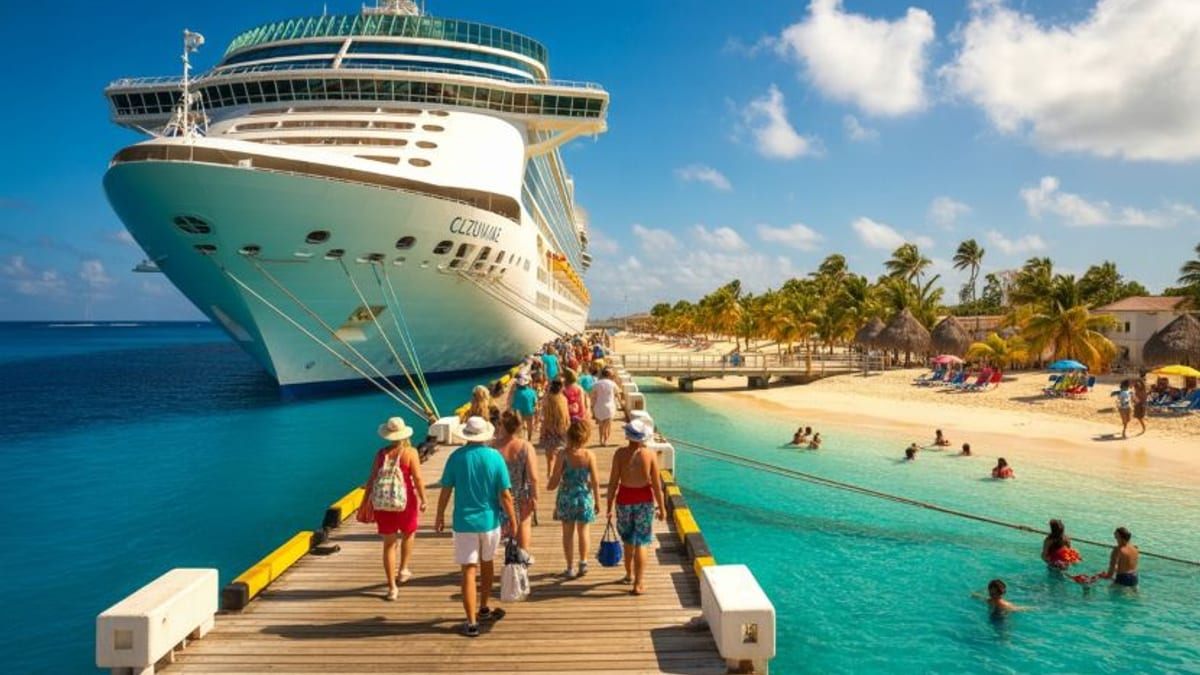
A small territory at the center of a growing transatlantic dispute
The British Virgin Islands, a United Kingdom overseas territory of roughly 30,000 residents, has long marketed itself as a low-stress, high-end hub for yacht charters and small-ship cruising. Marinas such as Nanny Cay on Tortola, Soper’s Hole on the island’s western tip, and Leverick Bay in the North Sound routinely fill with US-flagged yachts and crewed charter vessels during the December to April high season.
In recent months, however, a row over rising costs and regulatory changes for foreign-flagged charter boats has intensified. Publicly available notices from marine industry groups describe higher fees and stricter enforcement affecting international operators that base their yachts in the territory for part or all of the winter. Charter companies that rely heavily on American guests have warned in trade briefings that the new measures are squeezing margins and could make BVI itineraries less competitive compared with nearby islands.
Reports in regional business publications indicate that lobbying by affected operators has reached policymakers in Washington, where concerns extend beyond pricing to questions about how foreign-flagged US-owned boats are being treated in local enforcement actions. According to this coverage, the dispute has now reached a point where some US officials are studying unusually severe options, including the possibility of designating the territory as a hostile jurisdiction for certain categories of travel and commerce if relations deteriorate further.
Such a move would go significantly beyond the Level 1 to Level 4 State Department advisory system familiar to most travelers and would represent a distinct policy choice rather than a routine safety update. As of early November 2026, the State Department had not publicly reclassified the BVI within its standard advisory tiers, and no formal hostile-state designation had been announced, but the fact that the option is reportedly being discussed has already rattled parts of the Caribbean tourism sector.
What a ‘hostile state’ label could mean for US tourists
While there is no standard consumer-facing definition of a hostile-state travel designation, analysts who track US sanctions and security policy note that similar labels in other regions have led to tighter banking scrutiny, new insurance exclusions and higher compliance costs for tour operators. For ordinary travelers, the practical effect can be felt in credit card processing challenges, restrictions on certain types of financial transactions and changes in how travel insurers underwrite trips.
In marine tourism, even modest regulatory shifts can reverberate quickly. Yacht charters to the BVI often involve complex routing through US Virgin Islands ports such as St. Thomas for air arrivals, provisioning and crew changes. If banks or card networks began treating BVI-linked transactions as higher risk, operators might be forced to reroute guests, request earlier payments or avoid the territory altogether in favor of anchorages in the US Virgin Islands or other Eastern Caribbean destinations.
Travel trade reports already describe contingency plans being drafted for upcoming winter flotillas. These include substituting BVI anchorages with bays in neighboring territories and promoting alternative routes that still offer line-of-sight sailing, coral reefs and sheltered moorings but are perceived as more predictable from a regulatory and financial standpoint. For some companies, that could mean more nights in St. John or St. Croix, or expanded one-way itineraries linking the US Virgin Islands with St. Martin or Antigua instead of the BVI.
The most immediate impact would likely fall on new bookings for late 2026 and early 2027. Experienced charter guests with longstanding ties to local skippers and marinas may be inclined to keep existing plans while monitoring developments, but first-time visitors could be more sensitive to headlines suggesting that the United States is contemplating a hostile-state stance, even if no formal designation has yet been made.
Caribbean tourism on edge as warnings multiply across the region
The tensions around the British Virgin Islands come at a time when US travelers are already navigating a patchwork of advisories across the Caribbean. The State Department currently assigns most major vacation islands to its lower two tiers, encouraging either normal precautions or increased caution, but several destinations have faced sharper warnings in 2025 and 2026.
Haiti, once a regular stop on cruise itineraries, remains under a Level 4 “Do Not Travel” advisory, with violent crime, kidnapping, unrest and limited law enforcement cited among the reasons for Americans to avoid visiting. Separate coverage notes that this guidance has been renewed multiple times as gang activity and political instability continue to disrupt daily life, effectively removing most leisure travel demand to the country.
Other islands popular with US visitors, including Jamaica, the Dominican Republic, Saint Lucia, Turks and Caicos and Grenada, have all drawn updated Level 2 advisories highlighting specific risks. Recent notices and embassy alerts reference violent crime affecting both residents and visitors, as well as more targeted concerns such as reports of travelers being drugged and robbed at hotels and short-stay rentals in the Dominican Republic, or strict firearms and ammunition laws in Turks and Caicos that have led to lengthy jail sentences for visitors who inadvertently carried a few forgotten rounds in their luggage.
Travel and lifestyle publications point out that despite this drumbeat of warnings, the majority of Caribbean tourism still flows to destinations categorized at the lower advisory levels. Analysts emphasize that the underlying message in many notices is to remain situationally aware, choose accommodations and excursions carefully, and understand local laws, rather than to cancel trips outright. Against that backdrop, the idea of one small territory being informally discussed as a potential hostile state stands out as a very different kind of risk narrative.
How travelers with upcoming BVI trips can respond now
For travelers who have already booked winter or spring itineraries that include the British Virgin Islands, travel specialists recommend focusing on what is currently official rather than what may be under discussion. As of mid-November 2026, no public US advisory has instructed citizens to avoid the territory or restricted standard tourism activities such as yacht charters, resort stays or marine excursions.
Practical steps include reviewing the fine print on trip insurance policies to see how they define political risk, sanctions and government travel warnings; confirming payment and cancellation terms with charter companies; and ensuring that any significant balances are paid through channels that offer clear documentation, such as major credit cards or established US-based tour operators. Travelers enrolled in the Smart Traveler Enrollment Program can expect to receive email alerts if the situation changes while they are abroad.
On the logistics side, it can be useful to have flexible routing options in mind. Many yacht charters already rely on flights into St. Thomas in the US Virgin Islands with ferry or water taxi transfers across to Tortola. If future restrictions or financial frictions were to affect the BVI specifically, travelers who have coordinated closely with their operators might be able to reconfigure routes to focus more time in US territory or to shift the embarkation point to another island without losing the entire trip.
For those still deciding where to book, travel advisors note that alternative Eastern Caribbean hubs such as Antigua, Barbados, the Cayman Islands and the French Caribbean departments continue to market themselves around stability, established air links and a long track record with US visitors. The calculus may come down to individual risk tolerance and the relative importance of classic BVI anchorages compared with a smoother booking and insurance environment elsewhere.
Uncertain outlook as winter high season approaches
With the Caribbean’s critical winter high season about to begin, the standoff involving the British Virgin Islands leaves regional tourism planners facing yet another variable in an already complex landscape. Airlift schedules, cruise deployments and charter-boat fleets are largely set months in advance, and sudden policy shifts can be difficult to absorb without financial consequences for both operators and local communities.
In the BVI itself, publicly available local coverage portrays marinas and waterfront businesses pressing ahead with hurricane-season maintenance, vessel haul-outs and restocking in anticipation of the winter influx of yachts and bareboat sailors. For many taxi drivers, provisioning firms, dive operators and beach bars, the arrival of US visitors over the next few months will determine income for the year.
Regional tourism leaders have repeatedly stressed that the Caribbean’s competitive edge depends not only on beaches and climate but also on the perception of safety and reliability. If talk of a hostile-state designation for any one territory were to harden into policy, it could prompt some travelers to broaden their search to other islands while also encouraging governments and industry groups to resolve regulatory disputes quickly to avoid wider spillover effects.
For now, the picture remains fluid. Travelers eyeing the British Virgin Islands are being encouraged by tour operators and travel publications to keep monitoring official US advisories and embassy messages in the weeks ahead, staying in close contact with airlines, ferry companies and charter firms in case adjustments become necessary as the season unfolds.